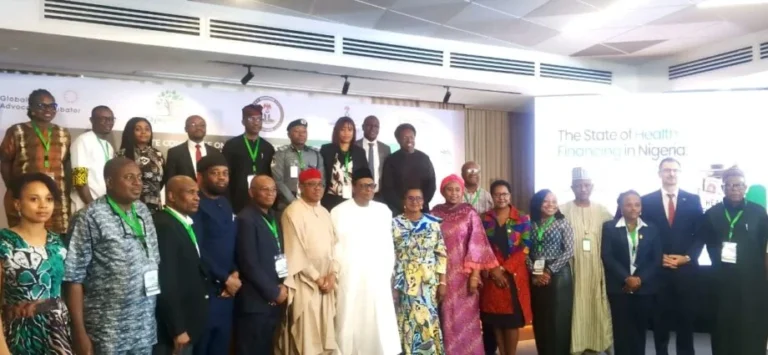
The pursuit of a robust and self-sustaining healthcare system in Nigeria has reached a critical juncture as national stakeholders, led by the Senate Committee on Health, have formally called for an immediate acceleration of legislative and policy reforms. At the recent National Convergence on Sustainable Health Financing held in Abuja, organized in partnership with the Caywood Brown Foundation, experts and policymakers underscored that the current reliance on external donor funding is precarious and insufficient for the nation’s burgeoning population. The event, which served as a high-level assembly of health sector leaders, focused on shifting the country from a model of reactive, donor-dependent care to one of proactive, internally funded, and resilient health infrastructure.
The core of the discourse centered on the urgent passage of pending health financing bills, the expansion of the Sugar-Sweetened Beverage (SSB) levy, and the strengthening of the Basic Health Care Provision Fund (BHCPF). With Nigeria facing a growing burden of non-communicable diseases (NCDs) and the lingering challenges of infectious disease management, the consensus among attendees was that the status quo of "token investments" is no longer viable.
The Evolution of Health Financing in Nigeria: A Chronology
Nigeria’s journey toward sustainable health financing has been marked by several legislative milestones and policy shifts over the last decade. The establishment of the National Health Act in 2014 provided the foundational legal framework for the BHCPF, which was intended to be the "one percent of the Consolidated Revenue Fund" earmarked for primary healthcare.
However, the implementation of these provisions has been inconsistent. In 2018, the government officially launched the BHCPF to expand primary healthcare services to the most vulnerable. By 2021 and 2022, while disbursements increased, the challenge shifted toward the inability of state governments to provide the required counterpart funding. The 2025 National Health Financing Dialogue acted as a precursor to the current convergence, identifying the gaps in domestic resource mobilization and the necessity of the SSB levy as a strategic fiscal tool for health. The current push by the 10th National Assembly represents the latest phase in this timeline, aiming to codify these fiscal reforms into law before the end of the legislative session.
The Economic Reality: Why Domestic Funding Matters
The Coordinating Minister of Health and Social Welfare, Prof. Muhammad Pate, provided a sobering reality check during the summit. He highlighted that for decades, Nigeria’s health expenditure per capita has hovered below 20 dollars—a figure far below the threshold required to deliver quality, modern medical services.
"Health is not cheap. If you want quality healthcare, society must choose to pay for it," Prof. Pate remarked. His analysis pointed to a fundamental truth: the health outcomes currently observed across the country are a direct result of the limited financial choices made by previous administrations. According to recent data from the World Health Organization (WHO), countries that successfully achieve Universal Health Coverage (UHC) typically demonstrate a high ratio of government-to-out-of-pocket expenditure. Nigeria’s current system, characterized by high out-of-pocket spending, forces millions of citizens into poverty whenever a medical emergency strikes. By moving toward a pooled, insurance-based, and state-supported model, the government aims to decouple the receipt of care from the immediate ability to pay.
Legislative Hurdles and the Path Forward
The Senate Committee on Health, under the leadership of Sen. Ipalibo Harry-Banigo, has positioned itself at the forefront of this reform. Senate Bills 713 and 886 are currently the most critical pieces of legislation on the table. These bills are designed to create a predictable financial architecture that ensures health funding is not subject to the whims of annual budget fluctuations.
"We must progressively rely on domestic resources to finance healthcare, while development assistance merely complements our national investments," Sen. Harry-Banigo stated. Her position is supported by the House Committee on Healthcare Services, led by Rep. Amos Magaji, who emphasized that sustainable health outcomes require institutional strength. According to Rep. Magaji, the BHCPF must be insulated from administrative interference to serve as a reliable safety net for the poorest citizens.

The legislative strategy involves two prongs: national-level passage of bills and the "domestication" of these reforms at the state level. Because health is on the concurrent legislative list in Nigeria, the federal government can set the policy, but state-level compliance—specifically regarding the payment of counterpart funds—remains the primary bottleneck.
The Role of Fiscal Policy and the SSB Levy
A significant portion of the dialogue focused on the Sugar-Sweetened Beverage (SSB) levy. Economic experts argue that the tax serves a dual purpose: it acts as a disincentive for the consumption of products linked to rising rates of diabetes, hypertension, and obesity, and it generates a dedicated revenue stream that can be ring-fenced for the health sector.
Dr. Jide Idris, Director-General of the Nigeria Centre for Disease Control and Prevention (NCDC), advocated for a paradigm shift toward prevention. He noted that the cost of treating chronic NCDs far outweighs the cost of preventative measures, such as public health education and dietary regulation. By earmarking the SSB tax proceeds directly to health, the government creates a self-sustaining cycle where the revenue generated by an unhealthy product is used to treat the health consequences of that product.
Multi-Sectoral Perspectives and Stakeholder Reactions
The urgency of the moment was echoed by various heads of agencies and development partners. Dr. Kelechi Ohiri, Director-General of the National Health Insurance Authority (NHIA), noted that the convergence of the health and finance sectors is a sign of maturity in government planning. He argued that without the legal backing to enforce insurance coverage and strategic purchasing, the country would remain stuck in a cycle of inefficiency.
Representing the civil society and advocacy front, Ms. Ibim Banigo of the Caywood Brown Foundation warned against delays. With the 10th National Assembly approaching its final phases, she emphasized that the window for securing presidential assent is closing. Her call was echoed by Prof. Emmanuel Alhassan of the Global Health Advocacy Incubator, who stressed that the House of Representatives must move quickly to concur with the Senate’s bills.
Similarly, Mr. Ademuyiwa Damilola of the Legislative Initiative for Sustainable Development (LISDEL) highlighted the macroeconomic reality. With donor funding for HIV, TB, and malaria projected to plateau or decline globally, Nigeria’s fiscal space is tightening. Domestic financing is no longer a matter of policy preference—it is a matter of national security and economic survival.
Implications for the Future of Healthcare in Nigeria
The implications of the reforms discussed at the National Convergence are far-reaching. If successfully implemented, the following outcomes are expected:
- Reduced Out-of-Pocket Expenditure: By strengthening the NHIA and the BHCPF, more citizens will be protected from the financial ruin of medical bills.
- Improved Primary Healthcare (PHC): The focus on domestic funding is expected to rehabilitate thousands of primary health centers that are currently under-equipped or under-staffed.
- Local Capacity Building: As Prof. Pate noted, the move toward domestic financing will incentivize the local manufacturing of medical commodities, reducing the reliance on expensive imports and protecting the country from global supply chain shocks.
- Resilience Against Epidemics: A properly funded health system, with dedicated domestic resources, will allow for a more rapid response to outbreaks, reducing the time spent waiting for international aid.
The road ahead remains challenging. It requires not only the passage of bills but the sustained political will of governors to commit state resources and the transparency of health ministries to ensure that funds are utilized efficiently. The consensus at the Abuja summit was clear: Nigeria possesses the human and natural resources to fund its own health sector. The missing link has been the legislative and policy framework to translate those resources into life-saving outcomes. As the bills move toward potential enactment, the eyes of the public remain fixed on the National Assembly to see if they will rise to the challenge of securing the nation’s health for generations to come.