
The United States healthcare landscape has long grappled with soaring pharmaceutical expenditures, often outpacing every other high-income nation by a wide margin. In an aggressive bid to rein in these escalating costs, the implementation of the Most-Favored-Nation (MFN) drug pricing policy by the Trump administration has sought to tie what Medicare pays for brand-name medicines directly to the lower prices charged in peer countries abroad. While domestic policy proponents argue that this international benchmarking will successfully lower federal spending and deliver much-needed relief to American taxpayers, a groundbreaking international modelling study warns of profound unintended consequences. According to comprehensive research published in The Lancet by academics from Harvard University, the London School of Economics, and the University of Zurich, the MFN framework could inadvertently catalyze a surge in prescription drug costs across international markets and trigger strategic delays in new drug launches worldwide.
The core mechanics of the MFN pricing policy rely on cross-border comparisons to restrict the reimbursement rates for patented pharmaceuticals. Under the administration’s designated models—specifically the GLOBE program, which oversees medicines administered in hospital and outpatient settings, and the GUARD program, which regulates retail pharmacy distribution—a randomized cohort comprising 25 percent of Medicare beneficiaries is currently subjected to these international benchmark caps over a five-year evaluation window. By referencing the cost of pharmaceuticals in 19 developed nations, the policy aims to bridge a historical financial chasm where US patients and government programs consistently shoulder a disproportionate share of global drug development costs.
However, the international research team evaluated 195 patented medicines accounting for $87.9 billion in annual Medicare expenditures to project how manufacturers would financially absorb these mandatory US revenue cuts. Their findings reveal that for approximately 75 percent of the evaluated therapeutics, the anticipated Medicare savings under the MFN mandate would equate to nearly four times the total annual profits generated by those same drugs within the specific benchmarked country used for price comparison. Consequently, industry analysts and study authors warn that multinational pharmaceutical corporations face intense financial pressures to protect their profit margins, creating a powerful market incentive to either hike prices in referenced nations or withhold new life-saving medications from smaller international markets altogether.

Tracing the evolution of American drug pricing policy reveals a long-standing tension between government expenditure control and the robust profit incentives required for pharmaceutical innovation. Historically, the federal Medicare program—which currently provides healthcare coverage for approximately 68 million older and disabled Americans—was legally barred from negotiating drug prices directly with manufacturers. This legislative restriction remained a bedrock of American healthcare policy until the enactment of the Biden-era Inflation Reduction Act in 2022, which authorized limited price negotiations for a small tier of exceptionally costly medications.
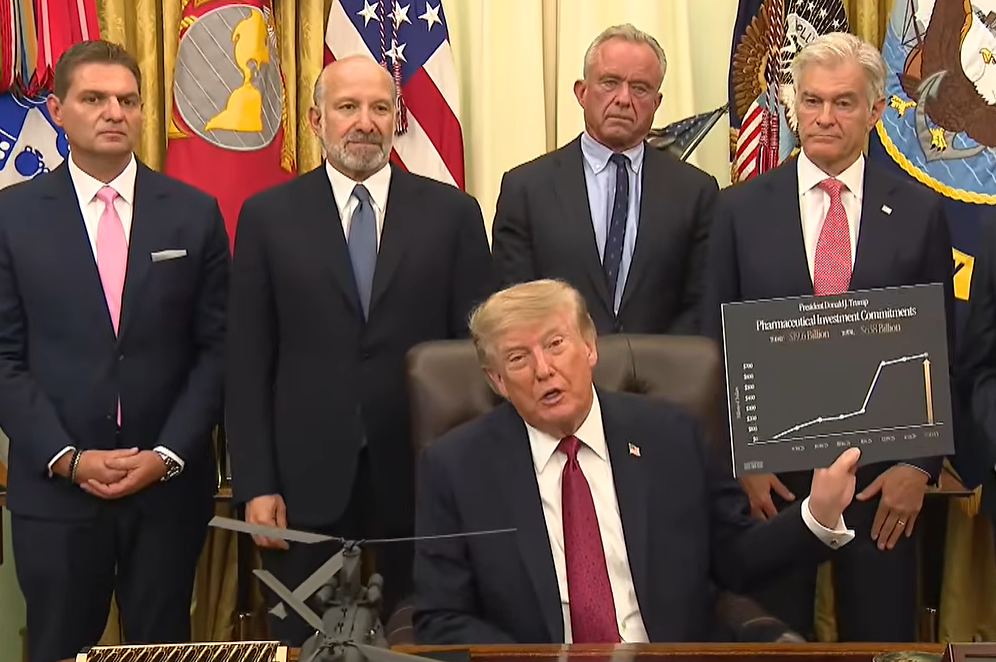
Building upon this shifting regulatory environment, the Trump administration introduced the MFN executive order to drastically accelerate cost-containment measures. As the policy transitioned from conceptual frameworks to execution, early market indicators began validating researchers’ warnings regarding international pushback. In March 2026, Tokyo-based Astellas Pharma successfully negotiated higher domestic drug prices in Japan by explicitly warning Japanese regulators that local pricing structures could be exposed to US downward valuation under the MFN framework. Similar market anxieties have manifested across Europe, including the controversial market withdrawal of a major cholesterol-lowering medication in Denmark and ongoing trade friction stemming from threatened pharmaceutical tariffs between the United States and the United Kingdom.
To quantify the financial dimensions of these regulatory shifts, the research team modeled multiple economic scenarios to project government savings and market reactions. Without any carve-outs or exemptions, the study estimates that the initial phase of the MFN policy could yield substantial savings for the federal government: approximately $5.2 billion, or a 16 percent reduction, under the GLOBE model, alongside $6.4 billion, or an 18 percent reduction, under the GUARD model. Should the federal government choose to expand these pricing rules to cover all Medicare beneficiaries rather than the initial 25 percent subset, projected savings could dramatically escalate to $21 billion for clinical administrations and $25.5 billion for retail pharmacy channels.
The comparative data underscores the vast magnitude of the transatlantic price divide. International benchmarking revealed that the lowest prices utilized in foreign reference nations were, on average, 71 percent lower than the baseline rates previously absorbed by Medicare. Norway, South Korea, and Australia emerged as the most frequently referenced nations establishing the international price floor.

Nevertheless, the realization of these theoretical government savings remains highly contentious due to the widespread implementation of confidential side deals and manufacturer exemptions. The study’s authors emphasize that when pharmaceutical corporations successfully negotiate confidential rebate agreements and exemptions with the administration—agreements intentionally excluded from public MFN oversight—the projected macroeconomic savings are severely compromised. For the initial cohort of 17 manufacturers that publicly announced individualized side agreements, the academic models project that aggregate savings would plummet by a staggering 71 percent, leaving the net federal savings closer to a modest 4 to 6 percent.
The friction generated by the MFN policy has ignited intense debate among global health economists, government officials, and pharmaceutical industry representatives. Dr. Thomas Hwang, lead author of the study and a faculty member at Brigham and Women’s Hospital and Harvard Medical School, highlights the acute structural dilemma facing foreign healthcare systems. Referenced nations spanning from Germany and Japan to Australia are experiencing immense bilateral pressure from both US political actors and multinational drug manufacturers to elevate their domestic healthcare spending. However, this pressure collides directly with the hard fiscal reality that these foreign nations operate under strict, legislated budgetary caps with very limited room for expansion.
Echoing these concerns, Dr. Aaron Kesselheim, a co-author of the study at Harvard, notes that while the MFN architecture was explicitly engineered to resolve the glaring inequities of American drug pricing, its actual efficacy is severely undermined by legal challenges, lobbying efforts, and confidential carve-outs. Conversely, defenders of the administration’s policies argue that aggressive international benchmarking is a long-overdue mechanism to prevent American consumers from perpetually subsidizing global research and development while foreign governments free-ride on negotiated discounts.
Dr. Kerstin Vokinger of ETH Zurich and the University of Zurich underscores the profound global health equity implications inherent in these domestic regulatory decisions. Because modern pharmaceutical development is deeply integrated across borders, unilateral pricing interventions executed by the world’s largest healthcare market inevitably ripple outward. If multinational corporations find their revenue streams severely constricted by American MFN rules, the resulting defensive measures—such as altered drug formulations, shifting discount structures into opaque rebates, or delaying commercial product rollouts—will directly threaten patient access to innovative therapies worldwide.
Ultimately, the empirical analysis paints a complex picture of modern healthcare reform. While the Most-Favored-Nation pricing policy holds theoretical promise for slashing federal outlays and offering fiscal relief to American taxpayers, its implementation introduces severe systemic risks to the global pharmaceutical ecosystem. As policymakers navigate the delicate balance between domestic affordability and international market stability, the study serves as a critical warning that lowering healthcare costs in one domestic market can trigger disruptive inflationary shocks and access barriers across the rest of the interconnected global community.