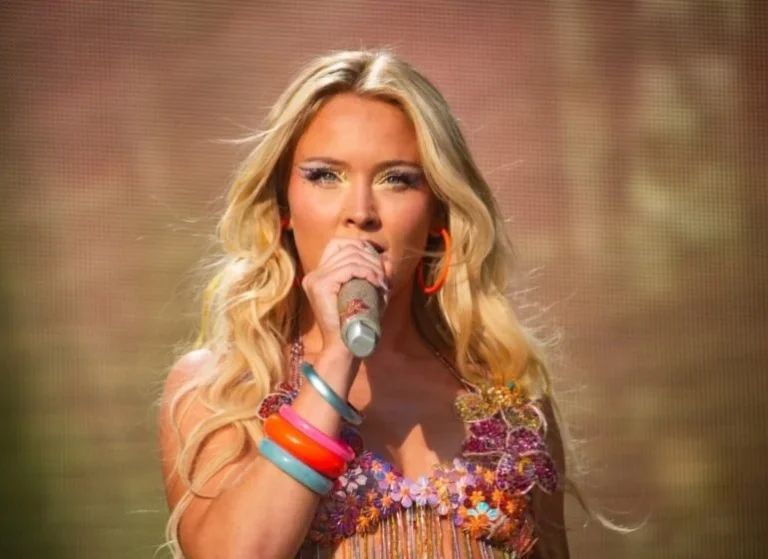
Swedish pop sensation Zara Larsson has publicly criticized the White House following the unauthorized use of her ethereal track “Midnight Sun” in a promotional TikTok video documenting an Immigration and Customs Enforcement (ICE) raid. The controversial digital short featured federal agents detaining, handcuffing, and escorting alleged undocumented immigrants into law enforcement vehicles, all underscored by Larsson’s gentle melodies. The unexpected fusion of pop music and high-stakes federal enforcement triggered a swift online backlash, prompting the administration to silently strip the audio from the post. However, the damage was already done, igniting a broader conversation concerning the ethics of state-sponsored media, the human cost of immigration enforcement, and the ongoing friction between artists and political institutions over copyright and creative autonomy.
The incident highlights a recurring flashpoint in contemporary American politics: the contentious intersection of federal immigration policy, social media content creation, and the rights of artists who find their intellectual property conscripted into state messaging. For Larsson, the decision to pair a song celebrating human connection and nature with footage of detentions crossed an ethical boundary. Taking to TikTok to address her millions of followers, the internationally acclaimed artist expressed deep dismay rather than blind rage, framing the controversy not merely as a copyright infringement, but as a moral indictment of state-sanctioned media strategies.
Chronology of the Digital Controversy
The sequence of events began with the publication of a short-form video on the official White House TikTok account. Designed to showcase the operational capabilities and enforcement actions of Immigration and Customs Enforcement, the clip relied heavily on dynamic editing, cinematic pacing, and trending audio elements common to the platform. Among the chosen tracks was Zara Larsson’s “Midnight Sun,” a composition known for its atmospheric production and lyrics evoking unity, nature, and emotional resonance.
Within hours of its upload, digital rights advocates, fans, and pop culture observers noticed the stark contrast between the song’s lyrical themes and the grim reality of individuals being handcuffed and separated from their communities. Social media users flooded the comment sections, alerting Larsson and criticizing the administration for weaponizing pop culture to aestheticize enforcement actions.
Recognizing the gravity of the public outcry, White House digital media handlers quietly removed the audio track, replacing it or muting the video entirely without issuing a formal public apology or explanation. Despite the swift removal, archived copies of the video continued to circulate online.
Reacting to the digital footprints of the video, Larsson released a video statement addressing her supporters. Rather than launching into a purely partisan tirade, the Swedish singer spoke from a place of emotional exhaustion and empathy. She confessed that upon first viewing the footage, she felt an overwhelming sense of sadness.
"I do not even know what to say. I saw some comments. I got tired of this, obviously. Some people are like, she is going to be pissed. I am just really sad," Larsson told her followers, her tone subdued and reflective.
Expanding on her critique, she emphasized the shared humanity between law enforcement, citizens, and the undocumented individuals depicted in the raid. She noted that an accident of geography and the circumstances of one’s birth are often the primary drivers of privilege, determining whether an individual is born into a nation of safety and economic opportunity or forced to navigate perilous journeys for survival.
"I wish I could help you remember that you and I are not that different at all. We are not that different from the people in the video either," Larsson stated, challenging the creators of the video to look beyond administrative classifications and recognize the flesh-and-blood individuals behind the immigration statistics.
Dehumanization and the Aesthetics of Enforcement
At the core of Larsson’s public rebuke is the concept of dehumanization—a process whereby individuals are stripped of their unique human qualities and reduced to bureaucratic categories or political talking points. By setting coercive state actions to upbeat or melodic pop music, critics argue that digital content creators risk turning human suffering and state-enforced displacement into casual entertainment or sanitized political propaganda.
Larsson was careful to delineate between complex debates surrounding macroeconomic immigration policy and the visceral, human-level reality of federal enforcement operations.
"If you want to talk about politics and immigration, that is really not what this is. This video is so dehumanising. These people in this video are real people. The majority of undocumented people are regular people with jobs. They are just trying to have a better future," she articulated.
Furthermore, the singer expressed bewilderment over the specific artistic choice of "Midnight Sun." She noted that the song was composed to evoke feelings of universal harmony, ecological interconnectedness, and empathy between human beings. Utilizing such a track to soundtrack a visual narrative defined by division, state power, and institutional coercion represented, in her view, a profound perversion of art’s original intent.
"I do not understand why you would do this video. It is wild, especially with this song, which is about feeling connected to nature and feeling connected to the universe, to people, essentially. And this creates a massive divide for the people," she added.
A Growing Trend: Musicians Push Back Against Political Co-Option
Larsson’s public confrontation with the White House is far from an isolated incident. Over the past decade, as political campaigns and government agencies have increasingly turned to short-form video platforms like TikTok, Instagram Reels, and YouTube Shorts to reach younger demographics, artists have found themselves repeatedly forced to issue cease-and-desist notices or public condemnations.
The phenomenon transcends partisan lines, though contemporary friction frequently centers around conservative administrations and restrictive immigration agendas. In July of the previous year, pop superstar Ariana Grande publicly warned the Donald Trump administration to immediately cease utilizing her musical catalog to promote federal immigration policies and enforcement metrics. Grande’s intervention echoed a broader sentiment within the creative community that pop music should not serve as an endorsement of state apparatuses carrying out controversial actions.
Similarly, singer-songwriter Sabrina Carpenter voiced sharp objections, calling upon the White House to exclude her and her artistic output from what she characterized as an "inhumane" political agenda. Carpenter’s fans rallied behind her stance, underscoring the growing expectation from younger consumers that celebrities use their platforms to police how their art is deployed in political discourse.
The roster of international artists who have locked horns with political entities over unauthorized usage spans generations and musical genres. Iconic Swedish pop group ABBA, legendary Canadian vocalist Céline Dion, and American powerhouse Beyoncé have all previously taken decisive action after their iconic anthems were appropriated for political rallies, campaign videos, or official government communications without proper licensing or consent.
Legal, Ethical, and Digital Implications
The recurring friction between musicians and political entities raises critical questions regarding copyright law, digital fair use, and the governance of social media platforms. While government agencies frequently claim exemptions under specific educational, informational, or fair use doctrines when broadcasting public service announcements or documentation of official duties, commercial copyright laws strictly protect master recordings and musical compositions from unauthorized exploitation, particularly for promotional or ideological purposes.
Platforms like TikTok operate under complex licensing agreements with major record labels and performing rights organizations (PROs) such as ASCAP and BMI. These agreements typically grant general users access to vast audio libraries for personal content creation. However, institutional accounts—including those belonging to government bodies, political campaigns, and corporate entities—frequently face heightened scrutiny and legal limitations when using commercial music to advance political messaging or institutional branding.
When an artist publicly calls out an administration, the fallout extends beyond legal compliance into the realm of public relations. For political communications teams, utilizing trending audios to boost algorithmic reach on social media can backfire spectacularly if the featured artist publicly denounces the content. Such missteps risk alienating vital demographic blocs, particularly Gen Z and millennial voters who place a high premium on authenticity, social justice, and artistic autonomy.
Broader Social Impact and the Debate Over Immigration Media
The controversy surrounding the ICE video and Zara Larsson’s response touches upon a deeper societal debate regarding how immigration enforcement is visualized and consumed in the digital age. As governments increasingly rely on gamified, highly edited social media formats to communicate policy enforcement, the line between objective institutional reporting and emotionalized propaganda continues to blur.
Human rights advocates and immigration reform organizations have long criticized the public dissemination of raid footage, arguing that it instills widespread fear within immigrant communities, undermines trust in local public institutions, and reduces complex human journeys to spectacles of state authority. By injecting her global platform and empathetic worldview into the discourse, Larsson shifted the public focus away from institutional metrics and back toward the individual dignity of those caught in the administrative machinery of the state.
As the digital landscape evolves, creators, platform administrators, and political communicators alike will likely face mounting pressure to establish clearer ethical and legal guardrails. Until then, artists like Zara Larsson continue to demonstrate that the ownership of art extends far beyond commercial royalties, encompassing the moral right to protect the emotional integrity of their creations from being conscripted into political narratives they vehemently oppose.