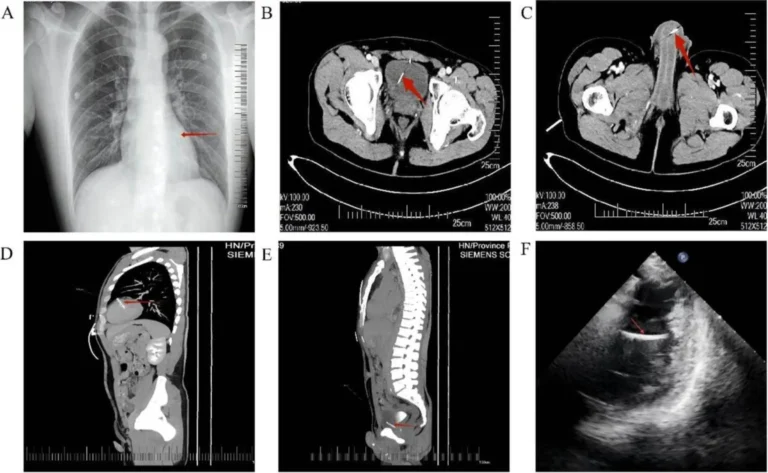
A routine medical consultation at a hospital in China recently escalated into a complex surgical intervention after imaging diagnostics revealed an alarming array of metallic foreign objects embedded throughout a 35-year-old male patient’s body. The man, who sought professional medical care due to symptoms of hematuria—blood in the urine—and significant dysuria, or painful urination, presented with stable vital signs and otherwise unremarkable physical health. However, what began as a standard urological evaluation quickly transformed into a high-stakes case study involving cardiothoracic, abdominal, and urogenital surgical teams.
The clinical findings, which have since been documented in medical literature, highlight the extreme risks associated with self-embedding behavior, a rare form of non-suicidal self-injury (NSSI). The discovery of a 1.4-inch sewing needle piercing the pericardium, the protective sac surrounding the heart, underscored the life-threatening nature of the patient’s condition and prompted an immediate reassessment of his internal anatomy.
Clinical Chronology and Initial Discovery
The patient’s journey to the operating theater began when he arrived at the hospital reporting discomfort while urinating. Upon conducting a physical examination and an initial radiological assessment, clinicians observed an anomalous shadow near the thoracic region. This finding necessitated a contrast-enhanced computed tomography (CT) scan, which provided a comprehensive, three-dimensional mapping of the patient’s interior. The results were startling: multiple needle-like metallic objects were identified, dispersed across the patient’s pelvis, bladder, abdomen, and thoracic cavity.
This was not the patient’s first encounter with such a diagnosis. Medical records indicated that two years prior, surgeons at a different facility had successfully removed two foreign bodies from his abdomen. Given his history of intellectual disability and the absence of any logical explanation from the patient or his legal guardian regarding how these items were introduced, medical staff concluded that the patient was likely engaging in the deliberate insertion of objects into his own body.
The Anatomy of Self-Embedding
Self-embedding behavior is a rare and perplexing clinical phenomenon. While it is often classified under the broader spectrum of self-injury, it carries specific risks that distinguish it from superficial cutting or burning. Individuals who engage in this behavior may insert a wide array of objects, including glass shards, wire, staples, paper clips, and sewing needles, into subcutaneous tissue, muscle, or internal organs.
The practice presents a significant diagnostic challenge. Because the objects are often inserted into soft tissue, they can migrate over time, moving through the body via the circulatory system or simply shifting due to muscle movement and gravity. The patient in this case had a sewing needle that had migrated to the pericardium, creating an environment ripe for infection, cardiac tamponade, or vascular rupture.
Historically, this behavior has been documented in psychiatric literature for nearly a century. One of the most infamous historical references involves the serial killer Albert Fish, who, in 1936, was found to have approximately 30 needles embedded in his pelvic region and abdomen. While the motives behind such actions vary—ranging from severe psychological distress and psychosis to cognitive impairments that prevent an understanding of physical danger—the medical management remains consistently complex.
Surgical Intervention and Post-Operative Recovery
Given the distribution of the objects, the surgical team was forced to prioritize. The needle located in the pericardium posed the most immediate threat to the patient’s life. If the needle were to shift further, it could have pierced the heart wall, leading to catastrophic hemorrhage or cardiac failure.
The surgery was conducted with extreme precision. Surgeons successfully extracted an intact, black metallic sewing needle from the pericardium. Upon removal, the object was found to be significantly corroded, confirming that it had been lodged within the heart’s protective sac for an extended period. This chronic presence had caused localized inflammation and trauma, which became apparent immediately following the procedure.
The patient’s post-operative phase was precarious. His cardiac function showed signs of decline as the heart struggled to compensate for the surgical trauma and the long-standing damage inflicted by the metallic object. He required intensive monitoring and specialized care for the days following the surgery. Fortunately, his condition stabilized, and he was discharged nine days after the intervention. A follow-up examination conducted nine months later revealed that the patient remained clinically stable, with cardiac function having returned to near-normal levels.
The Dilemma of Conservative Management
A significant aspect of this case is the decision to leave the remaining foreign bodies in situ. While it might seem intuitive to remove all foreign objects identified during imaging, the medical team determined that the risks of surgical exploration—including the potential for damaging surrounding nerves, blood vessels, and organs—outweighed the benefits of removal for the needles that were not currently causing acute distress.
This "watchful waiting" approach is standard in cases of multiple foreign body ingestion or embedding, provided the objects are not currently impinging on vital structures. By monitoring the patient’s health via periodic imaging, doctors can intervene only if an object begins to migrate or shows signs of causing secondary infection, such as an abscess or localized cellulitis.
Broader Implications and Public Health Context
This case serves as a poignant reminder of the intersection between psychiatric health and physical medicine. For patients with intellectual disabilities, the inability to communicate distress or comprehend the consequences of physical harm can lead to medical scenarios that require multidisciplinary care. The case also highlights the limitations of current diagnostic and intervention protocols for patients with chronic self-injury behaviors.
From a clinical standpoint, the case underscores the importance of a thorough "whole-body" diagnostic approach when a patient presents with symptoms that appear localized, such as urinary pain, but occur in the context of an unclear medical history. Had the clinicians not ordered the CT scan upon noting the suspicious thoracic shadow, the needle in the pericardium might have gone undetected until it caused a fatal event.
Ethical and Social Considerations
The management of this patient also raises ethical questions regarding the role of caregivers. In cases where a patient cannot advocate for themselves due to cognitive limitations, the responsibility for prevention falls heavily on the legal guardian. However, as demonstrated by the patient’s history of repeat self-embedding, preventing access to common household items like sewing needles is a monumental challenge for families and care facilities alike.
The medical community continues to struggle with how to effectively treat the underlying impulses associated with self-embedding. Unlike other forms of self-harm that may be addressed through behavioral therapy and psychiatric intervention, the physical risks in these cases often demand emergency surgery, which can be traumatizing for the patient and logistically difficult for the medical system.
Conclusion
The recovery of this patient is a testament to the advancements in modern surgical techniques and diagnostic imaging. By successfully removing the most dangerous object while exercising restraint with the others, the surgical team managed to preserve the patient’s quality of life and prevent a potentially lethal outcome. However, the case remains a sobering example of the complexities inherent in treating patients who engage in, or are at risk of, self-embedding.
Moving forward, medical professionals involved in this case have suggested that such patients require a more integrated approach, combining long-term psychological support with frequent, non-invasive imaging to monitor the status of any remaining foreign bodies. The successful nine-month follow-up offers a positive outlook, yet it also emphasizes the necessity for continued vigilance, as the presence of metallic objects within the body remains an ongoing medical concern that requires lifelong management. The case of the 35-year-old patient will likely serve as a foundational reference for clinicians dealing with the rare but dangerous phenomenon of self-embedding for years to come.