When the United States administration initially announced a steep $100,000 surcharge on H-1B visa applications in late 2025, immigration experts and labor market analysts predicted a predictable behavioral shift. The prevailing theory was that global talent and multinational employers would simply bypass the newly prohibitively expensive pathway, pivoting seamlessly toward alternative non-immigrant visa categories such as the O-1 visa for individuals with extraordinary ability, or traditional student and exchange tracks.
However, empirical data covering the first five months of Fiscal Year 2026 demonstrates that this anticipated workaround was largely illusory. Rather than triggering a redirection of global talent, the policy change catalysed a systemic contraction across virtually every corridor of legal entry into the United States. Fresh data from the US Department of State reveals that non-immigrant visa issuances plummeted by one million year-on-year over a concise five-month window. For regions historically reliant on American mobility pathways—most notably the African continent—the doors have slammed shut with unprecedented force, culminating in an eighty-six percent collapse in total visas issued to nations like Nigeria.
The Anatomy of the Policy: A Timeline of Escalation
To comprehend the sheer magnitude of the current immigration contraction, it is necessary to examine the regulatory trajectory that brought it about. The framework began taking shape when the US Department of Homeland Security (DHS) introduced a proposed rule aiming to impose a staggering $103,265 fee on cap-subject H-1B petitions, a move designed to curb what the administration characterized as systemic visa program abuses.
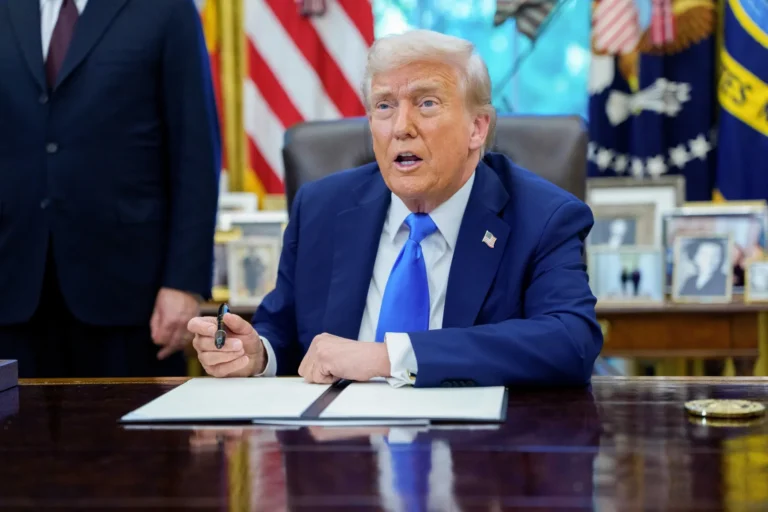
Running parallel to the DHS rulemaking process, US President Donald Trump signed an executive proclamation in September 2025 establishing a twelve-month, $100,000 surcharge specifically targeting foreign professionals applying for H-1B sponsorships from abroad. This measure was explicitly formulated to discourage the high-volume offshore hiring models frequently utilized by major IT and engineering services firms.
Despite facing immediate legal challenges in federal appeals courts from business coalitions and civil rights groups, the administration doubled down on its restrictive stance. On September 24, 2026, as the public comment window for the broader DHS proposal closed, President Trump formally extended the $100,000 H-1B fee for an additional year, locking the surcharge into place through September 2027. By employing a dual-track strategy—combining executive surcharges on offshore applicants with sweeping domestic rulemaking that affects in-country status adjustments—the administration has constructed a resilient legal fortress designed to restrict foreign technical labor regardless of judicial setbacks.
The H-1B Cliff: Quantifying the Immediate Aftermath
The H-1B visa has historically served as the cornerstone of America’s technology sector, providing the foundational engineering and scientific workforce for Silicon Valley and major corporate hubs across the country. Traditionally, nationals from India, China, and key emerging markets have dominated the beneficiary pools.

Following the implementation of the surcharge, the downstream effects were immediate and severe. Department of State datasets for the first five months of FY2026 (spanning October 2025 through February 2026) illustrate an absolute cliff in approvals. Total H-1B issuances dropped from 115,164 during the corresponding period in FY2025 to just 55,057 in FY2026, representing a sharp 52% contraction. When compared against pre-surcharge baseline figures from FY2023, the drop approaches 55%.
The geopolitical distribution of this decline highlights the specific targets of the policy. India, which accounts for the lion’s share of global H-1B issuances due to extensive offshore IT staffing operations, experienced a 61.5% drop, falling from 79,395 visas issued in the early months of FY2025 to 30,593 in FY2026. A granular look at the data following the immediate codification of the rule reveals an even starker reality: during January and February—the first full months of the extended fee regime—Indian H-1B issuances collapsed by 90%, plunging from 31,135 to just 3,047 year-on-year. China experienced a tamer yet significant 29% decline over the same comparative window.
The Fallacy of the Substitution Effect
A central hypothesis among corporate immigration lawyers was that the financial barrier of the H-1B fee would force employers and applicants to explore alternative non-immigrant visa classifications. To test this hypothesis, analysts tracked twelve distinct US non-immigrant visa pathways, encompassing employment, education, business, travel, and family-based migration.
The resulting data decisively debunked the substitution theory. Out of twelve monitored categories, eleven registered negative growth.
Specialized employment and talent routes failed to absorb displaced workers. Issuances for the O-1 visa—widely touted as the natural refuge for high-achieving scientists and technologists—declined by 10.5%, dropping from 8,911 to 7,971. Educational and exchange channels suffered similarly; F-1 student visas plummeted by 44.7% (dropping from 79,660 to 44,027), while J-1 exchange visitor visas fell by 10.8%. Intracompany transfer categories (L-1 and L-2 visas) contracted by 14.6%, and dependent visas tied to primary holders, such as H-4 derivatives, experienced a severe 54.8% drop.
The sole category to register positive movement across the entire monitoring period was the E-1/E-2 treaty trader and investor visa class, which posted a marginal increase of just 406 visas, moving from 22,225 to 22,631. This negligible uptick stands in stark contrast to the massive deficit created by the loss of over 60,000 H-1B visas alone. In total, across all monitored non-immigrant classifications, legal temporary entries contracted from 4.54 million to 3.50 million—representing one million fewer legal entries over a five-month span.
The Disproportionate Impact on African Mobility
While nations like India and China absorbed the largest numerical losses in absolute volume, the structural contraction dealt a devastating blow to emerging talent markets, most notably across the African continent. Historically accounting for a smaller percentage of specialized technical visas, African nations relied heavily on a diversified mix of visitor, student, and exchange pathways for professional development and international mobility.
Across all tracked visa classes, total US visas issued to African nationals were effectively halved, dropping from 168,078 between October 2024 and February 2025 down to 84,485 in the corresponding period of FY2026. Measured against FY2023 baselines, continental visa issuances are down by 58%.
Nigeria, which had consistently ranked as the continent’s largest source of US non-immigrant visas through FY2025, bore the brunt of the restrictive climate. Total US visas issued to Nigerian nationals collapsed by 86.7%, falling from 34,643 to just 4,595 over the five-month tracking window. This collapse was heavily concentrated in B-1/B-2 business and tourism visas, which plummeted by 90% from 31,089 to 3,251. Consequently, Nigeria plummeted from being Africa’s top source of US visas to sixth place, trailing behind Morocco, South Africa, Egypt, Ghana, and Kenya.
Other regional powerhouses were not spared. Ethiopia recorded a 72.6% decline in total visa issuances, while Egypt experienced a 52.7% drop. F-1 student visas originating from the continent fell by 62.5%, shrinking from 8,294 to 3,110. The lone exception within the region was Morocco, which saw its B-1/B-2 issuances surge by 60%—from 10,625 to 17,031—largely attributed by consular analysts to the administrative clearing of a massive backlog at the US consulate in Casablanca rather than a broader regional trend.
Economic Implications and Industry Reaction
The widespread contraction of US non-immigrant visas has elicited sharp reactions from industry groups, academic institutions, and international business councils. Proponents of the administration’s policies argue that the aggressive fee structure and tighter screening protocols successfully protect domestic employment markets, curb systemic visa fraud, and force corporations to invest in training the domestic American workforce. From this perspective, the contraction of low-cost offshore outsourcing models is a desired policy outcome.
Conversely, technology sector advocates and economic analysts warn of severe long-term consequences. By effectively pricing out foreign talent and shuttering alternative entry vectors, American companies face an acute talent deficit in specialized fields such as artificial intelligence, advanced engineering, and biotechnology. Furthermore, the steep decline in international student enrollments—evidenced by the 44.7% drop in F-1 visas—threatens the financial stability of higher education institutions that rely heavily on international tuition revenues to fund research and development.
For developing economies in regions like Africa, the tightening of US immigration policy represents more than a bureaucratic hurdle; it severs vital professional, educational, and economic bridges. As the United States solidifies its protectionist stance through extended surcharges and rigorous interagency coordination, the global talent landscape is undergoing a permanent structural realignment, forcing skilled professionals to look toward alternative hubs in Europe, Asia, and domestic technology ecosystems.