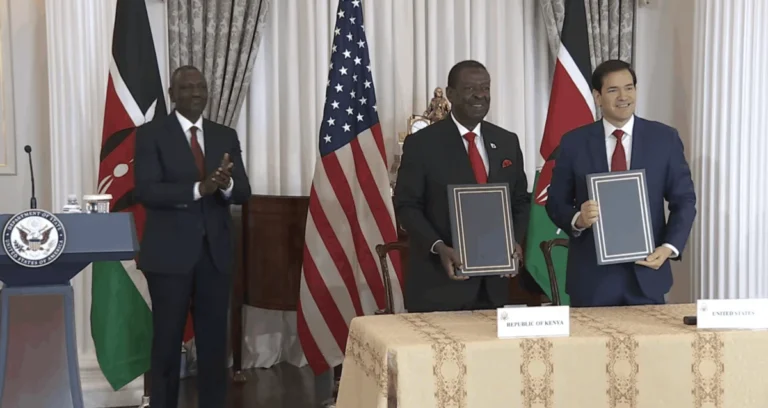
One year after its introduction, the United States’ America First Global Health Strategy has fundamentally transformed international medical assistance, leaving a trail of country controversies, secret terms, opaque procurement practices, and billions of dollars in unspent congressional funds in its wake. Introduced on September 18, 2025, by U.S. Secretary of State Marco Rubio, the initiative was pitched as an essential correction to what the administration termed "inefficient and wasteful" legacy global health programming. Replacing traditional multilateral channels and established grant frameworks like the President’s Emergency Plan for AIDS Relief (PEPFAR) and the U.S. Agency for International Development (USAID), the new strategy relies heavily on bilateral memorandums of understanding (MOUs).
However, public health experts, civil society organizations, and international policy analysts warn that the initiative’s first operational year has severely compromised healthcare delivery across the developing world. Emily Bass, an expert consultant for Physicians for Human Rights (PHR), summarized the sharp decline in service quality, noting that healthcare systems are demonstrably weaker than they were a year ago. According to field reports and public health metrics, HIV testing rates have dropped significantly, the specialized treatment and care of children living with HIV have plummeted, and community-based disease prevention networks have been largely dismantled.
The Chronology and Implementation of Bilateral Pacts
The rollout of the America First Global Health Strategy began in earnest following Secretary Rubio’s September 2025 announcement. The core mechanism of this policy shift involves five-year bilateral MOUs signed directly between the United States and recipient governments. To date, 35 nations have executed these agreements, though the journey has been fraught with intense geopolitical friction, domestic legal challenges, and outright rejections.

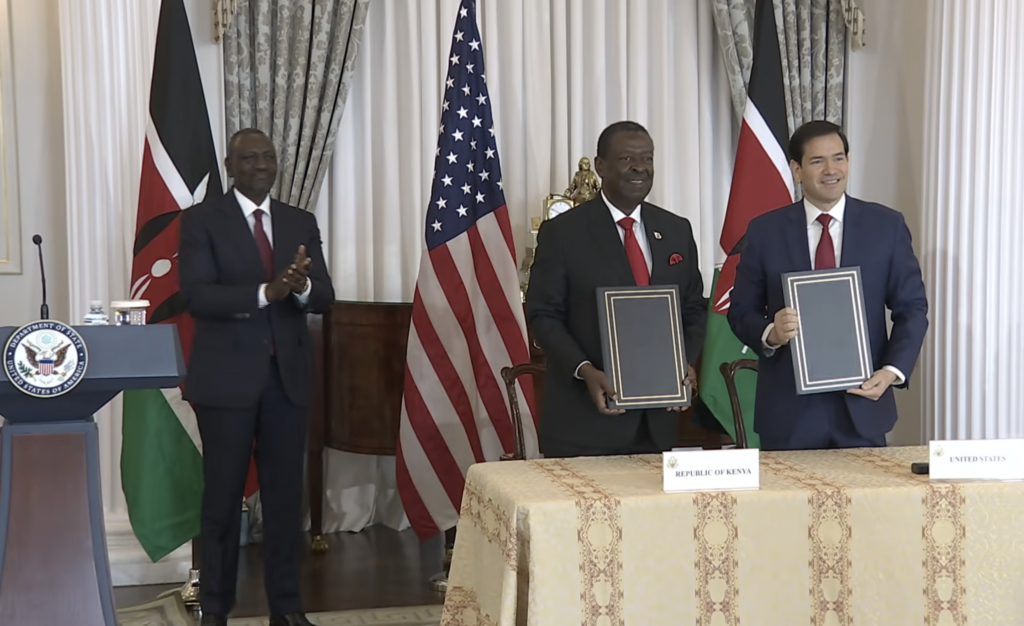
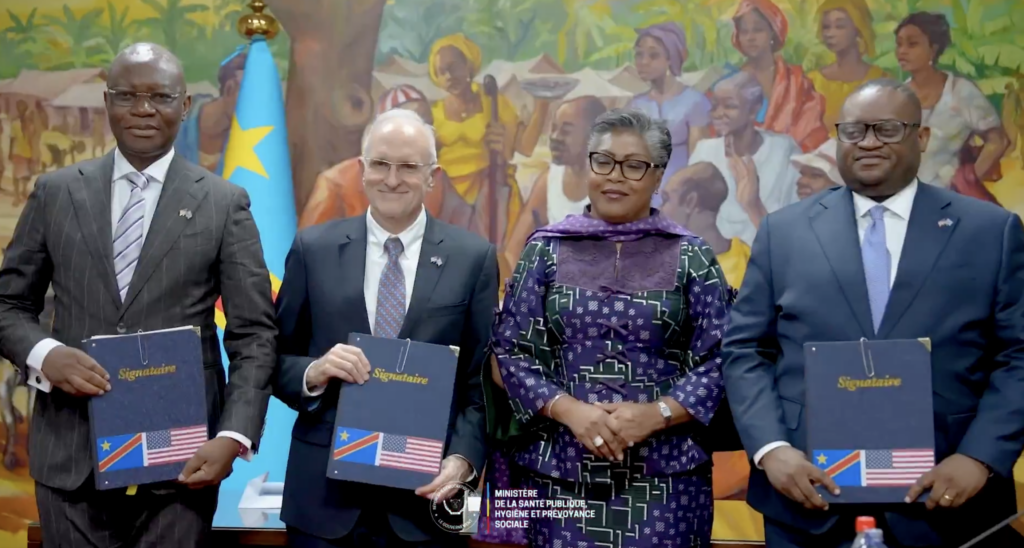
Among the early adopters, countries like Kenya and the Democratic Republic of Congo (DRC) have faced severe domestic resistance, including constitutional challenges brought by civil society organizations contesting the opaque terms of the pacts. Conversely, nations such as Ghana, Zimbabwe, and Namibia firmly rejected the terms offered by Washington. The primary sticking point for these holdouts was the U.S. demand for sensitive, real-time national health and pathogen data. Meanwhile, Zambia has struggled to navigate a post-PEPFAR landscape, attempting to secure vital U.S. medical aid without conceding sovereign health data rights. Notably, in several instances—such as in the DRC and Guinea—health MOUs were signed concurrently with strategic agreements granting U.S. firms access to critical national minerals.
Geopolitical tensions have also resulted in outright cutoffs. The Trump administration completely severed health aid to South Africa—the nation with the highest HIV prevalence in the world—primarily due to Pretoria’s progressive legislative measures addressing apartheid-era racial injustices and its active case against Israel at the International Court of Justice (ICJ).
Objectives: National Security Masquerading as Public Health
The stated intent of the five-year MOUs is to align international assistance directly with U.S. domestic interests, aiming to "make America safer, stronger, and more prosperous." Under the structural design of these agreements, traditional U.S. grant assistance is rapidly phased out and replaced by escalating domestic "co-financing" commitments that recipient governments must fulfill annually.
A critical component of these bilateral deals is the strict mandate for developing countries to invest heavily in advanced disease surveillance and laboratory infrastructure. The agreements require partner nations to supply pathogen information to U.S. authorities within seven days of identifying any novel outbreak. While framed as a measure to protect American shores from emerging biological threats, global health advocates note that this framework provides U.S. corporations with exclusive, preferential access to valuable pathogen data. This data advantage enables American pharmaceutical firms to rapidly develop and commercialize vaccines, therapeutics, and diagnostics. Critics point out that this framework directly undermines the multilateral pathogen access and benefit-sharing (PABS) system currently being negotiated under the auspices of the World Health Organization (WHO)—an organization from which the United States has formally withdrawn.
Onerous Co-Financing and Steep Funding Cliffs
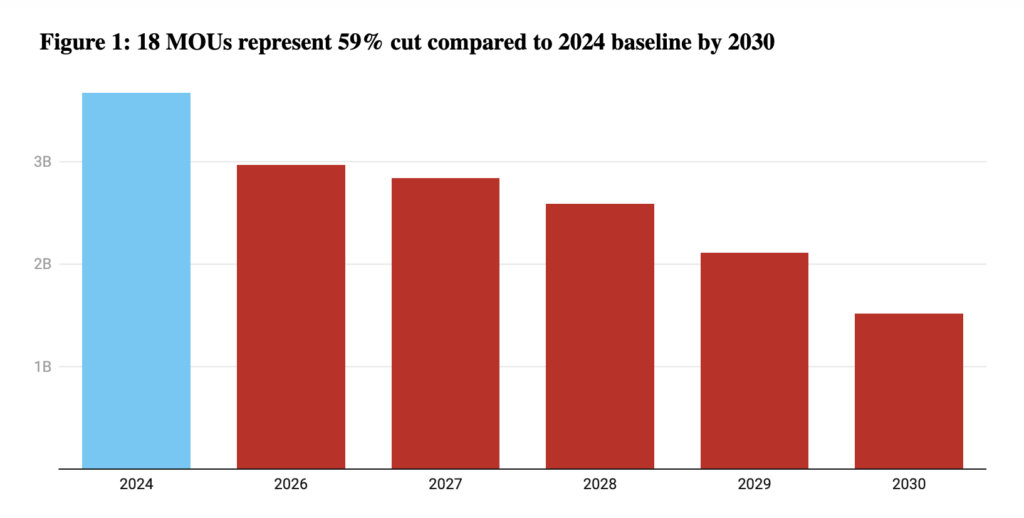
Independent analyses of 18 obtained MOUs, conducted by public advocacy groups including Public Citizen and Partners In Health (PIH), reveal a staggering contraction in American financial support. By 2030, U.S. funding across these nations is projected to be cut by more than $2 billion, representing a brutal 59% reduction compared to 2024 baseline spending levels. Because the administration initially classified these documents, researchers had to resort to Freedom of Information Act (FOIA) requests and federal lawsuits to force transparency.
The countries facing the most catastrophic proportional reductions in direct U.S. assistance include Rwanda, which faces a 97% reduction, Liberia (84%), Burundi (78%), Madagascar (77%), and Sierra Leone (71%).
Furthermore, financial modelers argue that a five-year window is entirely insufficient for vulnerable states to bridge the looming fiscal gap. To compound the crisis, the U.S. stipulations explicitly forbid recipient governments from leveraging funding from other international donors or multilateral organizations to fulfill their mandatory co-financing requirements. For instance, public health economists calculate that Malawi would be forced to mobilize new domestic revenue equivalent to an astonishing 56% of its entire national health budget merely to meet its annual U.S.-mandated co-financing obligations.
For at least seven of the poorest nations in Africa—Burundi, Cameroon, Eswatini, Kenya, Lesotho, Madagascar, and Malawi—these escalating financial pressures are projected to result in a net loss of healthcare workers by 2030. To enforce compliance, several MOUs incorporate punitive financial mechanisms. Uganda and Côte d’Ivoire, for example, face a $2 reduction in U.S. aid for every $1 they experience in domestic budgetary shortfalls, while nations like Kenya, Ethiopia, Mozambique, Cameroon, and Malawi face a dollar-for-dollar penalty structure.
The Paradox of Unspent Congressional Appropriations
Even as the executive branch aggressively slashes health packages for impoverished nations, billions of dollars explicitly appropriated by the U.S. Congress for global health initiatives remain deliberately withheld.
During a congressional and media briefing, Partners In Health CEO Sheila Davis highlighted a looming "funding cliff." She warned that $1.35 billion in previously approved funding for tuberculosis, malaria, HIV/AIDS, and maternal and child health faced immediate expiration at the close of the fiscal year unless the State Department and the Office of Management and Budget (OMB) authorized immediate disbursement. Concurrently, PEPFAR funding has suffered from an estimated $2.3 billion in deliberate underspending due to administrative payment delays engineered by the State Department, jeopardizing lifesaving antiretroviral treatment for upwards of 20 million patients worldwide.
Dr. Vincent Lin of Partners In Health sharply criticized the executive branch’s posture, pointing specifically to the OMB and USAID’s Legacy Unit. "The executive branch agencies… have been withholding and underspending global health funds at an unprecedented level," Lin stated. He warned that continued withholding of these funds would directly cause tens of thousands of preventable deaths from infectious and maternal diseases.
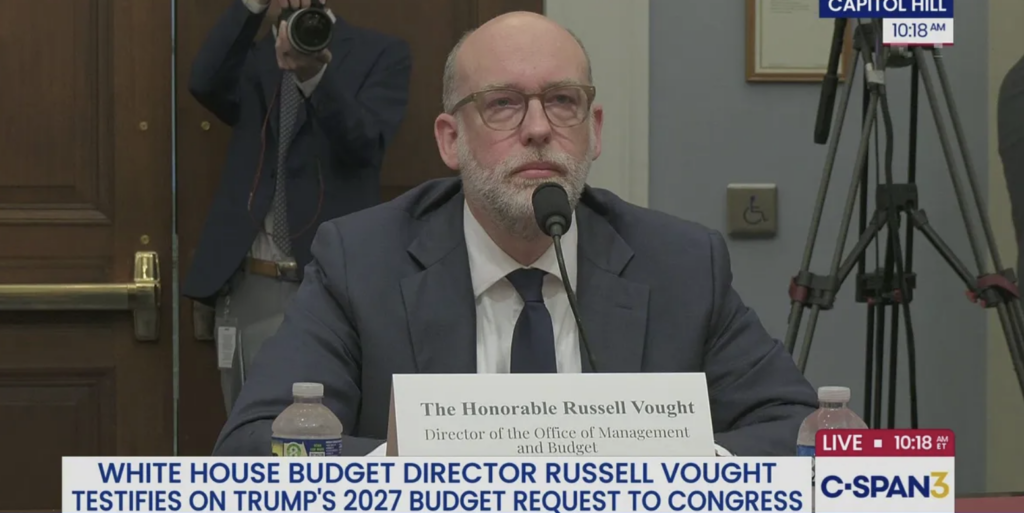
In response to this administrative bottleneck, a bipartisan coalition of 170 Members of Congress dispatched a stern letter to Secretary Rubio and OMB Director Russell Vought in late August. The legislators demanded the immediate release of over $3 billion in unobligated global health funding, warning that executive obstruction directly defied statutory law and endangered millions of lives.
Opaque Procurement and the Rise of Non-Competitive Awards
A foundational justification provided by the Trump administration for dismantling traditional aid programs was the claim that legacy systems were structurally inefficient. Secretary Rubio asserted a year ago that up to 60% of traditional health assistance was consumed by technical assistance, program management, and institutional overhead.
This assertion has been heavily challenged by independent research institutions, such as the Center for Global Development, whose review of 2024 PEPFAR spending demonstrated that 63% of funds directly supported frontline, lifesaving treatment programs. Categories criticized by the State Department as administrative overhead—such as community outreach, health worker training, and data tracking for treatment adherence—actually accounted for only 18% of funding.
In place of transparent, competitive federal procurement processes, the administration’s implementation of the new bilateral strategy has relied heavily on non-competitive, sole-source mechanisms. Monitoring by PIH indicates that between $3 billion and $5 billion is currently being channeled to handpicked implementers through opaque structures. This includes an $800 million innovation fund designed to distribute grants to favored U.S. entities without competitive bidding, and the State Department’s Annual Program Statement (APS), a semi-competitive mechanism moving billions of dollars without clear alignment to established federal procurement laws.
Notable awards under the Innovation Fund include $150 million allocated to the American logistics firm Zipline, alongside undisclosed financial packages to Gilead Sciences for the long-acting HIV prevention drug lenacapavir, and to SC Johnson for mosquito repellent distribution. Congressional watchdogs note that despite scaling up to hundreds of millions of dollars, information regarding the oversight and selection criteria of these funds remains virtually non-existent.

Distortion of Domestic Health Priorities and Civil Society Erasure
The structural demands of the bilateral MOUs are also altering the domestic budgetary priorities of developing nations. While African nations committed decades ago under the Abuja Declaration to allocate at least 15% of their domestic budgets to health—a threshold met by only a handful of countries—the enforcement mechanisms of the U.S. strategy risk distorting these allocations further.
For example, under its bilateral MOU, the government of Cameroon—led by long-serving President Paul Biya—committed to increasing domestic health spending by $450 million over five years to unlock $400 million in matching U.S. aid. While Cameroon nominally increased its proposed 2026 health budget by 30%, administrative failures quickly undermined delivery. By mid-year, the government had released only 19% of its designated immunization funding, leaving an estimated 430,000 children without vital routine vaccinations due to unfulfilled financial commitments. Policy analysts warn that forcing authoritarian or fragile governments to reallocate funds to satisfy narrow U.S. foreign policy metrics often comes at the direct expense of broader domestic healthcare needs, such as hiring clinical staff or maintaining rural clinics.
Furthermore, the operational architecture of the new MOUs represents a total departure from historic norms. Previous PEPFAR and USAID grants required rigorous Country Operational Plans developed in formal partnership with local civil society organizations (CSOs). The current bilateral framework, by contrast, is strictly government-to-government. It entirely excludes civil society from governance structures, effectively sidelining grassroots organizations that possess the greatest operational reach among vulnerable and marginalized groups, such as sex workers and men who have sex with men.
Broader Implications and Future Outlook
The first-year trajectory of the America First Global Health Strategy highlights a profound ideological and operational shift in American foreign assistance. By pivoting away from multilateralism, public health transparency, and broad-based community engagement toward transactional, bilateral, and security-driven pacts, the United States has fundamentally altered the global health landscape.
While the aid shock has served as a catalyst for renewed discussions regarding regional self-reliance and sovereignty across the Global South—exemplified by initiatives like the Accra Reset—analysts emphasize that true financial and structural independence remains a distant horizon for many low-income nations. Moreover, public health experts continue to raise alarms regarding systemic resilience. As demonstrated by past global crises like the Ebola and COVID-19 epidemics, rigid bilateral agreements are fundamentally unsuited for rapid, coordinated containment during fast-moving pathogen outbreaks. Coordinating responses across dozens of fragmented, secret bilateral deals in the face of a global pandemic remains an untested and potentially catastrophic risk.