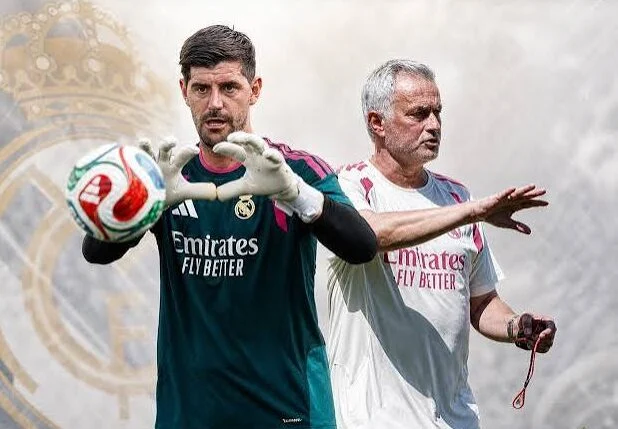
The Santiago Bernabéu has long been a theater of high-stakes drama, but the return of José Mourinho on June 11th marked a paradigm shift in the club’s strategic trajectory. Tasked with dismantling the domestic hegemony established by rivals FC Barcelona and steering a squad that had endured two consecutive seasons without silverware, the 63-year-old Portuguese tactician has begun his second tenure with a blend of familiar authority and newfound composure. Among those welcoming the change is Real Madrid’s stalwart goalkeeper, Thibaut Courtois, who offers a unique perspective on the evolution of one of football’s most polarizing figures.
A Reunion Rooted in History
The connection between Courtois and Mourinho is deep-seated, forged in the intense pressure cooker of the Premier League during the 2014-15 season at Chelsea. Under Mourinho’s guidance, a young Courtois blossomed into one of the world’s elite shot-stoppers, playing a pivotal role in a campaign that saw the Blues lift the league title.
When news broke that Mourinho would return to the Spanish capital—a city where he previously spent three years between 2010 and 2013—the footballing world was divided. Critics pointed to his turbulent history in various leagues, while supporters of Los Blancos championed his proven track record of winning trophies. For Courtois, the reunion was not merely a professional overlap but a chance to work under a leader who demands excellence.
"It was really exciting to have him back," Courtois noted in a recent assessment of the team’s current atmosphere. "He fills the room. When you come in and he’s there, you feel he’s there. I think that is something that we needed."
The Evolution of the Special One
Perhaps the most intriguing aspect of Mourinho’s return is the perceived softening of his abrasive edges. While his tactical acumen remains sharp, observers and players alike have noted a change in his man-management style. Mourinho, often characterized in the past by inflammatory press conferences and volatile dressing-room confrontations, appears to have embraced a more tempered approach.
Courtois, who has had the benefit of witnessing Mourinho’s evolution over a decade, provided a nuanced comparison. "I think he himself says he has maybe grown to be more mature even," the Belgian explained. "With the experience, I think sometimes he is a bit calmer. At Chelsea, I remember he was a bit stronger in the dressing room, a bit more heavy and intense. Now he still is, but I feel he is a tiny bit less so from what I remember 12 years ago. But he’s still the same personality, the same presence."
This maturation is crucial for a Real Madrid squad undergoing a transition. The current iteration of the team requires a leader who can balance the weight of the club’s history with the pragmatic demands of modern football. Mourinho’s ability to maintain his "commanding aura" while adjusting his intensity suggests a manager who has learned that longevity in the sport requires flexibility.
A Chronology of the Mourinho-Madrid Connection
To understand the significance of this tenure, one must look at the timeline of Mourinho’s relationship with the club:
- 2010–2013: The initial spell. Mourinho arrives from Inter Milan after a historic treble. He secures the 2011 Copa del Rey, the 2011-12 La Liga title, and the 2012 Spanish Super Cup. He oversees 178 matches, leaving a legacy of defensive solidity and counter-attacking brilliance.
- 2013–2025: A 13-year hiatus during which Mourinho manages Chelsea, Manchester United, Tottenham Hotspur, and AS Roma, while Real Madrid cycles through various managers, experiencing both immense success and periodic stagnation.
- June 2025: Mourinho is appointed to a three-year contract, tasked with ending the "trophyless" drought.
- August–September 2025: A challenging start, including two early-season losses that prompt intense media scrutiny.
- Late 2025–Present: A period of stabilization as the team finds its tactical identity and begins climbing the table.
Navigating the Early-Season Turbulence
Every managerial tenure at the Bernabéu begins under a microscope. The two early-season defeats served as a reality check for the squad, highlighting the gaps that existed between the team’s ambition and their on-field execution. However, the response from the players, bolstered by Mourinho’s tactical adjustments, has been promising.
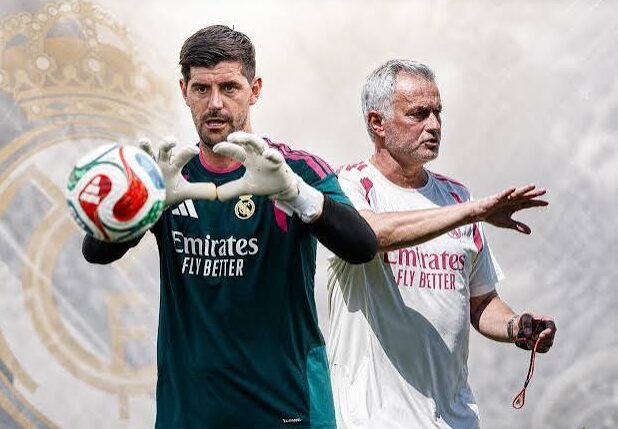
"At the beginning, we had two losses, but now everything is going well and we hope to keep that run going," Courtois remarked. This sentiment reflects a growing confidence within the dressing room. Mourinho’s ability to insulate his players from the external pressure of the Spanish media has been a hallmark of his career, and it appears he is employing that same protective strategy in Madrid.
Tactical Implications and Squad Dynamics
Mourinho’s return brings with it a return to a more disciplined defensive structure—a necessity for a team that had become defensively porous in previous campaigns. By prioritizing structural integrity, Mourinho allows his creative talents more freedom to operate within the final third.
The analytical consensus suggests that Mourinho is building this team from the back forward. By instilling a "clean sheet" mentality, he provides a platform for the forwards to find rhythm. For a goalkeeper like Courtois, this shift is beneficial; it reduces the frequency of desperate, reactive saves and emphasizes positional discipline. The "heavy and intense" dressing room atmosphere Courtois described from his Chelsea days is now being channeled into collective defensive discipline rather than individual blame.
The Broader Impact on La Liga
The arrival of Mourinho changes the landscape of La Liga. His rivalry with Barcelona is legendary, and his presence acts as a gravitational force in the league. By instilling a "siege mentality"—a classic Mourinho tactic—he has effectively galvanized the fan base and created a unified front against domestic rivals.
If this trend continues, the implications for the league are significant. A revitalized Real Madrid, led by a manager who knows how to exploit the weaknesses of a league-leading rival, creates a more competitive environment. For the fans, it represents the return of the "Mourinho factor"—the unpredictability and the intensity that made El Clásico the most watched fixture in world football for over a decade.
Looking Ahead: The Three-Year Project
Mourinho’s three-year contract is a statement of intent from the club’s hierarchy. It is an acknowledgement that the team requires a long-term vision rather than a quick fix. Success in this project will not be measured solely by the silverware in the trophy cabinet at the end of the current season, but by the structural foundation laid for the future.
The manager’s maturity, as noted by Courtois, will be his greatest asset in this endeavor. Managing the massive egos at Real Madrid requires a sophisticated touch. If Mourinho can continue to blend his legendary tactical discipline with this new, calmer persona, he may well succeed in his primary objective: restoring Real Madrid to the summit of both Spanish and European football.
Conclusion
As the season progresses, all eyes will remain on the Bernabéu. The partnership between a seasoned, evolving manager and a world-class goalkeeper who understands his methods provides a compelling narrative for the coming months. While the ghosts of previous seasons still linger, the atmosphere surrounding the club has shifted from uncertainty to cautious optimism.
The "Special One" may be a bit quieter in the dressing room these days, but as Thibaut Courtois suggests, his presence is as undeniable as ever. Whether this leads to another golden era of trophies will depend on the team’s consistency, but for now, the return of José Mourinho has provided Real Madrid with the gravity it needed to stabilize its orbit and once again aim for the stars. The journey has only just begun, but the signs of a renewed, more mature, and equally lethal Real Madrid are becoming increasingly difficult to ignore.