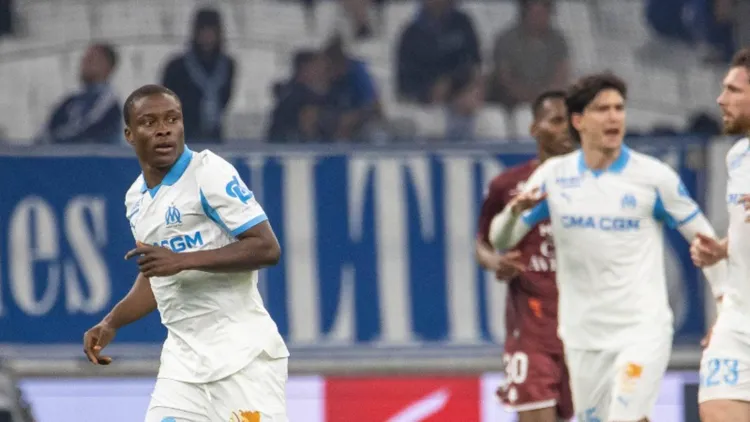
The announcement of the 24-man Super Eagles squad for the upcoming Africa Cup of Nations (AFCON) qualifying double-header against Tanzania has signaled a notable return for one of Nigeria’s most promising midfield talents. Tochukwu Nnadi, the 22-year-old Olympique Marseille anchor, has been officially recalled by head coach Eric Chelle following a compelling string of performances in the French Ligue 1. Nnadi’s reintegration into the national setup comes after a period of enforced absence due to a knee injury that sidelined him during the September international window, a period during which the Super Eagles experienced mixed results, including a 2-1 victory over Madagascar and a disappointing 3-0 defeat at the hands of Guinea-Bissau.
The upcoming matches, scheduled for November 13 at the Godswill Akpabio Stadium in Uyo and November 17 in Tanzania, are critical for Nigeria’s trajectory in Group L. With the tactical landscape of the team currently under intense scrutiny, Nnadi’s return is viewed as a strategic maneuver to stabilize the central midfield department.
A Chronology of Nnadi’s Resurgence
Nnadi’s path to the national team has been defined by resilience and rapid adaptation. Following his €6 million transfer from Zulte Waregem to the historic French giants, Olympique Marseille, the young midfielder initially found himself navigating the challenges of adjusting to one of Europe’s most competitive leagues. The start of the 2026 season was characterized by limited playing time as he integrated into the club’s tactical framework.
However, the trajectory of his season shifted significantly in October. After successfully completing his rehabilitation from a knee injury, Nnadi returned to the first-team fold with renewed vigor. Since his return to full fitness, he has been involved in seven matches across Ligue 1 and European competitions. Crucially, five of these appearances have been starts, totaling 466 minutes of high-intensity competitive football. This sequence of appearances has served as the primary catalyst for his recall to the national squad, providing the technical staff with sufficient evidence that he is physically and tactically prepared for the rigors of international football.
Statistical Breakdown: The Case for Nnadi
The analytical data surrounding Nnadi’s recent performances paints the picture of a disciplined, high-efficiency midfielder. In the modern game, where ball retention and transition play are paramount, Nnadi has emerged as a reliable pivot. Since his return to the pitch in October, he has maintained a passing accuracy of 92.2%, completing 264 out of 286 attempted passes.
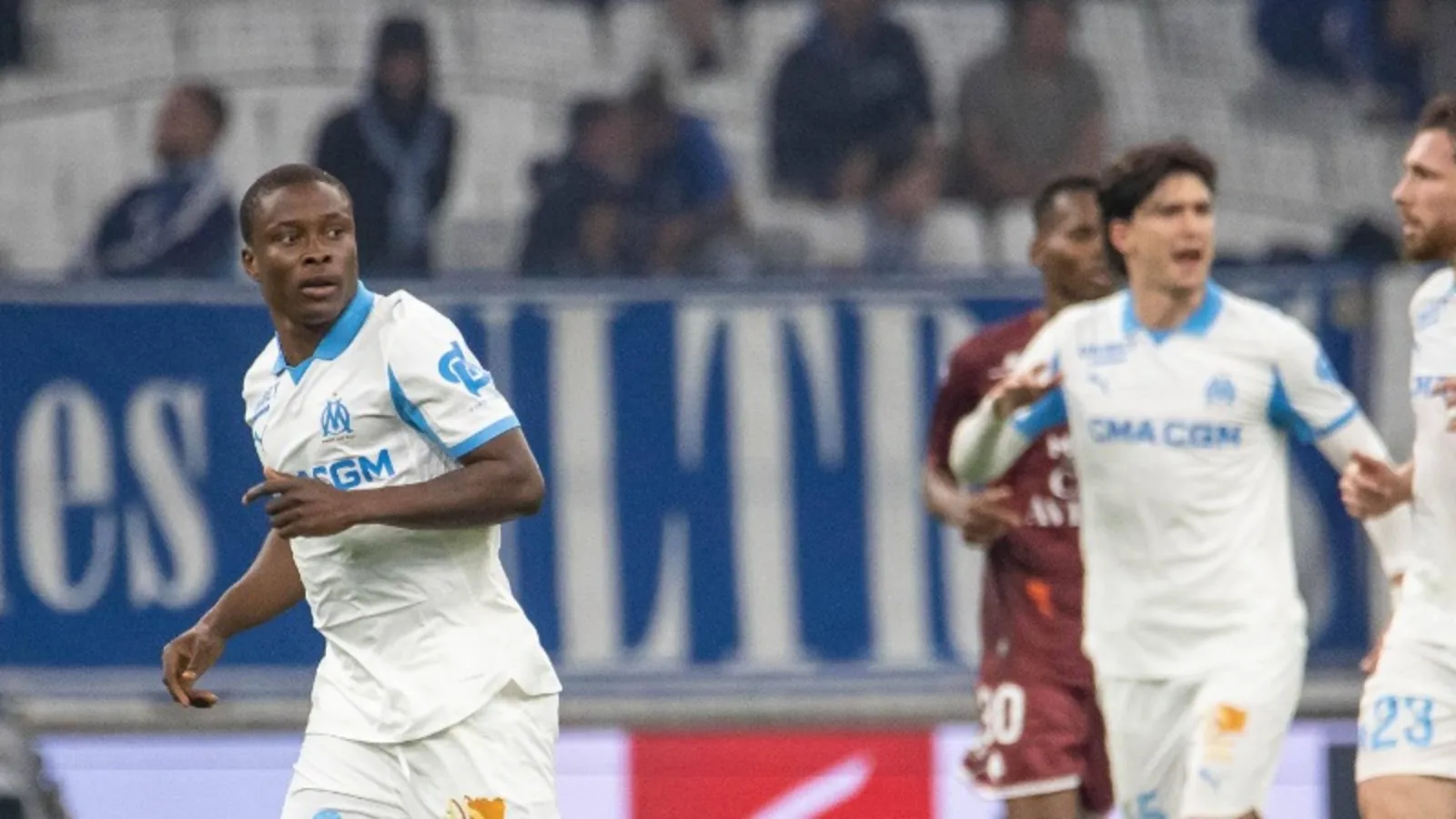
His performance against Lens last Sunday served as a masterclass in controlled possession, where he successfully completed 53 out of 54 passes while demonstrating a willingness to engage in the physical battle by winning six fouls. Such statistics highlight a player who is not only technically proficient but also tactically astute, capable of absorbing pressure and recycling possession in tight spaces.
Furthermore, his offensive contribution, though secondary to his defensive duties, was evidenced by his assist for Amine Harit during Marseille’s 5-2 victory over Angers on October 18. His ability to play full matches—such as the 90 minutes completed in a 4-3 thriller against Le Havre and 87 minutes in a 2-0 clean-sheet victory at Toulouse—demonstrates a high level of match fitness that the coaching staff will likely prioritize in the high-stakes environment of Uyo.
Tactical Implications for the Super Eagles
Coach Eric Chelle’s selection for the midfield, which includes Samson Tijani, Fisayo Dele-Bashiru, and Mubarak Suleiman alongside Nnadi, indicates a shift toward a more balanced, possession-oriented approach. The exclusion of certain senior figures has left a void in the middle of the park, and Nnadi’s inclusion is designed to fill the role of a progressive ball-winner.
In the context of the match against Tanzania, the midfield battle will be the decisive factor. Tanzania’s early arrival in Uyo suggests that they are preparing for a defensive, counter-attacking setup, looking to disrupt Nigeria’s rhythm and capitalize on transitions. Nnadi’s proficiency in keeping the play simple and minimizing turnovers will be essential in preventing these counter-attacks. If Chelle elects to field a dual-pivot system, Nnadi’s recent chemistry at the club level provides a template for the type of disciplined play required to anchor the midfield while allowing creative players like Dele-Bashiru to push forward into the final third.
The Significance of the Uyo Double-Header
The significance of the November 13 fixture cannot be overstated. Playing at the Godswill Akpabio Stadium, often referred to as the "Nest of Champions," places a burden of expectation on the home side. Group L remains tightly contested, and the points dropped against Guinea-Bissau in September have narrowed the margin for error for the Super Eagles.
For Nnadi, this international window represents a definitive "prove-it" moment. While his club form has been exemplary, international football requires a different level of psychological fortitude and adaptability. Having been omitted from the September squad, Nnadi is returning to a group that is looking to restore its reputation. The support from the home crowd in Uyo will provide a massive impetus, but the pressure to deliver results will be palpable. The coaching staff will be observing not just his technical output, but his leadership qualities and his ability to communicate with the defensive line.
Perspectives from the Technical Staff
While official statements from the Nigerian Football Federation (NFF) regarding specific player selections are often reserved, insiders close to the team suggest that the decision to bring Nnadi back was unanimous. The coaching staff reportedly values his "low-maintenance" style of play—a trait where he consistently prioritizes the collective structure over individual flair.
In discussions surrounding the squad’s deficiencies in previous matches, the lack of a "metronome"—a player capable of setting the tempo and maintaining composure under intense pressure—was identified as a primary concern. Nnadi’s ability to win the ball and immediately look for the forward pass, combined with his high success rate in short-passing sequences, directly addresses this identified weakness. His presence is expected to allow the more offensive-minded midfielders in the squad to operate with greater freedom, knowing that the defensive transition is being managed by a player accustomed to the high-tempo demands of French football.
Looking Ahead: AFCON Aspirations
Beyond the immediate challenge of Tanzania, the recall of Nnadi speaks to a broader strategy of building a squad capable of competing at the highest levels of the upcoming AFCON. The integration of younger players who are performing consistently in top-five European leagues is a clear sign that the technical crew is moving away from reliance on legacy names, favoring instead those with current, verified form.
If Nnadi performs well in the upcoming matches, he is likely to cement his place in the starting XI for the foreseeable future. The stability he brings to the central defensive midfield role could prove to be the final piece of the puzzle for a Super Eagles side that has often struggled with consistency in the middle of the pitch. As the team congregates in Uyo, the focus remains firmly on the tactical preparation. With Nnadi back in the fold, the team appears better equipped to manage the physical and mental demands of the qualifying process, potentially providing the impetus required to secure a dominant finish in Group L.
The next few days of training will be crucial as the squad integrates the returnees and finalizes the game plan for the Tanzanian threat. For Tochukwu Nnadi, the opportunity to wear the green and white jersey once again is not just a reward for his hard work in Marseille; it is a platform to demonstrate that he has evolved into a vital component of the Nigerian national team’s future. The fans in Uyo and those watching across the continent will be eager to see if he can translate his Ligue 1 efficiency into international dominance.