The makeshift shelter at the Anyiin Internally Displaced Persons (IDP) camp in Logo Local Government Area of Benue State offered little protection against the sweltering heat of April 2026, and even less against the quiet tragedy unfolding within its walls. Anaor Saawuan laid her eight-month-old granddaughter on a thin mattress, desperate for a solution to an illness she initially mistook for the routine discomfort of teething. For two consecutive days, the infant had suffered from relentless vomiting, watery diarrhea, and a spiking fever.
Seeking immediate relief, Mrs. Saawuan purchased over-the-counter cough syrup and tablets from a patent medicine vendor across the road. When those measures failed and the symptoms intensified, she carried the child to an external hospital, where medical personnel delivered a devastating verdict: the infant required an urgent blood transfusion.
"I had no money," Mrs. Saawuan recounted, her voice heavy with grief. "And there was nobody to help me."
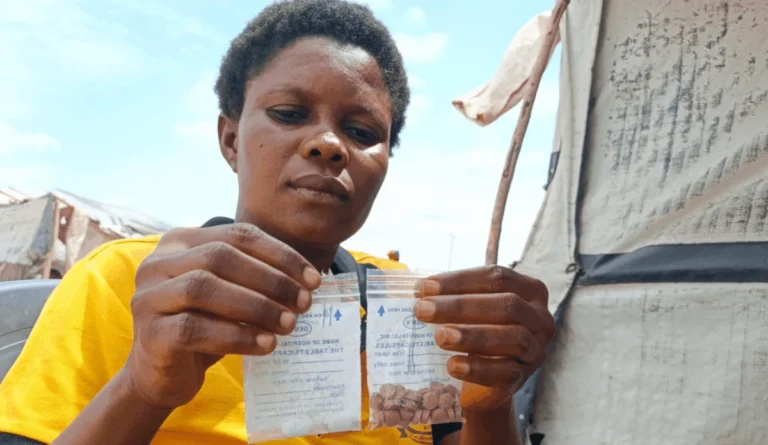
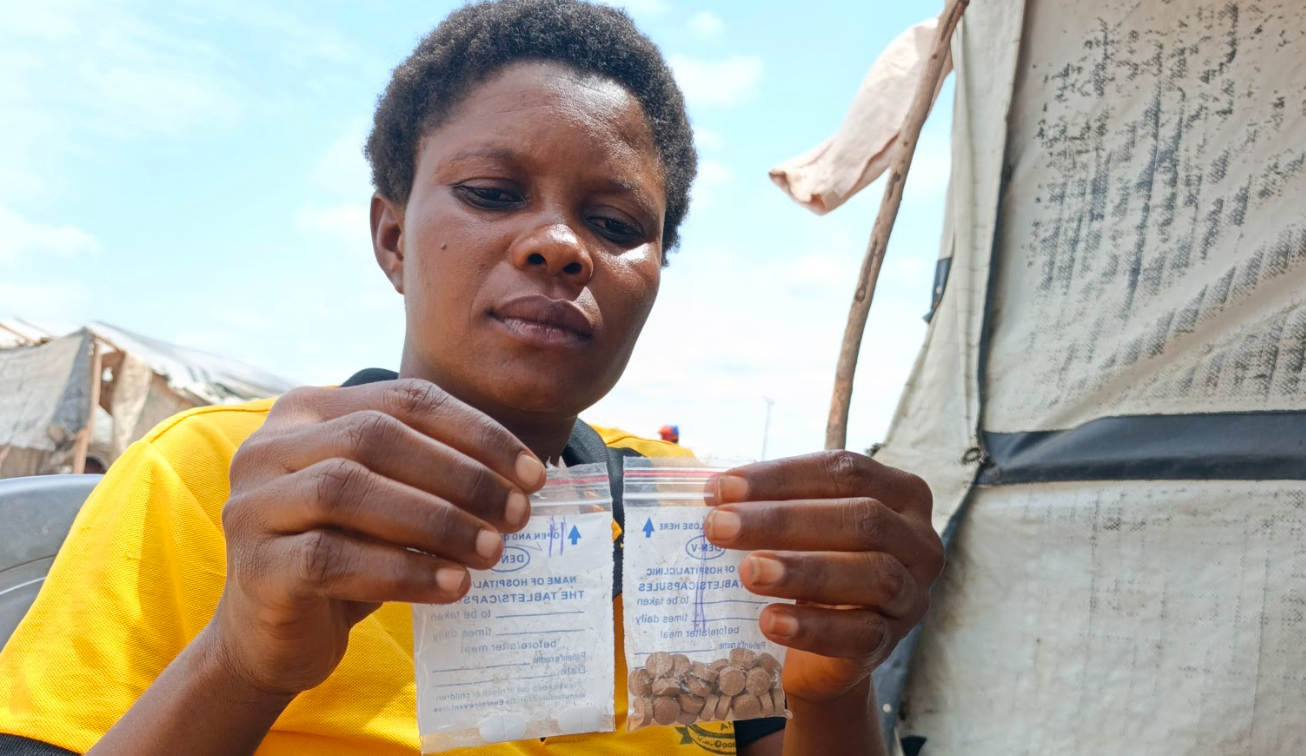
Lacking the financial resources for formal medical intervention, she turned to traditional herbal remedies in a desperate bid to save her grandchild. It was a race against time she would ultimately lose. At approximately 9:00 p.m. on May 2, the infant succumbed to her illness. Today, Mrs. Saawuan is left with the agonizing conviction that her granddaughter might have survived had the camp’s primary health clinic remained operational. Pointing toward a padlocked building within the camp premises, she noted that the facility once provided accessible, free medicines and treatment before services ground to a complete halt.
This heartbreaking loss is not an isolated incident; rather, it serves as a glaring symptom of a pervasive healthcare emergency across displacement settlements in Benue State. Throughout these camps, residents contend with shuttered or severely under-resourced clinics, critical shortages of essential pharmaceuticals, fragile emergency referral frameworks, and widespread destitution that places basic medical care entirely out of reach.
A Legacy of Conflict and Mass Displacement
The roots of this humanitarian crisis trace back to years of protracted farmer-herder clashes, communal violence, and localized insecurity that have uprooted hundreds of thousands of residents across Benue State. According to the International Organisation for Migration’s (IOM) Displacement Tracking Matrix (DTM) Round 18 assessment, Benue hosts 464,543 internally displaced persons, representing the highest concentration of displacement across the North-Central and North-West regions evaluated in the report.
While roughly 81 percent—approximately 376,000 individuals—live among sympathetic host communities, nearly 88,000 people remain confined to official camps and camp-like environments. Women and children constitute the vast majority of this vulnerable demographic, exponentially driving up the demand for functional maternal, reproductive, and pediatric healthcare services.
For these families, forced displacement has triggered a total economic collapse, stripping them of ancestral farmlands, small businesses, and reliable streams of income. A joint assessment conducted in August 2025 by the Benue State Emergency Management Agency (SEMA) and the Internal Displacement Solutions Fund revealed an overwhelming desire among the displaced population to rebuild their lives, noting that 96 percent of surveyed households desperately wish to return to their places of origin. Until security allows for safe returns, however, populations trapped in camps remain heavily reliant on humanitarian assistance.
The Domino Effect of NGO Withdrawals
The immediate catalyst for the healthcare breakdown at Anyiin and other camps across the state was the systematic scaling down and ultimate withdrawal of international humanitarian organizations. Helen Tsavwua, a former medical support worker at the Anyiin camp facility, explained that the clinic was originally established by Médecins Sans Frontières (MSF) at the height of the displacement crisis in 2018 to deliver emergency medical aid to vulnerable communities.

When MSF eventually concluded its direct interventions, the Victim Support Fund (VSF) assumed management of the facility until January 2021. Following VSF’s departure, the hospital was effectively shuttered. Although limited pharmaceutical supplies continued to trickle into the camp for a brief period, the complete absence of resident medical professionals rendered the clinic non-functional.
"They were giving medicines, but there was no doctor to attend to patients," Ms. Tsavwua explained. "When children or women were sick, they would go there, but there was nobody to give them medicine." She added that the minimal drugs distributed during this interim phase were frequently restricted to paracetamol or malaria tablets, often dispensed without any form of clinical diagnosis.
An anonymous community health worker corroborated these operational hurdles, pointing to chronic funding deficits as the primary driver of institutional collapse. While MSF had previously injected substantial resources into the facility—including the employment and retention of trained medical personnel—sustaining the complex logistics of the clinic proved impossible once external donor priorities shifted. Consequently, government oversight through SEMA remained largely supervisory, failing to bridge the widening operational vacuum.
A visit to the abandoned clinic within the NKST Primary School in Anyiin reveals a stark monument to institutional neglect. The facility is heavily coated in dust, its rooms permanently locked, with chipped beige-and-black paint peeling from the walls. Faded chalk inscriptions linger on dark metal doors, while the cracked concrete walkway is bordered by barren red soil where children play, entirely detached from the medical infrastructure that once served their parents.
In an official statement addressing its exit from the state, MSF outlined the operational realities that forced its departure. After six years of delivering emergency healthcare to displaced populations and host communities across Benue, MSF phased out basic healthcare and decentralized activities by June 2024, followed by family planning and sexual and reproductive health services in July, and comprehensive sexual and gender-based violence (SGBV) care in August 2024.

Between May 2018 and March 2024, MSF medical teams recorded 412,832 consultations and treated 223,871 patients across camps such as Mbawa, Ortese, Naka, and Agagbe. The organization also admitted 1,731 survivors of sexual and gender-based violence in 2023 alone. While MSF emphasized that its core mandate centers on rapid-response emergency medical humanitarianism—necessitating the reallocation of resources to acute conflict zones elsewhere in the country—the organization acknowledged ongoing concerns regarding the safety and well-being of displaced women and girls in Benue.
Compounding Vulnerabilities: Maternal Health and Malnutrition
The closure of camp clinics has forced displaced residents to seek care at external primary healthcare facilities, introducing severe financial barriers. Naomi Teryen, a 32-year-old pregnant resident living a few shelters away from Mrs. Saawuan, embodies the acute dangers facing expectant mothers in the camps.
With a medical history marked by complicated, prolonged labors and prior Caesarean sections, Mrs. Teryen requires careful antenatal monitoring. Five months into her current pregnancy, however, she has been unable to afford regular check-ups or essential ultrasound scans at the European Economic Community Health Clinic (CHC) in Anyiin. Her husband, a wooden craftsman inside the camp, frequently struggles to secure paying customers.
"Every time she gives birth, it is difficult. Sometimes we spend more than a week in the hospital," her husband noted.
Mrs. Teryen alleged that despite utilizing external health centers, she is consistently forced to pay out-of-pocket for medications that are officially designated as free. During a recent antenatal visit, she received paracetamol alongside Multiple Micronutrient Supplements (MMS)—vital formulations containing essential vitamins and minerals designed to prevent micronutrient deficiencies and improve birth outcomes. These supplements are procured and distributed through Nigeria’s public health architecture with the direct backing of federal authorities and international development partners, notably UNICEF, under strict mandates that they be dispensed free of charge to beneficiaries.

Nevertheless, Mrs. Teryen stated that a standard antenatal visit to the CHC in Anyiin routinely costs her approximately ₦3,000, a prohibitive sum for a household with zero steady income. She recalled an instance when she arrived at the facility with only ₦1,000 and was promptly turned away.
Dr. Terrence Akighir, a medical doctor and UNICEF consultant, firmly condemned the monetization of these humanitarian commodities. "MMS is supposed to be free," Dr. Akighir stated. "If somebody is taking advantage of that to sell the medicine, it should be looked into and stopped. These women do not have money. If they are paying for medicines that should be free, how will they meet their other healthcare needs?"
This observation aligns closely with UNICEF’s Humanitarian Situation Report No. 3, published in March 2025, which highlighted that 8.8 million people—including 4.9 million children—required urgent humanitarian assistance across targeted intervention zones, with 2.9 million individuals classified as internally displaced. Through its First 1,000 Days Initiative, UNICEF distributed free MMS to 489 pregnant women in Benue IDP camps between June and December 2025 alone. Yet, institutional leakages and localized extortion continue to subvert these life-saving distributions.
When approached for comment regarding the allegations of charging patients for UNICEF-donated supplements, an official on duty at the European Economic Community Health Clinic in Anyiin declined to comment, stating she lacked authorization to speak on the matter before walking away.
A Broader Public Health Catastrophe
The localized crises observed in Anyiin reflect a wider, systemic health emergency across Benue State. According to research published in the National Library of Medicine’s PubMed Central (PMC), analyzing maternal health cohorts across primary health centers in Benue State, the maternal mortality ratio stands at an alarming 1,189 deaths per 100,000 live births. This figure is more than double Nigeria’s already high national average and dwarfs the United Nations Sustainable Development Goal (SDG) target of fewer than 70 maternal deaths per 100,000 live births by 2030.

Furthermore, data from the 2021 Nigeria Multiple Indicator Cluster Survey (MICS) indicates that only 59.1 percent of births in Benue State are attended by skilled health personnel. Traditional birth attendants assist with 17.7 percent of deliveries, while relatives or friends manage another 17.2 percent. Compounding these vulnerabilities, health insurance coverage among women sits at a negligible 2.5 percent, leaving impoverished households entirely exposed to catastrophic out-of-pocket health expenditures. Infant mortality remains similarly devastating, with the MICS report revealing that one in every 56 children born in Benue dies within their first 28 days of life.
Dr. Akighir emphasized that the primary drivers of childhood mortality within the camps—malnutrition, malaria, and acute diarrheal diseases—are largely preventable or easily treatable when medical intervention is administered promptly.
"Malnutrition is one of the biggest problems we see," Dr. Akighir explained. "When children are malnourished, their immunity drops, and they become vulnerable to infections." He added that inadequate access to safe water and sanitation facilities accelerates the spread of waterborne diseases, while children walking barefoot face constant exposure to hookworm infestations and severe dermatological infections.
For pregnant women, the combination of grinding poverty, lack of transportation, and closed camp clinics frequently leads to delayed medical care. "Health-seeking behaviour is generally poor," Dr. Akighir noted. "Sometimes labour begins, and the woman delivers inside the camp because there is nobody to accompany her to a health facility. Others present very late, when complications have already developed."
Systemic bottlenecks further complicate emergency referrals, particularly for displaced persons who arrived after official camp registration periods concluded and lack the documentation required to access institutional support networks.

Institutional Silence and the Path Forward
Despite the documented suffering, efforts by journalists to secure official commentary from key state oversight bodies have met with institutional stonewalling.
James Iorpuu, the Executive Secretary of the Benue State Emergency Management Agency (SEMA), initially scheduled an in-person interview at the agency’s headquarters in Makurdi following a telephone discussion. However, after the reporter waited for over three hours past the appointed time, Mr. Iorpuu emerged from his office, bypassed the journalist entirely, entered his official vehicle, and departed without explanation or an offer to reschedule. Subsequent written inquiries sent to SEMA detailing the closure of camp clinics, drug shortages, out-of-pocket costs, and emergency referral frameworks remained unanswered by the time of publication.
Similarly, the Benue State Commissioner for Health, Paul Ogwuche, declined to provide immediate remarks. Following instructions from the commissioner’s secretariat during an office visit, a formal written request for an interview was submitted to the ministry. The commissioner failed to respond to the inquiries prior to publication.
Despite these administrative barriers, humanitarian agencies continue to bridge critical gaps where possible. UNICEF’s 2025 operational reporting indicates that essential health services reached displaced populations across 10 IDP camps and two host communities in Benue, facilitating more than 44,000 medical consultations and administering 16,000 childhood immunizations. Nevertheless, humanitarian partners acknowledge that chronic underfunding, supply chain vulnerabilities, and weak inter-agency coordination continue to limit the scope of the response.
Back at the Anyiin camp, camp chairman Julius Tema painted a grim picture of daily survival. "Our biggest challenges now are food and health," he said, noting that malaria and hepatitis remain rampant among residents. With the camp clinic shuttered and commercial healthcare financially out of reach, desperate families continue to gamble with unverified traditional herbs.

"When there is no medicine and no hospital inside the camp, people suffer," Mr. Tema concluded, issuing a direct plea to government authorities and international partners. "We need medicines. We need medical personnel. We need intervention before more lives are lost."