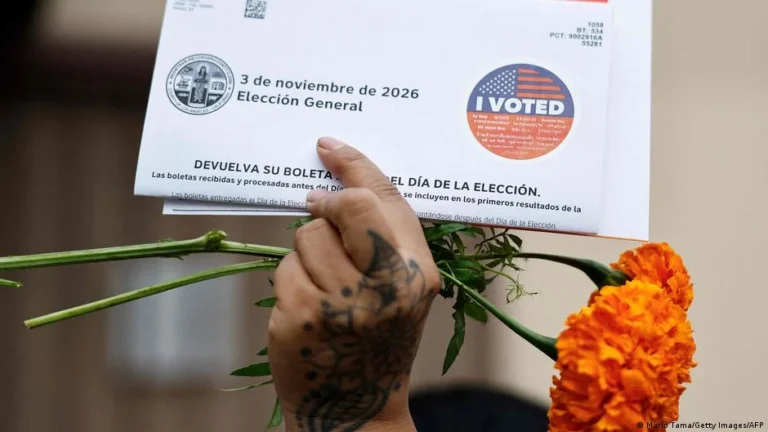
As the United States stands on the precipice of the 2026 midterm elections, a significant constitutional showdown has emerged between the federal executive branch and the state of California. In a final, aggressive maneuver, the administration of President Donald Trump has petitioned the Supreme Court to intervene in the state’s electoral process. The administration seeks to sideline more than 20,000 mail-in ballots, asserting, without broad evidence, that these votes were cast by non-US citizens. This legal offensive, spearheaded by the Department of Justice (DoJ) under the leadership of Attorney General Todd Blanche, marks an unprecedented escalation in the federal government’s attempt to assert oversight over state-run election procedures.
Chronology of the Legal Dispute
The roots of this conflict trace back to mid-October, when the DoJ first filed a lawsuit in federal court. The department alleged that California’s voter rolls were contaminated with the names of non-citizens. The federal government relied on data compiled by the Department of Homeland Security (DHS) to justify its claims.
The initial filing was met with swift resistance. In late October, US District Judge David Carter delivered a blistering rejection of the government’s motion. In his ruling, Judge Carter warned that the executive branch’s attempt to unilaterally discount ballots based on unverified allegations posed a severe threat to the democratic process. "If the Executive can discount votes and threaten an ongoing election due to unproven allegations, then our democracy is in danger," Carter wrote, noting that such actions could "wreak havoc" on voter confidence and the logistical integrity of the midterm cycle.
Undeterred by the district court’s dismissal, the DoJ escalated the matter to the Supreme Court on Monday. The administration requested a "limited injunction" that would force California to cease "commingling" what it termed "suspected illegal ballots" with verified ones. This request aims to isolate the disputed ballots until a comprehensive status verification process can be completed—a task that, according to election officials, is logistically impossible to finalize before polls open on Tuesday.
Flaws in the Federal Voter Blacklist
The federal government’s case rests entirely on the accuracy of the voter list provided by the Department of Homeland Security. However, subsequent judicial orders have forced the DoJ to share this "blacklist" with immigrant rights advocates and researchers at the University of California, Los Angeles (UCLA).
An analysis of this list has revealed significant, systemic errors. Preliminary findings indicate that thousands of individuals flagged as non-citizens by the DHS are, in fact, naturalized US citizens who are fully entitled to vote. The inclusion of these individuals on a "suspect" list has sparked alarm among civil rights groups, who argue that the federal government is utilizing flawed data to disenfranchise legal voters.
Judge Carter’s observations in the district court proceedings underscore a recurring pattern in such challenges: similar attempts to purge voter rolls in other states have frequently identified naturalized citizens as ineligible simply due to outdated database cross-referencing. The fact that the federal government is attempting to leverage this data as a basis for judicial intervention has drawn sharp criticism from legal scholars who view it as an encroachment on state sovereignty.
The Broader Context of Election Integrity
This legal battle occurs against a backdrop of long-standing tension between the Trump administration and Democratic-led states. President Trump has spent years cultivating a narrative centered on widespread voter fraud, despite a lack of empirical evidence to support claims of systemic electoral manipulation. During the 2026 midterm cycle, the rhetoric has shifted specifically toward the participation of non-citizens.
Research from academic institutions and non-partisan watchdog groups has consistently debunked the theory that non-citizen voting occurs at any scale capable of altering election outcomes. Nevertheless, the administration’s focus on this issue has become a cornerstone of its current political strategy. By highlighting the potential for "illegal" ballots, the White House seeks to build a framework that justifies the questioning of election results, particularly in states where the outcome may not favor the Republican Party.
Official Responses and State Defiance
California, which remains a stronghold for the Democratic Party and a focal point of opposition to the current administration, has taken a firm stance. Governor Gavin Newsom has characterized the federal government’s legal maneuvers as a form of voter intimidation.
"The federal government is overstepping its constitutional bounds in a desperate attempt to interfere with the fundamental right of Californians to cast their ballots," a spokesperson for the Governor’s office stated earlier this week. In anticipation of potential interference, Newsom has authorized the deployment of a comprehensive protection strategy. This includes the mobilization of election law experts and a state-sponsored hotline designed to allow voters to report any incidents of harassment, intimidation, or procedural irregularities at the polls.
Election officials in California have also expressed frustration with the federal government’s timing. With early voting having commenced several weeks ago and hundreds of thousands of ballots already processed, the request to separate or invalidate specific ballots is described by local registrars as a "procedural nightmare" that could potentially disrupt the count for weeks after the election.
Implications for American Democracy
The Supreme Court’s response to the DoJ’s emergency request is being watched closely by constitutional experts across the country. A ruling in favor of the administration could set a profound legal precedent, effectively granting the federal executive branch greater power to intervene in state-run elections under the guise of "election integrity." Conversely, a rejection would solidify the boundaries between state authority and federal overreach in the electoral process.
The political implications are equally significant. For the Republican Party, the focus on non-citizen voting serves to energize its base and provide a mechanism to challenge outcomes in states where they face uphill battles. For the Democratic Party, the incident serves as a rallying cry, framing the dispute as a defense of voting rights and institutional stability.
Ultimately, the dispute highlights a deepening polarization in the American electoral system. As trust in democratic institutions continues to fluctuate, the willingness of the federal government to utilize the judicial system to cast doubt on the legitimacy of ballots before they are even fully counted suggests a new, more volatile era in American political life.
Analytical Overview
The reliance on the DHS list—a tool designed for administrative record-keeping rather than real-time voter verification—raises questions about the diligence of the current administration’s legal strategy. If the Supreme Court denies the request, the administration may pivot to post-election litigation, using the same "suspect" list as a basis for challenging individual races.
As Tuesday’s polls open, the situation remains fluid. The core issue—the tension between the federal government’s mandate to enforce immigration law and the states’ constitutional authority to conduct their own elections—is likely to persist long after the final results of the 2026 midterms are certified. For now, the focus of election officials is on maintaining the chain of custody for all ballots and ensuring that no voter is disenfranchised by an administrative error or a politically motivated purge. The outcome of this specific legal struggle will serve as a bellwether for the health of the American electoral process as the nation looks toward future cycles.