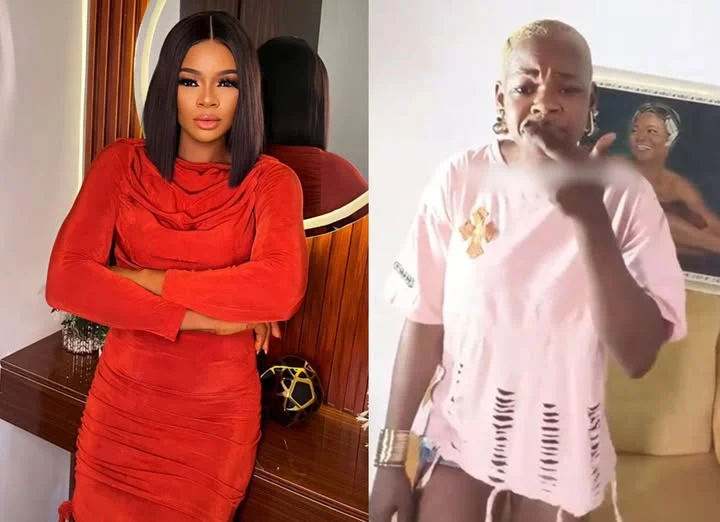
Nigerian model and media personality Olajumoke Orisaguna, whose meteoric rise from a street bread seller to an international fashion icon captured global headlines in 2016, has formally addressed and debunked circulating rumors regarding her lifestyle and health. The clarification comes in response to a wave of social media speculation triggered by a recent video posted on TikTok, which led some observers to allege that the model had succumbed to substance abuse, specifically citing concerns over her physical appearance and behavior in the clip.
In a detailed video statement released via her official Instagram account on Monday, April 14, 2024, Orisaguna expressed profound disappointment over the public’s interpretation of her creative output. She clarified that the footage, which featured her singing and performing what appeared to be a freestyle musical session, was intended strictly as entertainment and social media engagement—commonly referred to in digital spaces as "content." The model emphasized that the assumptions made by a section of the public were not only unfounded but also damaging to the reputation she has worked to maintain since her introduction to the limelight.
The Genesis of the Controversy
The controversy began when a short video clip surfaced on TikTok, showing Orisaguna in a relaxed, informal setting. In the video, her demeanor and the style of her performance led some viewers to post speculative comments suggesting she might be under the influence of alcohol or nicotine. As the video was shared across various platforms, including X (formerly Twitter) and Facebook, the narrative shifted from a simple performance to a debate over her well-being.
Public concern was fueled by the contrast between the highly polished, curated images of Orisaguna’s early modeling career and the raw, unedited nature of modern social media "vibing" videos. While many fans defended her right to express herself and participate in social media trends, others expressed worry that the pressures of her unique journey might have led to a decline in her personal standards.
Responding to these claims, Orisaguna was firm in her denial. “I’m not happy about the comments I saw on my video,” she stated. “Some people were saying that I now smoke and drink alcohol. Why would anyone think that about me? It was just content. I know some people understood that, but it was only content.”
Reaffirming Values and Upbringing
A significant portion of Orisaguna’s rebuttal focused on her core values and the conservative upbringing that she credits for her character. She argued that the habits being attributed to her—smoking and drinking—are entirely inconsistent with her personal history and moral framework. She appealed to her audience to avoid labeling her with a "reputation that isn’t mine," stressing that she has remained disciplined despite the many social pressures of the entertainment industry.
“I don’t smoke or drink; I wasn’t raised that way,” she explained. “Please, I’m begging you all, don’t give me a reputation that isn’t mine. Even when I go to parties and I’m offered a drink, I simply leave it on the table.”
Furthermore, she clarified the artistic nature of the video, noting that the song she was singing was not an original composition but a popular track she was simply interpreting for her followers. This distinction was intended to highlight the performative aspect of social media, where creators often adopt personas or engage with trends that do not necessarily reflect their private lives.
A Timeline of the ‘Cinderella’ Story
To understand the weight of the public’s scrutiny, one must look back at the extraordinary circumstances of Olajumoke Orisaguna’s rise to fame. Her story remains one of the most significant pop-culture events in recent Nigerian history, often cited as a "miracle" or a real-life "Cinderella" story.
- February 2016: While hawking Agege bread on the streets of Yaba, Lagos, Orisaguna inadvertently walked into the background of a photoshoot featuring British-Nigerian rapper Tinie Tempah. The shoot was being conducted by renowned photographer and singer TY Bello for ThisDay Style magazine.
- The Discovery: Upon reviewing the photographs, TY Bello noticed the striking natural beauty and poise of the bread seller. A social media search ensued, and Orisaguna was located.
- Global Stardom: Within weeks, Orisaguna was signed to a major modeling agency (Few Models). She appeared on the cover of ThisDay Style, received numerous corporate endorsements—including deals with Payporte and Stanbic IBTC—and was featured in international media outlets such as the BBC, CNN, and the Huffington Post.
- Transition and Education: Recognizing her humble beginnings as a mother of two who had moved to Lagos from Osun State to make ends meet, well-wishers and sponsors provided her with an apartment and enrolled her in finishing school and English language classes to help her navigate her new world.
- The Quiet Years: After the initial frenzy of 2016–2018, Orisaguna’s presence in the mainstream modeling world became less frequent. This period was marked by changes in management and personal challenges, leading to a hiatus from the spotlight that lasted several years.
Re-emergence and Advocacy in 2024
In early 2024, Orisaguna made a strategic return to the public eye, but this time in a different capacity. Moving away from the silent image of a high-fashion model, she transitioned into the role of a media personality and radio presenter. Her talk show, Kilon Shele, broadcast in Yoruba, has become a platform for her to find her voice and share the realities of her journey.
Through this show, she has been remarkably candid about the difficulties she faced following her sudden rise to fame. She has detailed experiences with exploitative management teams who she claims did not have her best interests at heart, as well as the emotional and physical toll of an abusive marriage with her ex-husband. Her re-emergence has been characterized by a desire for autonomy and a focus on building a sustainable career that transcends the "viral moment" that defined her early 20s.
Analysis: The Burden of the ‘Perfect’ Narrative
The recent backlash against Orisaguna highlights a broader sociological phenomenon regarding celebrities who rise to fame through unconventional means. Because her story was framed as a "miracle," the public often holds her to an impossibly high standard of perceived "purity" or "gratitude." When she engages in the same casual social media behavior as other influencers—such as posting "content" that may appear unpolished—it is often viewed through a lens of concern or judgment rather than as a standard form of digital expression.
Moreover, the Nigerian social media landscape is increasingly sensitive to issues of substance abuse among entertainers. Following several high-profile cases of health crises within the industry, fans have become hyper-vigilant, sometimes to the point of making premature or intrusive assumptions based on short video clips.
For Orisaguna, the challenge lies in balancing her identity as the "innocent bread seller" who won the world’s heart with her current reality as a grown woman, mother, and professional media practitioner navigating the complexities of modern celebrity.
Broader Implications for Social Media Engagement
The incident also serves as a reminder of the "context collapse" often found on platforms like TikTok and Instagram. In the digital age, a single video can be stripped of its intended meaning and repurposed into a narrative of scandal. Orisaguna’s plea for the public to "understand creative expression" underscores the gap between a creator’s intent and an audience’s perception.
Professional observers suggest that for public figures with Orisaguna’s specific history, the margin for error is slim. However, her decision to address the rumors directly rather than ignoring them reflects a growing media literacy and a refusal to let others dictate her narrative. By speaking out, she has reclaimed the conversation, shifting it from speculation about her health to a discussion about the nature of content creation.
As she continues her work with Kilon Shele and other media projects, Olajumoke Orisaguna remains a symbol of resilience. Her journey from the streets of Lagos to the height of global fame—and her subsequent struggle to maintain that platform on her own terms—remains a compelling study in the power and the pitfalls of the modern "viral" era. For now, the model turned presenter is focused on her children and her career, asking only for the public to see her for who she truly is, rather than the rumors they find online.