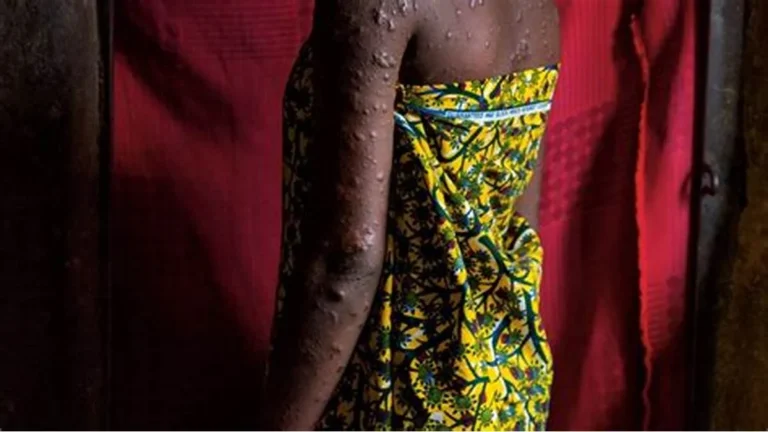
The World Health Organization (WHO) has released its comprehensive multi-country external situation report, revealing that 11 African nations experienced active transmission of mpox between 6 July and 16 August 2026. During this pivotal six-week surveillance window, public health authorities documented 1,153 confirmed cases and seven related fatalities across the continent. While weekly numbers have plateaued at an average of roughly 200 cases per week, global health experts caution that these figures likely represent an undercount due to logistical reporting delays, geographical isolation, and diminished active surveillance in remote regions.
The data, published officially by the UN health agency on 14 September 2026, highlights a shifting epidemiological landscape. Madagascar emerged as the primary focal point of the recent surge, reporting 785 confirmed cases—the highest tally for any single nation during the six-week window. Other countries registering significant transmission include Angola with 184 cases, Kenya with 94, the Democratic Republic of the Congo (DRC) with 41, and Cameroon with 28. Although the stabilization of weekly numbers offers a tentative glimpse of control, health agencies remain on high alert as the virus continues to find footholds in vulnerable populations.
Broad Epidemiological Timeline and Cumulative Impact
The current figures form a critical chapter in the protracted multi-country mpox outbreak that has swept across 35 African nations since January 2025. According to the WHO dataset, the cumulative toll across the continent between 1 January 2025 and 16 August 2026 reached an alarming 52,424 confirmed cases and 238 deaths.
On a global scale, the statistics underscore the international footprint of the pathogen. Between 1 January 2025 and 31 July 2026, a total of 65,784 confirmed cases and 264 deaths were reported across 105 countries worldwide. Looking specifically at the month of July 2026, 32 countries globally reported 1,370 confirmed cases and seven deaths. Notably, the African Region bore the heaviest burden during this monthly snapshot, accounting for a staggering 74.8 per cent of all global cases.
Madagascar’s ongoing crisis remains a primary source of concern for the global health community. The WHO has formally classified the country’s current outbreak as the largest mpox outbreak globally and within the African Region since December 2025. By 16 August 2026, Madagascar’s cumulative totals had escalated to 3,436 confirmed cases and 22 deaths, stretching local healthcare capacities and demanding sustained international intervention.
Geographical Spread and Clade Ib Developments
Beyond the African continent, the epidemiological profile of the outbreak has continued to evolve through international travel and local transmission chains. The WHO report detailed significant new milestones in the spread of the virus, notably regarding the behavior of the Clade Ib strain.
For the first time since the onset of the multi-country outbreak, authorities in Chile and Hungary reported confirmed cases of mpox driven by the Clade Ib variant. Concurrently, established community transmission of the same clade was documented across several European nations, including Czechia, France, Germany, Ireland, Italy, the Netherlands, Portugal, Switzerland, and the United Kingdom.
Western and Southern Europe have absorbed a considerable portion of these imported and secondary cases. Spain reported the highest cumulative number of Clade Ib cases within this European cohort, registering 241 infections. It was followed closely by France with 173 cases, Portugal with 162, and Germany with 140. Epidemiologists note that these figures demonstrate the persistent risk of cross-continental transmission in an interconnected world, necessitating robust genomic surveillance at international transit hubs.
The Shift from Emergency Status to Long-Term Control

The release of these sobering statistics comes just months after a major strategic shift in how continental health authorities manage the crisis. In January 2026, the Africa Centres for Disease Control and Prevention (Africa CDC) officially declared an end to mpox as a Public Health Emergency of Continental Security (PHECS).
When lifting the emergency declaration, the Africa CDC explained that the continent was transitioning away from acute emergency firefighting toward longer-term, sustainable control, management, and eventual elimination of the disease. The decision was underpinned by encouraging epidemiological trends observed throughout late 2025. Specifically, continental data showed that suspected mpox cases had dropped by 40 per cent, while confirmed cases fell by 60 per cent between the early and late stages of 2025. Furthermore, the suspected case fatality ratio experienced a notable decline, dropping from 2.6 per cent down to 0.6 per cent.
Despite scaling back the continental emergency status, the Africa CDC emphasized at the time that mpox would remain endemic in various ecological settings across Africa. Public health officials consistently reiterated that targeted vaccination campaigns, community engagement, and cross-border collaboration would remain the cornerstones of any future preventative strategy.
WHO Response and Extended Recommendations
In stark contrast to the regional transition observed by the Africa CDC, the World Health Organization continues to treat the ongoing multi-country event as a graded health emergency. Recognizing the persistent transmission chains, the geographic expansion of Clade Ib, and the severe local outbreaks in nations like Madagascar, the WHO has formally extended its global standing recommendations on mpox until August 2027.
This extension empowers member states to maintain heightened vigilance, uphold rigorous diagnostic protocols, and ensure equitable access to medical countermeasures, including vaccines and antivirals. Public health analysts point out that while the acute panic surrounding the 2022–2024 global surges has largely subsided, the virus has established persistent endemic reservoirs that will require years of sustained public health infrastructure investment to suppress.
Fact-Based Analysis of Implications
The persistence of mpox transmission across multiple African nations, coupled with the unexpected emergence of Clade Ib in South America and Eastern Europe, carries profound implications for global health security.
First, the situation in Madagascar illustrates the fragility of public health systems when confronted with novel or resurgent zoonotic pathogens. Without robust primary healthcare networks and rapid diagnostic capabilities in rural and semi-urban areas, outbreaks can rapidly overwhelm local resources, leading to unreported deaths and extended transmission cycles.
Second, the international dissemination of Clade Ib highlights the limitations of localized containment measures in a globalized economy. Pathogens do not respect geopolitical borders; thus, surveillance gaps in one region inevitably pose a threat to others. The fact that European nations continue to document sustained community transmission of Clade Ib proves that international travel protocols and contact-tracing frameworks must remain active and adaptable.
Finally, the policy divergence between the Africa CDC’s transition toward long-term management and the WHO’s continuation of a graded emergency status reflects the complex challenge of communicating risk to the public. While long-term endemic management is a pragmatic approach for health ministries dealing with resource constraints, maintaining international emergency recommendations ensures that donor funding, research focus, and vaccine stockpiles remain prioritized. Moving forward, international stakeholders must bridge this gap by aligning long-term developmental assistance with emergency readiness, ensuring that vulnerable populations in affected African nations receive the continuous support required to mitigate the dual threats of endemic disease and emerging variants.