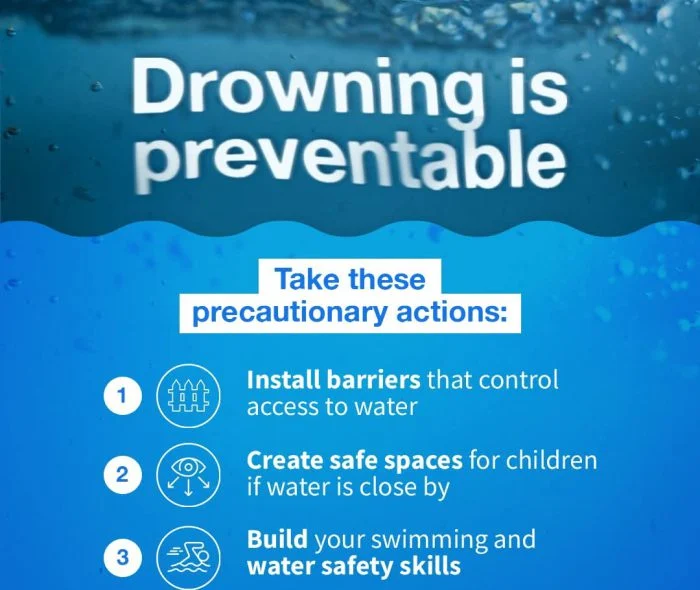
The World Health Organization (WHO) has officially introduced a comprehensive technical package titled PROTECT, designed to guide nations in the implementation of seven evidence-based strategies to mitigate the global drowning crisis. Launched ahead of World Drowning Prevention Day, observed annually on July 25, the initiative represents a significant step forward in addressing what public health experts call a "silent epidemic." With nearly 300,000 lives lost to drowning every year, the PROTECT framework serves as a strategic roadmap for governments, non-governmental organizations, and local communities to "Unite to Turn the Tide," the official theme for the 2024 observance.
Drowning remains a leading cause of accidental death worldwide, yet it has historically received far less international attention and funding than other public health challenges such as infectious diseases or road safety. The launch of the PROTECT package aims to change this narrative by providing actionable, scalable, and scientifically backed interventions that can be adapted to various geographic and socioeconomic contexts.
A Silent Global Health Crisis
According to the latest data from the WHO, drowning accounts for over 2.5 million deaths over the past decade. The burden is disproportionately distributed, with more than 90 per cent of these fatalities occurring in low- and middle-income countries (LMICs). These regions often lack the infrastructure for water safety, such as fenced-off water sources, regulated maritime transport, and widespread swimming literacy.
The statistics regarding children are particularly harrowing. Drowning is consistently ranked among the top ten leading causes of death for children and adolescents aged 5 to 14 years. In many parts of the world, children lose their lives in mundane settings—nearby ponds, open wells, or irrigation ditches—while their parents are engaged in domestic or agricultural work. The WHO emphasizes that these deaths are almost entirely preventable through the application of the strategies outlined in the new framework.
The PROTECT Framework: Seven Pillars of Safety
The PROTECT technical package is the culmination of years of research and field testing. It translates the WHO’s Global Strategy for Drowning Prevention into a practical toolkit. The acronym PROTECT stands for the seven priority areas of intervention:
- Provide safe water infrastructure: This includes installing barriers (such as fencing around pools or covering open wells) to control access to water hazards.
- Rescue and resuscitation capacity: Training bystanders in safe rescue techniques and cardiopulmonary resuscitation (CPR) to increase the chances of survival after a drowning incident.
- Occupational water safety: Enhancing safety for workers in the fishing and maritime industries through the use of personal flotation devices and better vessel standards.
- Transport safety: Strengthening regulations for ferries and small boats, ensuring they are not overcrowded and are equipped with essential safety gear.
- Education in swimming and water safety: Implementing school-based programs to teach children basic swimming skills and water safety awareness.
- Childcare and safeguarding systems: Establishing community-based crèches or supervised childcare centers to keep young children away from water hazards while parents are occupied.
- Timely preparedness for floods: Developing early warning systems and disaster response plans to protect populations during extreme weather events.
Dr. Tedros Adhanom Ghebreyesus, the Director-General of the WHO, emphasized the human cost of inaction during the launch event. "Every drowning is a preventable tragedy," he stated. "The PROTECT strategies give countries practical, evidence-based approaches to prevent these tragedies, including making water transport safer, teaching schoolchildren to swim, and preparing for floods."
The Escalating Impact of Climate Change on Water Safety
A critical component of the WHO’s latest warning involves the intersection of climate change and drowning risks. As global temperatures rise, the frequency and intensity of extreme weather events, such as floods, cyclones, and storm surges, have increased. These events create immediate drowning hazards for millions of people living in vulnerable coastal or low-lying areas.
Furthermore, the WHO pointed to research indicating that drowning deaths often spike during periods of extreme heat. As heatwaves become more common, more people seek relief in natural bodies of water, such as rivers, lakes, and oceans, which may not be monitored by lifeguards or safe for swimming. This behavioral shift, driven by a changing climate, necessitates a more robust approach to public awareness and water safety infrastructure.
The WHO’s technical package includes specific guidance on how nations can integrate drowning prevention into their broader climate adaptation and disaster risk reduction strategies. By aligning water safety with climate resilience, the WHO hopes to ensure that drowning prevention remains a priority in the face of environmental shifts.
Regional Spotlight: Implementing Solutions in Ghana
The WHO chose to launch the PROTECT framework in Ghana, a country that has demonstrated a growing commitment to addressing water safety. In Ghana, an estimated 1,100 people die from drowning annually. Similar to global trends, the majority of these victims are children and young adults. The impact is felt most acutely in fishing communities and areas surrounding the country’s vast inland waterways, such as Lake Volta.

The Ghanaian government, in collaboration with international partners, has begun exploring the implementation of the PROTECT pillars. This includes evaluating the safety of water transport, which is a vital part of the local economy but often suffers from a lack of regulation and safety equipment. By hosting the launch, Ghana has positioned itself as a regional leader in the fight against drowning, providing a model for other Sub-Saharan African nations to follow.
The Evolution of Global Advocacy: A Chronological Perspective
The journey toward a coordinated global response to drowning has been a multi-decade effort. For years, drowning was viewed primarily as an individual or local issue rather than a global health priority.
- 2014: The WHO released its first "Global Report on Drowning," which provided the first comprehensive look at the scale of the problem and highlighted the lack of effective prevention measures in many countries.
- 2017: Following the report, the WHO published "Preventing Drowning: An Implementation Guide," which offered early frameworks for intervention.
- 2021: A landmark moment occurred in April when the United Nations General Assembly adopted its first-ever resolution on global drowning prevention (Resolution 75/273). This resolution established World Drowning Prevention Day and called for increased international cooperation.
- 2023: The World Health Assembly (WHA) adopted a resolution to accelerate action on drowning prevention, leading to the creation of the WHO Global Alliance for Drowning Prevention.
- 2024: The launch of the PROTECT technical package marks the transition from global advocacy to standardized, technical implementation.
The Role of Philanthropy and International Cooperation
The development of the PROTECT framework has been supported by key international partners, most notably Bloomberg Philanthropies. Since 2014, Bloomberg Philanthropies has been a primary funder of drowning prevention research and program implementation in countries like Bangladesh and Vietnam.
Dr. Kelly Henning, who leads the public health program at Bloomberg Philanthropies, highlighted the importance of data-driven solutions. "The framework will help governments strengthen efforts to reduce drowning deaths through proven interventions," she noted. The partnership between Bloomberg and the WHO has been instrumental in moving drowning prevention from the fringes of public health into the mainstream.
In addition to philanthropic support, the WHO is working with various UN agencies, including UNICEF and the International Maritime Organization (IMO), to ensure that the PROTECT strategies are integrated across different sectors. For example, while the WHO focuses on the health aspects, the IMO can provide the technical standards for safer water transport, and UNICEF can lead the way in establishing community childcare centers.
Economic Implications and Multi-Sectoral Responsibility
Beyond the immeasurable emotional toll on families, drowning carries a significant economic burden. The loss of young lives represents a loss of future productivity and human capital. In many LMICs, the death of a primary breadwinner in a fishing or boating accident can plunge entire families into deep poverty.
The WHO argues that investing in drowning prevention is not only a moral imperative but an economic one. The cost of implementing the PROTECT strategies—such as installing basic fencing or providing swimming lessons—is relatively low compared to the long-term economic benefits of saving lives and preventing the trauma associated with these incidents.
Achieving the goals of the PROTECT framework requires a multi-sectoral approach. It is not solely the responsibility of health ministries; it involves education ministries (for swimming lessons), transport ministries (for maritime safety), and local governments (for infrastructure and disaster preparedness). The "Unite to Turn the Tide" theme specifically calls for this type of horizontal collaboration.
Conclusion and Future Outlook
As the world marks World Drowning Prevention Day on July 25, the launch of the PROTECT package provides a renewed sense of urgency and a clear path forward. The WHO’s goal is to see a significant reduction in global drowning rates by 2030, in line with the Sustainable Development Goals (SDGs), particularly those related to child health and disaster resilience.
The success of the PROTECT framework will ultimately depend on political will and the allocation of resources. While the WHO provides the technical guidance, it is up to individual nations to integrate these strategies into their national policies. With 300,000 lives at stake every year, the message from the WHO is clear: the tools to prevent drowning exist; now, the world must find the resolve to use them. By uniting governments, communities, and international partners, there is a tangible opportunity to turn the tide on this global tragedy and ensure that water is a source of life and livelihood, rather than a hidden danger.