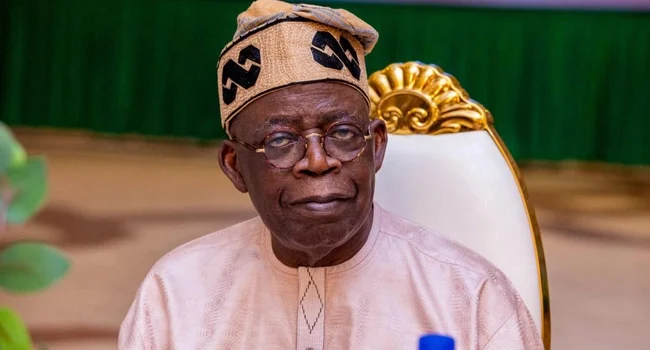
The political landscape of Lagos State, long considered the impenetrable fortress of President Bola Ahmed Tinubu, experienced a seismic shift during the February 25, 2023, presidential election. For the first time since he emerged as a dominant force in Nigerian politics in 1999, Tinubu lost his home state to an opposition candidate. While many political analysts and observers attributed this upset to the surging popularity of the Labour Party (LP) candidate, Peter Obi, and the "Obidient" movement, a different perspective has emerged from within the political establishment. Musiliu Obanikoro, a former Minister of State for Defence and a veteran of Lagos politics, has asserted that the primary catalyst for the All Progressives Congress (APC) defeat in Lagos was not the charisma of Peter Obi, but rather the deep-seated apprehension surrounding the APC’s decision to field a Muslim-Muslim ticket.
Speaking during an in-depth interview on "Mic On," a podcast hosted by prominent Channels Television journalist Seun Okinbaloye, Obanikoro provided a candid post-mortem of the 2023 polls. The former minister argued that the selection of former Borno State Governor Kashim Shettima, a Muslim, as the running mate to Tinubu, who is also a Muslim, created a vacuum of trust among the Christian electorate in Lagos. This religious anxiety, he claims, transcended party lines and ethnic affiliations, leading to a protest vote that ultimately tilted the scales in favor of the Labour Party in Nigeria’s commercial nerve center.
The Religious Calculus and the 2023 Presidential Election
Nigeria’s political tradition has historically leaned on a delicate balance of regional and religious representation. Since the return to democracy in 1999, it has been an unwritten rule that a presidential ticket must feature a Christian and a Muslim to ensure national cohesion. When Bola Ahmed Tinubu clinched the APC primary ticket in June 2022, the search for a vice-presidential candidate became the most contentious issue in the party’s strategy.
The eventual selection of Kashim Shettima sparked a firestorm of criticism from various quarters, most notably the Christian Association of Nigeria (CAN) and the Pentecostal Fellowship of Nigeria (PFN). Critics argued that a same-faith ticket marginalized the Christian population and threatened the secular balance of the country. Obanikoro, in his interview, highlighted that this specific decision was the "Achilles’ heel" for the APC in Lagos.
"Let me tell you, what defeated us in Lagos was the Muslim-Muslim ticket, not Peter Obi," Obanikoro stated. He explained that the electorate was gripped by uncertainty regarding what a same-faith presidency would entail for the Christian community. "People were afraid because they didn’t know what Tinubu’s presidency would look like. People thought it was a situation where the Christian in Nigeria would be relegated."
Deconstructing the Fear of Religious Bigotry
Obanikoro sought to dispel the notion that President Tinubu’s personal convictions aligned with religious extremism. He pointed to the President’s private life and his long history of religious tolerance as evidence that the fears of the electorate, while impactful at the polls, were not grounded in the President’s actual character.
"Tinubu is a Muslim, but he is not a religious bigot that will carry one religion over another," Obanikoro emphasized. He cited the diversity within the President’s own household as a primary example. The First Lady, Senator Oluremi Tinubu, is an ordained pastor of the Redeemed Christian Church of God (RCCG). Furthermore, Obanikoro noted that the President’s son, Seyi Tinubu, is a Christian, and that the President has historically surrounded himself with individuals of various faiths.
To further bolster his point, the former minister pointed to the composition of the current federal cabinet. Since taking office on May 29, 2023, President Tinubu has appointed numerous Christians to high-ranking positions, including key ministerial roles and advisory posts. Obanikoro argued that this inclusive governance style has effectively "defeated" the narrative that a Muslim-Muslim ticket would lead to the marginalization of Christians.
A Chronology of the 2023 Lagos Upset
To understand the weight of Obanikoro’s claims, one must examine the timeline of events that led to the February 2023 result.
- June 2022: Bola Tinubu wins the APC presidential primary in Abuja.
- July 2022: Tinubu announces Kashim Shettima as his running mate. The announcement is met with immediate backlash from religious bodies and some APC members, leading to high-profile resignations from the party.
- Late 2022: The "Obidient" movement gains significant traction in Lagos, driven by youth dissatisfaction, the aftermath of the 2020 #EndSARS protests, and a desire for a "Third Force" outside the APC and PDP.
- February 25, 2023: Presidential election day. Reports emerge of high voter turnout in Lagos, particularly in urban centers and areas with high non-indigene populations.
- February 27, 2023: The Independent National Electoral Commission (INEC) announces the final results for Lagos State. Peter Obi of the Labour Party polls 582,454 votes, defeating Bola Tinubu of the APC, who secures 572,606 votes. The margin of victory is less than 10,000 votes—a staggering result in a state where the APC typically wins by hundreds of thousands.
Data Analysis: The Margin of Defeat
The data from the 2023 presidential election in Lagos reveals a highly fragmented electorate. While the Labour Party won the state, the margin was razor-thin. Out of over 1.3 million valid votes cast, Obi led Tinubu by only 9,848 votes.
Analysts suggest that if the religious concerns mentioned by Obanikoro had been mitigated, a shift of just 5,000 votes would have changed the outcome in favor of the APC. The People’s Democratic Party (PDP), represented by Atiku Abubakar, trailed far behind with 75,750 votes, indicating that the contest in Lagos was essentially a two-horse race between the incumbent power structure and the new wave represented by the Labour Party.
Obanikoro’s assessment suggests that the "Obi Factor" was a secondary force that benefited from the primary "Religious Factor." In his view, many voters who might have traditionally supported the APC or remained undecided were pushed toward the Labour Party as a way to express their disapproval of the same-faith ticket.
Responses and Counter-Narratives
While Obanikoro’s perspective offers an insider’s view of the APC’s struggles, other political actors have offered different interpretations. Supporters of the Labour Party argue that their victory in Lagos was a genuine endorsement of Peter Obi’s message of frugality and systemic reform. They point to the high turnout among young voters as evidence of a demographic shift that is less concerned with religious balancing and more focused on economic performance.
Conversely, some APC strategists have argued that the loss in Lagos was a result of logistical failures and a lack of mobilization among the party’s grassroots supporters, who may have been complacent. However, the subsequent 2023 Lagos State Gubernatorial election, held just weeks later, saw the APC’s Babajide Sanwo-Olu win a resounding victory. This discrepancy suggests that while voters were willing to "punish" the party at the federal level—possibly due to the Muslim-Muslim ticket—they remained loyal to the APC at the state level.
Implications for Future Electoral Strategy
The admission by a figure like Obanikoro underscores a critical lesson for Nigeria’s political parties: the intersection of religion and politics remains a potent force in the nation’s democratic process. Despite the APC’s eventual victory at the national level, the loss of Lagos served as a wake-up call.
The implications of this "Lagos Lesson" are already visible in the way the Tinubu administration has approached its first year in office. There has been a visible effort to ensure religious and regional balance in appointments to temper the criticisms that trailed the campaign. For the APC, the challenge moving toward 2027 will be to convince the electorate that the same-faith ticket was a one-time strategic necessity rather than a permanent shift away from Nigeria’s pluralistic traditions.
Conclusion: The Evolving Political Identity of Lagos
The 2023 election marked a turning point in the political identity of Lagos. It proved that no political machine, regardless of its history or resources, is immune to the concerns of the electorate. Musiliu Obanikoro’s revelation serves as a reminder that in a diverse and complex society like Nigeria, the symbolic representation of faith can sometimes outweigh the perceived competence of a candidate.
As President Tinubu continues his four-year term, the shadow of the 2023 Lagos defeat remains a point of reflection for his strategists. Whether the religious anxieties of 2023 will persist or be forgotten by the next election cycle depends largely on the administration’s ability to demonstrate that its policies benefit all Nigerians, regardless of their religious affiliations. For now, the "Muslim-Muslim ticket" remains a defining chapter in the story of how the APC nearly lost its grip on its most vital political asset.