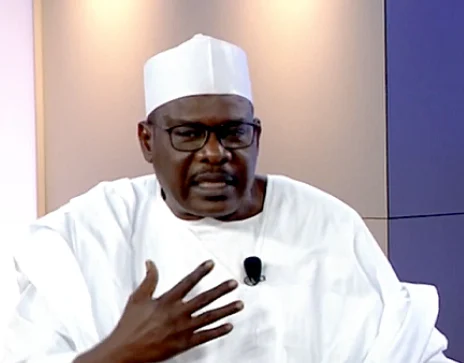
Senator Ali Ndume, the lawmaker representing Borno South Senatorial District, has issued a definitive call to action for the Federal Government, asserting that the pervasive insecurity currently plaguing Nigeria could be eradicated within a six-month window. Speaking during an interview on Channels Television on Monday, April 14, the high-ranking legislator emphasized that the resolution of the nation’s security crisis is not a matter of resource scarcity but rather a fundamental lack of political will and decisive execution. Senator Ndume, who has been a vocal advocate for military reform and regional stability, argued that the transition from persistent rhetoric to tangible results requires a concentrated focus on three primary pillars: rigorous training, advanced equipment, and robust personnel motivation.
The Senator’s remarks come at a critical juncture in Nigeria’s history, as the country grapples with a multi-faceted security landscape characterized by Boko Haram and ISWAP insurgencies in the Northeast, rampant banditry and kidnapping in the Northwest and North Central, and secessionist agitations in the Southeast. Ndume’s assertion that a half-year timeline is feasible challenges the prevailing narrative that the conflict is an interminable "forever war," suggesting instead that the current stalemate is a byproduct of operational gaps and administrative lethargy rather than an invincible enemy.
The Call for Decisive Political Action
Central to Senator Ndume’s argument is the concept of "political will." In the context of Nigerian governance, this refers to the readiness of the executive and legislative branches to prioritize national security above political expediency, ensuring that orders are followed by accountability and that resources reach the frontlines without being diverted by bureaucratic bottlenecks. Ndume noted that while the government frequently condemns attacks in the media, these statements have not consistently translated into the tactical superiority required to dismantle criminal networks.
"It is not about complaining," Ndume stated during the interview. "If the President and the Federal Government are serious about this, we can end this thing in six months. All we need is to train our soldiers, equip them, arm them very well, and then motivate them." This statement underscores a growing frustration among lawmakers and the citizenry regarding the perceived disconnect between the massive annual defense budgets and the reality of the security situation on the ground.
Ndume, who previously served as the Chairman of the Senate Committee on Army, possesses a deep understanding of the military’s internal struggles. His perspective is informed by the direct impact of the insurgency on his constituents in Borno South, an area that has been at the epicenter of the conflict for over a decade. His insistence on a six-month timeline is rooted in the belief that the Nigerian Armed Forces, when properly supported, remain one of the most capable fighting forces on the continent.
A Six-Month Roadmap to Stability
The proposed six-month timeline for ending insecurity is predicated on a rapid-response strategy that prioritizes the welfare and technical capacity of the Nigerian military. According to Senator Ndume, the persistence of insurgency and banditry is largely due to gaps in military preparedness and support. To bridge these gaps, he advocates for an immediate overhaul of the procurement process and a surge in personnel training.
Training, in this context, involves specialized counter-insurgency (COIN) and unconventional warfare tactics. As the enemy has shifted from territorial occupation to guerrilla tactics and asymmetric warfare, the military must adapt with greater agility and intelligence-led operations. Ndume argues that a six-month intensive training cycle for specialized units could provide the tactical edge necessary to flush out bandits from their forest strongholds and neutralize insurgent cells.
Furthermore, the issue of equipment remains a significant hurdle. Despite recent acquisitions, such as the Super Tucano fighter jets and various Mine-Resistant Ambush Protected (MRAP) vehicles, reports from the frontline often suggest that field units are outgunned or lack the necessary surveillance technology, such as drones and night-vision equipment, to effectively monitor and engage the enemy. Ndume insists that "arming them very well" means providing modern hardware that allows for 24-hour dominance of the battlespace.
Addressing Operational Weaknesses and Military Welfare
A particularly somber note in Senator Ndume’s assessment was his lamentation over the continued loss of military personnel, including senior officers. He warned that repeated successful attacks on security forces are not merely tactical setbacks but are indicators of deeper operational weaknesses. The loss of experienced officers represents a drain on the nation’s strategic intellectual capital and has a devastating effect on the morale of the rank-and-file.
"The repeated attacks on security forces point to deeper operational weaknesses that must be urgently addressed," Ndume cautioned. He urged the Federal Government to prioritize improved welfare for the armed forces. Motivation, in the Senator’s view, is the fuel of any military campaign. This includes competitive salaries, timely payment of allowances, comprehensive medical care for the wounded, and guaranteed support for the families of fallen heroes. When soldiers feel valued and their families are cared for, their commitment to the mission is significantly bolstered.
The Senator’s critique aligns with various reports from civil society organizations and military analysts who have highlighted that "fatigue" is a major factor in the prolonged conflict. Many soldiers have been deployed to the frontlines for years without adequate rotation, leading to physical and mental exhaustion. A well-supported military, as envisioned by Ndume, would have the logistical capacity to rotate troops regularly, ensuring that those in combat are always at peak readiness.
Historical Context and the Evolution of Insecurity
To understand the weight of Ndume’s claims, one must look at the timeline of Nigeria’s security challenges. The Boko Haram insurgency began in earnest in 2009, following the death of its founder, Mohammed Yusuf. What started as a localized radical movement in Maiduguri evolved into a regional crisis that has displaced over 2.5 million people and claimed tens of thousands of lives across the Lake Chad Basin.
Over the last five years, the security landscape has further complicated with the rise of "banditry" in states like Zamfara, Katsina, and Kaduna. These groups, often motivated by economic gain rather than ideology, have engaged in mass kidnappings of schoolchildren and travelers, effectively shutting down key transit corridors. The 2022 attack on the Abuja-Kaduna train served as a harrowing reminder of the audacity of these non-state actors.
Senator Ndume’s call for a six-month resolution is a reaction to this decade-long escalation. His frustration reflects a sentiment that the nation cannot afford another decade of incremental progress. The economic toll has been staggering; agricultural production in the "food basket" regions of the North has plummeted as farmers flee their lands, contributing to record-high food inflation across the country.
Analyzing the Financial and Strategic Gap
Nigeria’s defense spending has seen a steady increase over the years. In the 2024 budget, a significant portion of the N28.7 trillion total was allocated to the defense and security sector. However, the conversion of these funds into security on the ground remains a point of contention. Analysts point to "security votes"—opaque funds allocated to executive officials for security purposes—and a lack of transparency in defense procurement as major obstacles.
Senator Ndume’s insistence on "adequate funding" and "better equipment" implies that while the figures on paper are large, the actual impact on the frontlines is diluted. There is a pressing need for a transparent audit of military spending to ensure that every naira allocated contributes to the six-month goal. Furthermore, the strategic gap involves the need for better synergy between the various branches of the military and the police. Insecurity in Nigeria is often a "policing problem" that has been militarized; Ndume’s vision requires a holistic approach where the military clears the threats and the police maintain the peace.
Broader Implications and Official Responses
The implications of Senator Ndume’s statement extend beyond the halls of the National Assembly. If the Federal Government were to adopt such a condensed timeline, it would require a total mobilization of national resources, akin to a wartime economy. It would necessitate an immediate shift in the administration’s priorities, focusing on internal security as the absolute prerequisite for any other developmental goals.
While the Presidency and the Defense Headquarters have yet to issue a formal response to Ndume’s specific six-month claim, the government has historically maintained that it is doing everything within its power to secure the nation. Official spokespersons often cite the delivery of new platforms and the "neutralization" of hundreds of terrorists in weekly briefings as evidence of progress. However, the Senator’s critique suggests that these incremental successes are insufficient to change the overall trajectory of the conflict.
Independent security analysts have mixed views on the six-month timeline. Some argue that while the kinetic (military) aspect of the conflict could be significantly suppressed in six months, the root causes—poverty, lack of education, and environmental degradation in the North—require decades of social engineering. Nevertheless, there is a consensus that a "short, sharp shock" to the system, as proposed by Ndume, is necessary to provide the breathing room needed for long-term development projects to take root.
Conclusion: The Path Forward
Senator Ali Ndume’s interview serves as a stark reminder of the urgency of Nigeria’s security crisis. By setting a hypothetical six-month deadline, he has placed the ball firmly in the court of the executive branch, challenging them to demonstrate the "political will" that has been the missing ingredient in the counter-insurgency effort.
The Senator’s roadmap—focused on training, equipment, and motivation—provides a clear framework for evaluation. As the nation watches, the question remains whether the Federal Government will heed this call for a decisive shift in strategy or continue with the current approach. For the people of Borno South and millions of other Nigerians living under the shadow of violence, the hope is that the Senator’s vision of a secure nation within six months can transition from a bold assertion into a lived reality. The cost of delay is measured not just in naira, but in the lives of the soldiers and civilians who remain on the frontlines of this enduring struggle.