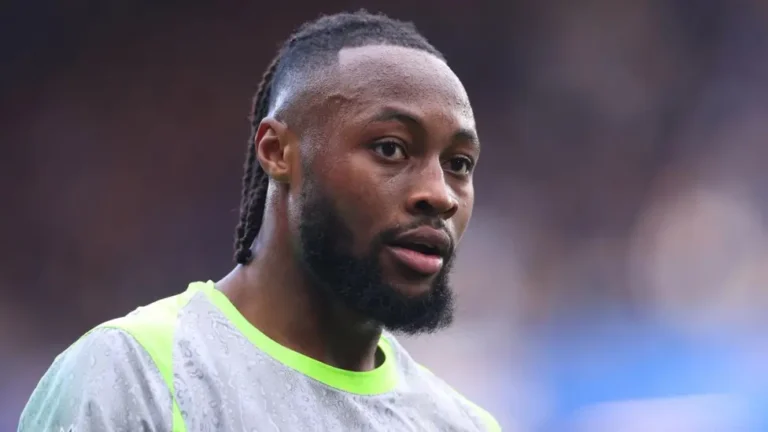
The landscape of English football has once again been marred by the specter of discrimination as Manchester City forward Antoine Semenyo revealed he has been subjected to a fresh wave of racist abuse on social media. The 26-year-old international took to his official Instagram account on Monday to expose the vitriol directed at him, sharing a screenshot of the offensive messages accompanied by a poignant and weary caption: “It’s started again.” This latest incident has ignited a firestorm of condemnation from fans, governing bodies, and anti-discrimination campaigners, highlighting the persistent failure of digital platforms to protect professional athletes from targeted hate speech.
Semenyo, who has become a pivotal figure in Manchester City’s attacking lineup, indicated that the abuse arrived in the wake of recent performances, suggesting a direct link between his visibility on the pitch and the toxicity he faces off it. The screenshot shared by the player showed a series of racial slurs and dehumanizing language sent via direct message from an account that appeared to be created specifically for the purpose of harassment. The phrase "it’s started again" resonates with a sense of grim inevitability, reflecting a reality where black players in the Premier League are often forced to view such abuse as an occupational hazard rather than an anomaly.
A Recurring Pattern of Hostility
To understand the weight of Semenyo’s frustration, one must look at the player’s history with such incidents. This is not the first time the forward has had to navigate the legal and emotional complexities of racial targeting. Earlier in the current season, while still finding his rhythm within the competitive environment of the top flight, Semenyo was the target of a high-profile incident during a Premier League clash against Liverpool. During that match, despite a stellar individual performance where he netted twice in a 4-2 loss, the joy of his professional achievement was overshadowed by a spectator’s racial slurs.
Following the Liverpool match, the authorities took swift action. The UK Football Policing Unit, in collaboration with stadium security, identified a suspect. A man was subsequently arrested and charged with a racially aggravated public order offense. While that case remains active within the judicial system, the recurrence of abuse—this time in the digital sphere—underscores the multifaceted nature of the problem. While physical stadiums have implemented better surveillance and "zero tolerance" policies, the digital frontier remains a lawless territory where anonymity emboldens offenders.
Chronology of Recent Incidents Involving Semenyo
The timeline of Semenyo’s experiences reflects a broader trend within the sport. In the early autumn of the current season, the initial incident at Anfield set a somber tone. Within 48 hours of that match, Manchester City and the Premier League issued joint statements condemning the behavior, and by the end of that week, a formal police investigation was underway.
In the months that followed, Semenyo appeared to have a period of relative peace, focusing on his integration into the City squad. However, as his profile rose and his impact on games became more pronounced, the "digital shadows" returned. The Monday morning post on Instagram marks the third documented instance of significant racial targeting against the player in a single calendar year. This chronology suggests that for players of color, success often acts as a catalyst for increased hostility rather than a shield against it.
Supporting Data: The Rising Tide of Online Hate
The abuse directed at Semenyo is not an isolated event but a data point in a disturbing upward trend. According to the most recent annual report from Kick It Out, the UK’s leading anti-discrimination charity in football, reports of online abuse have risen by nearly 30% year-on-year. The data suggests that while "in-person" discrimination reports have seen a slight fluctuation due to better policing, the sheer volume of social media vitriol has reached an all-time high.
Furthermore, a study conducted by the Professional Footballers’ Association (PFA) utilized AI technology to monitor social media comments directed at players across the top four divisions of English football. The findings were staggering: nearly 40% of all players monitored received some form of discriminatory abuse over the course of a season, with 50% of that abuse being specifically racial in nature. For elite players like Semenyo, who play for global brands like Manchester City, the volume of traffic means that even if only a small percentage of messages are abusive, the absolute number can be overwhelming.
Institutional and Club Responses
Manchester City has moved quickly to wrap a protective circle around their player. Sources within the club indicate that the legal and player welfare departments are fully engaged, providing Semenyo with access to psychological support and digital security experts. The club is also working directly with Meta—the parent company of Instagram—to trace the origin of the messages, although the effectiveness of such cooperation has historically been a point of contention between football clubs and tech giants.
The Premier League and the Football Association (FA) have also been notified. In a preliminary acknowledgment, the Premier League reiterated its commitment to the "No Room for Racism" initiative, emphasizing that they will support any criminal prosecution that arises from this incident. However, the recurring nature of these events has led to calls for more than just statements. Activists are demanding that social media companies implement mandatory ID verification for accounts, a move that the tech industry has resisted citing privacy concerns.
The Psychological Toll and Professional Implications
The emotional burden of such abuse cannot be overstated. Semenyo’s succinct social media post hints at a profound exhaustion. For an athlete at the peak of his career, the mental energy required to process racial trauma can detract from the focus needed on the pitch. This "emotional tax" is a documented phenomenon among black athletes, who must balance the pressures of elite competition with the personal defense of their humanity.
From a professional standpoint, the normalization of this abuse poses a risk to the league’s ability to attract and retain global talent. If the Premier League is perceived as an environment where players are routinely subjected to unpunished hate, it may influence the career decisions of future stars. The "Semenyo Case" serves as a litmus test for the UK’s Online Safety Act, which was designed to hold social media platforms accountable for the content they host. The football community is watching closely to see if this legislation will finally result in tangible consequences for online trolls.
Analysis: The Gap Between Policy and Reality
Despite the plethora of campaigns, including the "Take a Knee" gesture and the "No Room for Racism" branding, there remains a significant gap between institutional policy and the lived experience of players. The Semenyo incident highlights that while clubs are better equipped to support players after the fact, the prevention of abuse remains elusive.
The core of the issue lies in the lack of accountability for social media companies. Currently, the burden of reporting and documenting abuse falls largely on the victim. When Semenyo posts a screenshot, he is performing the labor of the investigator, the prosecutor, and the victim simultaneously. Analysts suggest that until social media platforms are held financially liable for the hate speech they monetize through engagement, the cycle is unlikely to break.
A Call for Collective Action
As the investigation into the latest messages continues, the football world stands at a crossroads. The PFA has hinted at the possibility of a "social media blackout" similar to the one staged in 2021, where clubs and players boycotted platforms for four days to demand change. Such collective action may be the only way to force a meaningful dialogue with the architects of the digital spaces where this abuse thrives.
For Antoine Semenyo, the path forward involves a return to training and preparation for Manchester City’s upcoming fixtures, but he does so with the knowledge that the battle off the pitch is far from over. His decision to speak out, rather than suffer in silence, is a testament to a generation of players who refuse to accept the status quo. As the case moves toward potential legal action, the broader conversation about race, technology, and sports remains more urgent than ever. The football community continues to grapple with the reality that while the game has moved forward in many ways, the shadows of the past continue to loom large in the digital age.