As the international community convenes for the 59th Session of the Commission on Population and Development (CPD), the intersection of technological advancement and public health has emerged as a primary focus for global leaders and policymakers. The assembly arrives at a critical juncture where the promise of digital health solutions meets the stark reality of systemic inequalities that continue to claim the lives of hundreds of thousands of women and infants annually. While scientific breakthroughs and mobile connectivity offer unprecedented opportunities to bridge gaps in care, the persistent "digital divide" threatens to leave the world’s most vulnerable populations further behind.
Each year, an estimated 287,000 women die from complications related to pregnancy and childbirth—deaths that are largely preventable through existing medical knowledge and timely intervention. The burden of this mortality is overwhelmingly concentrated in low- and middle-income countries, with sub-Saharan Africa accounting for approximately 70% of global maternal deaths. These statistics represent not only a failure of medical logistics but a profound crisis of equity, reflecting deliberate choices regarding how health systems are prioritized, financed, and deployed.
The Landscape of Maternal and Neonatal Mortality
The challenges facing maternal and newborn health are multifaceted, involving a complex interplay of clinical, economic, and social factors. The leading causes of maternal death—including severe bleeding, infections, high blood pressure during pregnancy (pre-eclampsia and eclampsia), and complications from delivery—are well-understood by the medical community. Similarly, neonatal mortality remains a significant hurdle; millions of newborns do not survive their first month of life due to preterm birth, birth asphyxia, and infections.
Despite global efforts under the framework of the United Nations Sustainable Development Goals (SDGs)—specifically Goal 3.1, which aims to reduce the global maternal mortality ratio to less than 70 per 100,000 live births by 2030—progress has stagnated in many regions. Financial barriers remain a primary obstacle. In many developing nations, out-of-pocket expenses for healthcare continue to account for a significant portion of total health spending, forcing families to choose between medical care and basic necessities. This economic strain is compounded by a lack of access to modern contraception, with over 200 million women globally still unable to exercise their reproductive rights due to a lack of resources or information.

Digital Interventions: Case Studies in Progress
The 59th Session of the CPD has highlighted technology as a transformative lever for health equity. Across the Global Leaders Network for Women’s, Children’s and Adolescents’ Health, several nations have pioneered digital tools that demonstrate how connectivity can save lives by facilitating informed decision-making and strengthening referral pathways.
In Kenya, the "Nena na Binti" (Speak with a Girl) initiative has established a toll-free digital hotline that operates 24/7. This service provides essential guidance on contraception, sexual violence, and mental health to young women in marginalized communities. By reaching tens of thousands of callers who lack access to physical clinics, the hotline serves as a vital lifeline for those navigating sensitive health issues in culturally restrictive or geographically isolated environments.
Tanzania has adopted a collaborative approach by co-designing a mobile application with community health workers and local beneficiaries. This digital referral system links primary health facilities, community workers, and local drug dispensing outlets. By creating a shared digital record, the system ensures continuity of care for mothers and children, reducing the likelihood of patients "falling through the cracks" of a fragmented health system.
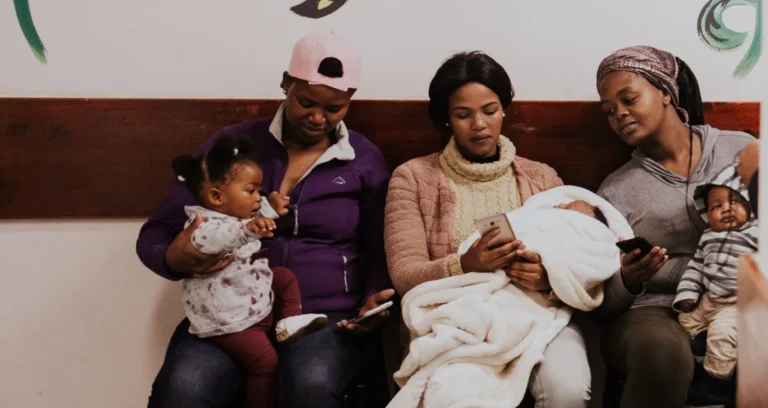
South Africa’s MomConnect platform represents one of the most successful large-scale implementations of mHealth (mobile health) in the world. Integrated into the national public health system, MomConnect registers pregnant women at antenatal clinics and delivers targeted, stage-specific health information directly to their mobile phones via SMS or WhatsApp. The platform not only educates mothers on nutrition and warning signs but also provides a mechanism for feedback on the quality of care received at government facilities.
In West Africa, Liberia has introduced the MORES system, a WhatsApp-based mobile referral network. Designed to link rural health facilities with district hospitals, MORES has proven instrumental in managing obstetric emergencies. By streamlining communication between remote clinics and surgical teams, the system has significantly reduced the "third delay"—the time it takes to receive adequate care once a patient reaches a hospital—cutting the time to emergency caesarean sections and potentially saving lives during critical complications.
The Persistent Barriers: Infrastructure and Cost
While these digital success stories offer a blueprint for the future, they are currently the exception rather than the rule. The "promise" of digital innovation is frequently hampered by a lack of basic infrastructure. As of 2024, internet penetration in Africa stands at approximately 40%. However, this figure masks a deep rural-urban divide; in rural areas, where maternal mortality rates are often highest, internet penetration drops to just 28%.
Furthermore, the economic cost of connectivity remains a prohibitive factor for the families who need these services most. On average, the cost of 1GB of mobile data in Africa consumes nearly 6% of the average monthly income. This is three times the 2% threshold considered "affordable" by the United Nations. For a family living in poverty, the cost of the data required to access a health app or a digital hotline can represent the equivalent of several days’ worth of food.
Research consistently indicates that without intentional policy intervention, digital health innovations tend to reach affluent, urban populations first. This creates a "digital paradox" where the tools intended to reduce inequality may actually deepen it by leaving behind those without smartphones, data plans, or reliable electricity. Women, the elderly, and those living in conflict-affected regions face the steepest barriers to digital inclusion.
The Demographic Dividend and Economic Imperative
The urgency of addressing these health and technological gaps is underscored by the rapid demographic shifts occurring across the Global South. Africa and parts of Asia are currently home to the world’s youngest and fastest-growing populations. This demographic profile presents a unique opportunity for economic dynamism and social innovation—often referred to as the "demographic dividend."
However, experts at the CPD have cautioned that a young population is not a guaranteed benefit. Without adequate investment in quality education, comprehensive health services, and economic opportunity, a burgeoning youth population can become a source of social and economic pressure. The transition from demographic potential to genuine human progress depends entirely on the health and agency of the current generation of women and adolescents. Ensuring they can survive childbirth and plan their families is a foundational requirement for long-term national development.
Official Responses and Strategic Pathways
Leaders at the 59th Session, including Dr. Louise Kpoto, the Minister of Health for Liberia, and Rajat Khosla, Executive Director of the Partnership for Maternal, Newborn & Child Health (PMNCH), have called for a paradigm shift in how health technology is funded and implemented. The consensus among these officials is that technology must not operate in a vacuum; it must be supported by robust domestic investment and international cooperation.
"The cost of inaction is not borne by those who choose it," Dr. Kpoto remarked during the proceedings. "It is borne by the woman who cannot reach a health facility in time, by the adolescent girl who has no one to turn to, and by the newborn who does not survive their first day of life."
To address these challenges, the following strategic priorities have been proposed:
- Prioritization of Domestic Health Financing: Governments must align their national budgets with the actual needs of their populations, moving toward the target of allocating at least 15% of annual expenditure to health, as outlined in the Abuja Declaration.
- Infrastructure Expansion: Investing in "last-mile" connectivity and reducing the cost of data through regulatory reforms and public-private partnerships is essential to ensure that digital health tools are accessible to rural and low-income users.
- Local Research Capacity: Strengthening the ability of local institutions to conduct research and co-design tools ensures that technological solutions are culturally appropriate and tailored to the specific logistical challenges of the region.
- Integrated Health Information Systems: Moving beyond standalone "pilot" projects toward integrated national systems, as seen in Ethiopia and Malawi, allows for better data collection and more informed resource allocation by health ministries.
Analysis of Implications
The discussions at the Commission on Population and Development signal a maturing view of digital health. The initial "techno-optimism" of the last decade is being replaced by a more nuanced understanding of equity. The success of platforms like MomConnect and MORES suggests that when technology is integrated into existing public health frameworks rather than treated as a "silver bullet," the impact is measurable and sustainable.
However, the transition to a digitally enabled health landscape requires more than just apps; it requires a fundamental commitment to the rights of women and children. As global health services continue to face the lingering effects of the COVID-19 pandemic and the mounting pressures of climate change and economic instability, the protection of maternal and child health services has never been more critical.

The path forward requires a dual approach: maintaining the momentum of scientific and technological innovation while simultaneously dismantling the financial and structural barriers that prevent that innovation from reaching the people who need it most. The Kind of world built in the coming decades will be defined by whether the international community views health equity as an optional goal or a moral and economic necessity. For the millions of families in the Global South, the stakes are nothing less than survival.