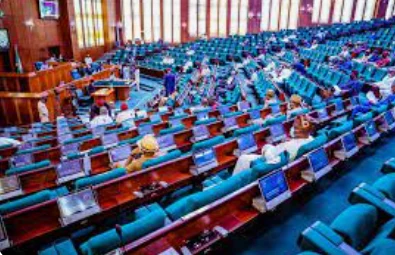
The House of Representatives Ad-Hoc Committee investigating the $460 million Closed Circuit Television (CCTV) surveillance project in the Federal Capital Territory (FCT) and other major cities has formally resolved to notify the Central Bank of Nigeria (CBN) to suspend all further payments to ZTE Corporation. This legislative directive comes amid a high-stakes probe into the execution of a contract that was intended to bolster national security but has instead become a symbol of infrastructure failure and lack of transparency. The committee’s decision, reached during a heated investigative hearing on Tuesday, underscores a growing frustration among lawmakers over what they describe as inconsistencies, evasive testimony, and a lack of tangible evidence regarding the project’s completion and functionality.
The resolution was the climax of a session marked by sharp exchanges between lawmakers and representatives of the Chinese telecommunications giant. The committee has demanded that ZTE Corporation provide comprehensive documentation, including the precise locations of all installed equipment, a detailed inventory of the hardware supplied, and the identities and contact information of 456 Nigerian personnel the company claims were trained to operate and maintain the surveillance system. The motion to halt payments was moved by Ali Shettima, representing the Bursari/Geidam/Yunusari Federal Constituency, and seconded by Kolawale Akinlayo of Ekiti State, reflecting a bipartisan consensus on the need for immediate financial intervention.
The Mandate of the Ad-Hoc Committee
The Chairman of the Committee, Donald Ojogo, opened the proceedings by clarifying the intent of the investigation. He emphasized that the probe is not a "witch-hunt" but a necessary exercise in legislative oversight aimed at answering the questions of millions of Nigerians who remain vulnerable to insecurity despite the massive investment in surveillance technology. Ojogo stated that the committee’s primary goal is to reconcile the documents provided by various government ministries with the reality on the ground.
"I want ZTE to know that this is a friendly conversation that is not meant to witch-hunt anybody," Ojogo remarked. "We are in search of answers to questions Nigerians are asking, and we urge ZTE to speak to the documents before us. This is about accountability for public funds and the safety of our citizens."
Despite this diplomatic opening, the tone of the hearing shifted rapidly as the committee began questioning the company’s representatives on the specifics of the project’s delivery. The $460 million project, officially known as the National Public Security Communication System (NPSCS), was designed to be a multi-faceted security network, yet lawmakers argued that its impact has been virtually non-existent.
Conflicting Accounts and Ghost Installations
The core of the dispute lies in whether the equipment was ever actually installed in the locations specified in the contract. Irene Momoh, the Company Secretary for ZTE, testified that the firm had successfully supplied and installed CCTV equipment in Abuja and Lagos, asserting that the project was completed between 2011 and 2012. However, when asked if the cameras were currently operational, Momoh’s response drew immediate ire from the committee.
"To the best of our knowledge, the items were supplied and installed in 2011/2012, but I cannot ascertain if they are currently working," Momoh stated. This admission prompted lawmakers to question how a project of such financial magnitude could be handed over without a sustainable maintenance framework or a verification of long-term functionality.
The veracity of ZTE’s claims regarding the geographical scope of the project was also challenged. Lawmaker Iyawe Esosa, representing a constituency in Edo State, cited documents from the Federal Ministry of Police Affairs which listed several locations in Edo State as beneficiaries of the surveillance equipment.
"The document, as submitted by the Federal Ministry of Police Affairs, shows several locations in Edo State where these items are purportedly located," Esosa said. "I live in Benin City. I can tell you that these items are not found anywhere. It is one thing to claim supply on paper; it is another to have the infrastructure serving the people."
A similar sentiment was echoed by Kolawale Akinlayo regarding the South-West region. He dismissed ZTE’s assertions that installations had been carried out in Ekiti State, specifically Ado-Ekiti. "I am from Ekiti State. All the places listed as beneficiaries of the security gadgets, including Ado-Ekiti, do not have these things. I can tell you that no camera was installed anywhere in the South-West, apart from Lagos," Akinlayo asserted.
Maintenance Gaps and Financial Obligations
ZTE’s defense for the non-functional state of the cameras centered on a lack of government funding for post-installation maintenance. Momoh explained that while the original agreement stipulated a three-month maintenance period, the company extended its services to six months before handing the system over to the Nigerian government. According to the company, the system’s eventual decay was the result of the government’s failure to commit further funds to keep the operations running.
This explanation did little to appease the committee, which is now looking into the financial trail of the project. Josiah Okike, representing the Central Bank of Nigeria, provided a critical update on the financial status of the contract. He disclosed that under the current loan repayment arrangement, ZTE is scheduled to receive a payment of $15.37 million in March 2026. Okike advised the committee that any directive to stop these payments must be channeled through the Office of the Accountant-General of the Federation to ensure legal and administrative compliance.
The prospect of further millions being paid to a company for a non-functional system has heightened the urgency of the probe. The committee has resolved to summon the Office of the Accountant-General and the Ministry of Finance to clarify the payment schedule and the terms of the sovereign loan used to fund the project.
Historical Context: The NPSCS Project
The CCTV project was a flagship security initiative of the administration of former President Goodluck Jonathan. Launched in 2010, the National Public Security Communication System was intended to provide a robust technological backbone for Nigeria’s security agencies. The project was financed through a $399.5 million loan from the Export-Import Bank of China (China EXIM Bank), with the Nigerian government providing a 15 percent counterpart funding of approximately $70.5 million, bringing the total cost to $460 million.
The project scope was ambitious, including:
- Global Open Trunking Architecture (GoTa): A digital trunking radio system for police communication.
- Video Surveillance System (VSS): The installation of 2,000 digital solar-powered cameras (1,000 in Abuja and 1,000 in Lagos).
- Video Conferencing System: Connecting all state police commands to the Force Headquarters.
- E-Policing System: For data sharing and digital record-keeping.
- National Command and Control Centers: Two main centers in Abuja and Lagos.
At the time of its inception, the NPSCS was touted as a major leap forward in combating the then-emerging threats of Boko Haram insurgency and rising urban crime. However, the project has been dogged by controversy for over a decade. Previous investigations by the 8th and 9th Assemblies also flagged the project for "monumental failure," yet payments on the Chinese loan have continued to be serviced by the Nigerian government.
Legal Friction and Accountability
The hearing took a tense turn when Irene Momoh attributed her inability to provide specific historical details to the fact that she only joined the company in 2023. She noted that many of the personnel who managed the contract in 2010 are no longer with ZTE. Lawmakers interpreted this as an attempt to evade accountability.
The committee expressed extreme dissatisfaction with this line of defense, with some members suggesting that the legal representative was being deliberately obstructive. There were even threats to report Momoh to the Nigerian Bar Association (NBA) for disciplinary action, citing a failure to provide the committee with the required level of professional cooperation during a national inquiry.
Analysis of Implications
The failure of the $460 million CCTV project has far-reaching implications for Nigeria’s national security and its international financial standing.
1. Security Vulnerability: The absence of a functional surveillance grid in the FCT and Lagos has left the nation’s most vital hubs vulnerable. Security experts have frequently pointed out that many high-profile kidnappings and bombings in the capital could have been prevented or solved more quickly had the NPSCS been operational.
2. The Debt Burden: Nigeria continues to service the $399.5 million loan from the Chinese government. Paying for "dead" infrastructure places an unnecessary strain on the national budget, especially at a time when the country is grappling with high debt-to-revenue ratios.
3. Future Foreign Contracts: This probe may influence how Nigeria approaches future infrastructure contracts with foreign entities. The committee’s insistence on "documentary proof of handover" and "sustainable maintenance frameworks" suggests a shift toward more rigorous procurement standards.
Conclusion and Next Steps
The House Ad-Hoc Committee has adjourned with a clear set of demands. ZTE Corporation must return with a comprehensive list of every camera location, the status of the command centers, and the specific government officials who signed off on the project completion. The committee also intends to verify the "456 trained Nigerians" to determine if any technical knowledge transfer actually occurred.
As the Central Bank and the Accountant-General’s office prepare to process the committee’s directive, the $460 million CCTV probe stands as a critical test of the 10th Assembly’s ability to enforce accountability. For Nigerians, the hope remains that this latest investigation will finally reveal why nearly half a billion dollars in investment has failed to produce a single minute of usable security footage for a nation in need.