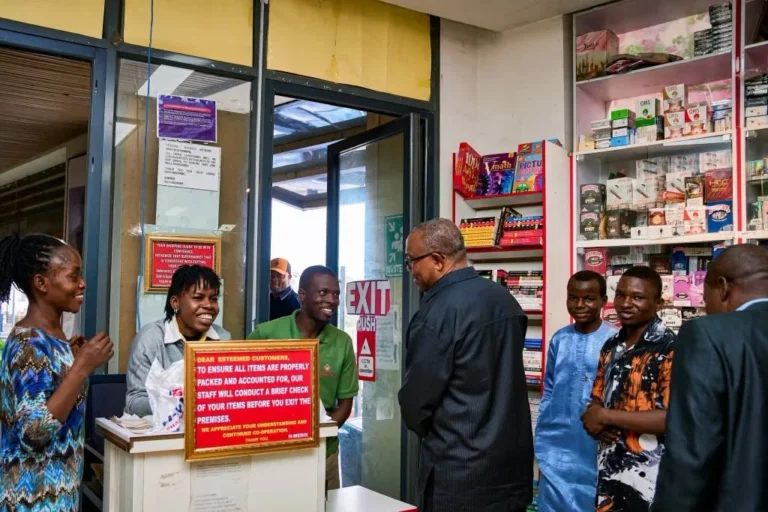
Former Anambra State Governor and the current presidential candidate for the National Democratic Congress (NDC), Peter Obi, was observed on Saturday engaging in a routine shopping trip at a branch of H-Medix Supermarket in Abuja. This seemingly ordinary outing quickly garnered significant public attention and social media traction, reigniting discussions about his distinctive approach to political engagement, often characterized by a deliberate "common touch." The incident, documented through photographs shared widely online, marks another chapter in Obi’s consistent efforts to project an image of relatability and direct understanding of the economic realities faced by average Nigerians.
The photographs capturing Obi’s presence at the supermarket were disseminated on the social media platform X by Esther Umoh, who previously served as his official photographer during the impactful 2023 presidential campaign. Umoh’s accompanying commentary provided immediate context and strategic framing for the visit, indicating that Obi was there to procure "a few personal items" but utilized the opportunity to engage directly and warmly with both the supermarket staff and fellow shoppers. This interaction, she suggested, was not merely coincidental but a reflection of Obi’s core political philosophy: a commitment to remaining connected with the everyday lives and challenges of the populace he seeks to serve.
A Deliberate Strategy: The Art of Retail Politics
Peter Obi’s visit to H-Medix is far from an isolated incident; rather, it appears to be a consistent and calculated element of his political strategy, often termed "retail politics." This approach emphasizes direct interaction with voters in everyday settings, moving away from traditional large rallies and formal events to foster a sense of accessibility and authenticity. For politicians, especially those aspiring to national leadership, engaging in activities such as shopping at local markets or supermarkets is a potent symbol. It aims to demonstrate solidarity with the struggles of ordinary citizens, particularly in economies experiencing significant challenges.
In the Nigerian context, where economic disparities are pronounced and the cost of living has become a dominant public concern, such gestures carry considerable weight. Political analysts often point to the effectiveness of these public displays in humanizing candidates and distinguishing them from a political elite often perceived as detached from the populace. By being seen in environments frequented by the average person, Obi reinforces a narrative of frugality, empathy, and a practical understanding of market dynamics – prices, availability, and the overall consumer experience – which are central to the economic well-being of households.
Chronology of Public Outreach: From Utako Market to H-Medix

This recent supermarket visit bears a striking resemblance to a prior incident that captivated national attention just a few months ago. In that widely publicized event, Peter Obi made an unscheduled stop at the bustling Utako Market in Abuja, where he was photographed purchasing groundnuts from a street vendor. That particular outing quickly went viral across social media platforms, with supporters lauding it as further evidence of his humility and connection to the common man, while critics sometimes viewed it as a calculated political stunt.
The consistency in these actions—from buying groundnuts at a traditional market to shopping for personal items at a modern supermarket—highlights a deliberate, ongoing campaign to maintain visibility and reinforce a specific public image. Both instances leveraged the power of social media to disseminate the message rapidly and widely, bypassing traditional media filters and allowing for direct engagement with a large, digitally savvy audience. The virality of these moments underscores the significant impact that seemingly simple acts can have in shaping public perception and political discourse in the digital age. These events serve not just as photo opportunities but as carefully curated narratives designed to resonate with the aspirations and frustrations of a broad electorate.
Strategic Communication: Unpacking Esther Umoh’s Statements
Esther Umoh’s statements accompanying the photographs offer valuable insight into the intended messaging behind Obi’s public appearances. Her assertion that "By experiencing the same markets, prices and economic conditions as everyone else, he gains a firsthand understanding of the challenges families face daily" is particularly pertinent. This statement directly addresses a critical concern among Nigerians: the escalating cost of living. It positions Obi not just as a leader who hears about economic hardships, but one who actively immerses himself in them, thereby enhancing his credibility when discussing economic solutions.
Furthermore, Umoh’s emphasis on Obi’s warm interactions with "members of staff and fellow shoppers" underscores a key aspect of his political brand: accessibility and empathy. In a political landscape often characterized by a perceived distance between leaders and the led, a politician who takes time to engage personally with ordinary citizens can cultivate a powerful sense of connection and trust. Her concluding remark, "A reminder that leadership is ultimately about staying connected to the people you serve," serves as a concise summary of the overarching message Obi’s camp aims to convey. This message is designed to appeal to a populace yearning for leadership that is not only competent but also genuinely concerned with their welfare and capable of understanding their daily struggles on a personal level.
Economic Realities: The Backdrop to Obi’s Engagement
The backdrop against which Peter Obi’s public shopping trips unfold is Nigeria’s challenging economic environment. The nation has been grappling with persistent high inflation, which has significantly eroded the purchasing power of average households. According to the National Bureau of Statistics (NBS), Nigeria’s headline inflation rate has consistently been on an upward trajectory, reaching over 33% year-on-year in recent months, with food inflation often even higher, exceeding 40%. This surge in prices for essential goods and services, exacerbated by policy decisions such as the removal of fuel subsidies and the devaluation of the Naira, has placed immense pressure on families across the country.

For instance, the price of staple foods like rice, beans, and bread, along with household consumables, has seen dramatic increases. A shopping trip for "personal items" at a supermarket like H-Medix, which caters to a broad consumer base, would expose any shopper to these stark realities. For a political figure like Obi, being seen navigating these price points and market conditions directly reinforces his claim of understanding the economic crunch. This is not merely symbolic; it aligns his persona with the prevailing public sentiment of economic hardship and the urgent need for effective solutions. His actions tacitly communicate that he shares in, and thus genuinely comprehends, the financial burdens that define daily life for millions of Nigerians.
Peter Obi’s Political Journey and Future Aspirations
Peter Obi’s political career is marked by a trajectory that has consistently emphasized good governance, fiscal prudence, and a focus on human development. He served two terms as the Governor of Anambra State from 2006 to 2014, a period during which he earned commendations for his administration’s focus on education, healthcare, and infrastructure development, often citing his commitment to saving public funds and investing strategically. His governance style in Anambra laid the groundwork for his national appeal, particularly his reputation for transparency and accountability.
In the lead-up to the 2023 general election, Obi emerged as a formidable force, first as a presidential aspirant under the Peoples Democratic Party (PDP), and subsequently as the presidential candidate for the Labour Party. His campaign, which galvanized a significant youth-led movement dubbed the "Obidient movement," transformed the political landscape, challenging the traditional dominance of the two major parties. Despite not winning the presidency in 2023, his performance demonstrated a powerful new wave of political consciousness and demand for alternative leadership.
The original article states that Peter Obi is "currently the National Democratic Congress (NDC) presidential candidate ahead of the 2027 presidential election." This information, if accurate and officially confirmed, would represent a significant shift from his 2023 Labour Party affiliation. While he remains a highly influential figure associated with the "Obidient" movement, any formal declaration or party switch for the 2027 election would be a major development warranting widespread media coverage. Regardless of his specific party platform for 2027, his consistent public engagement strategy, as exemplified by the H-Medix visit, clearly signals his continued political ambition and his intent to remain a central figure in Nigeria’s future electoral contests. His brand, built on fiscal responsibility, anti-corruption, and a common touch, continues to resonate with a significant segment of the Nigerian electorate.
Implications for Nigerian Political Discourse
The recurring nature of Peter Obi’s "common man" public appearances, and their subsequent virality, carries several significant implications for Nigerian political discourse. Firstly, it further solidifies his carefully cultivated public image as a leader who understands and shares the experiences of average citizens. This narrative is a powerful tool in a country where many perceive political leaders as out of touch with the populace. It fosters a sense of trust and relatability that can be crucial in garnering widespread support, particularly among younger voters and those disillusioned with traditional politics.

Secondly, these events set a precedent and potentially influence other political figures to adopt similar strategies. As social media continues to democratize information dissemination, the effectiveness of "retail politics" in generating organic buzz and favorable public perception becomes increasingly apparent. This could lead to a shift in campaign tactics, with more politicians venturing into public spaces in less formal capacities, aiming to replicate the perceived success of Obi’s approach. However, the authenticity of such moves would always be subject to public scrutiny.
Thirdly, the amplification of these moments through social media platforms like X (formerly Twitter) underscores the evolving role of digital media in political campaigns. It allows for direct communication, rapid response, and the creation of viral content that can shape narratives far more effectively than traditional press releases or advertisements. The "Obidient" movement itself is a testament to the power of social media mobilization, and these individual public engagements serve as continuous content generation, keeping the conversation around Obi alive and active.
Finally, such actions contribute to a broader discussion about what constitutes effective and empathetic leadership in a developing nation facing acute economic challenges. It challenges the notion that leadership must always be presented through an aura of aloofness and grandeur, instead proposing that true leadership involves a tangible connection to the daily lives of the people it serves. This ongoing dialogue about leadership style, public perception, and effective political communication will undoubtedly continue to shape Nigeria’s political landscape as the 2027 elections draw nearer.
Conclusion: The Enduring Quest for Connection
Peter Obi’s recent visit to H-Medix Supermarket, like his prior stop at Utako Market, is more than just a casual outing; it is a calculated political statement within a broader strategy. By consistently placing himself in environments frequented by everyday Nigerians, and allowing these moments to be captured and shared, Obi reinforces his image as a leader who is both accessible and deeply attuned to the economic realities facing the nation. This approach, amplified by social media and set against a backdrop of significant economic hardship, serves to distinguish his political brand and maintain his relevance in the lead-up to future electoral contests. As Nigeria navigates its complex political and economic landscape, the quest for leaders who embody a genuine connection with the people they serve remains a potent and enduring aspiration, one that Peter Obi’s public engagements continue to address directly.