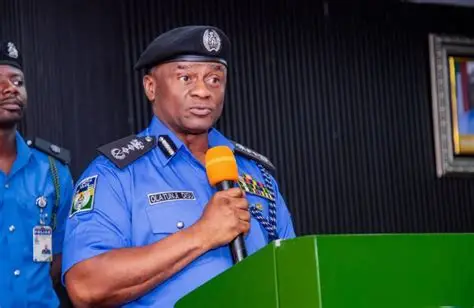
As the political landscape in Nigeria begins to shift toward the high-stakes 2027 general elections, the Inspector-General of Police, Olatunji Disu, has issued a stern, unequivocal warning to all personnel within the Nigeria Police Force to maintain absolute neutrality, impartiality, and strict adherence to democratic policing. The directive comes at a time when public scrutiny of law enforcement agencies is at an all-time high, with citizens and civil society organizations increasingly demanding accountability, transparency, and a non-partisan approach to internal security operations.
The Inspector-General’s proactive stance was officially unveiled during the commencement of a comprehensive, five-day intensive training programme on election security management hosted by the Jigawa State Police Command. Designed to systematically prepare tactical and operational officers for the myriad challenges associated with the country’s upcoming democratic transitions, the specialized workshop seeks to bridge identified gaps in tactical response, crowd management, and human rights compliance during volatile electoral cycles.
Context and Background: The Imperative of Electoral Neutrality in Nigeria
Elections in Nigeria have historically been characterized by intense political competition, which occasionally cascades into localized violence, voter intimidation, ballot box snatching, and structural disruptions of public order. Security agencies—chiefly the Nigeria Police Force, which statutory bears the primary responsibility for internal security and election policing—frequently find themselves under immense pressure from political actors seeking to bend institutional machinery to their advantage.
Historically, allegations of political bias, selective law enforcement, and over-zealousness have plagued the public perception of the police force during general elections. These perceptions not only undermine public trust in democratic institutions but also delegitimize the outcomes of democratic processes. Recognizing these historical vulnerabilities, the leadership of the Nigeria Police Force under IGP Olatunji Disu has prioritized institutional reforms centered on rigorous capacity building, ethical reorientation, and uncompromising professional standards.
The initiative in Jigawa State represents a broader, nationwide strategy to frontload security preparations rather than reacting to crises as they unfold. By embedding human rights education and neutrality training into pre-election preparations, the Force leadership aims to foster an environment where voters feel secure, candidates can campaign without undue harassment, and law enforcement personnel act strictly as impartial arbiters of the peace.
Inside the Jigawa State Election Security Workshop
The five-day training programme, officially themed “Role of Police Officers in Strengthening Electoral Security,” is being held at the prestigious Manpower Development Institute in Dutse, the capital of Jigawa State. The high-profile event drew key stakeholders from security agencies, academia, and civil society, all converging to dissect the operational realities of securing democratic exercises in complex socio-political environments.
Declaring the programme open, IGP Olatunji Disu—who was ably represented by the Jigawa State Commissioner of Police, Tijjani Murtala—emphasized that contemporary policing requires far more than brute force; it demands intellectual agility, tactical precision, and deep emotional intelligence. Murtala read the Inspector-General’s charge to the assembled officers, stressing that continuous professional development is non-negotiable for personnel tasked with safeguarding the nation’s fragile democracy.
“We must operate within the principles of democratic policing and ensure that our conduct reflects neutrality and respect for the law,” Murtala conveyed to the packed auditorium of senior police commanders, divisional police officers (DPOs), and tactical unit leaders. He explicitly warned that any officer found engaging in partisan activities or exhibiting political bias during the electoral cycle would face severe disciplinary measures in accordance with extant police regulations.
The curriculum for the five-day workshop was meticulously designed to cover a broad spectrum of critical areas. Sessions span advanced crowd control techniques, systematic conflict prevention and mitigation, strict interpretation of the rules of engagement, human rights preservation during civil unrest, robust intelligence gathering methodologies, and lawful, measured responses to sudden electoral infractions.
Collaborative Institutional Support
The execution of this vital training initiative is the result of strategic institutional partnerships. The programme was primarily organized by the Nigeria Police Trust Fund in collaboration with the mainstream Nigeria Police Force administration, reflecting a concerted effort to channel resources directly into human capital development and operational readiness.
Speaking on behalf of the Executive Secretary of the Nigeria Police Trust Fund, Ibrahim Muhammad underscored the organization’s unwavering commitment to transforming the operational capabilities of the police force. Muhammad noted that effective coordination, robust logistical support, and the provision of modern, non-lethal policing tools are absolute prerequisites for guaranteeing credible, violence-free elections. He reiterated the Trust Fund’s dedication to bankrolling targeted training modules across various state commands nationwide, ensuring that officers are well-equipped to meet the evolving security demands of the 21st century.
Academic experts and seasoned researchers also added intellectual depth to the workshop. Prof. Umar D. Muhammad, a distinguished consultant and facilitator from the University of Abuja, delivered a compelling paper advocating for intelligence-led policing. He argued that modern electoral security cannot rely solely on reactive enforcement; rather, it demands proactive threat assessment, continuous data collection, and strict adherence to lawful, procedural guidelines when addressing security breaches.
Echoing similar sentiments, Prof. Mustapha Hussaini of the Federal University Dutse focused his presentation on the necessity of lawful responses to election-related incidents. Prof. Hussaini stressed that the preservation of human rights must remain the lodestar for every police officer on electoral duty. He cautioned that high-handedness and extra-legal actions by security personnel often exacerbate tensions, alienate the civilian population, and undermine the legitimacy of the entire electoral process.
Chronology of Preparations and Future Milestones
The launch of the Jigawa workshop is part of an escalating timeline of security sector reforms and preparations leading up to the 2027 general elections:
- Third Quarter 2025: Initial strategic security assessments initiated by the police high command to identify flashpoint states and historical zones of electoral violence.
- First Quarter 2026: Comprehensive review of the Nigeria Police Force Standard Operating Procedures (SOP) regarding crowd control and political event monitoring.
- Mid-2026 (Current Phase): Rollout of specialized, localized training workshops across multiple geopolitical zones, beginning with capacity-building initiatives like the Jigawa State command seminar.
- Late 2026 to Early 2027: Deployment of specialized intelligence and tactical teams to high-risk areas, alongside inter-agency coordination meetings with the Independent National Electoral Commission (INEC) and sister security services.
- First Quarter 2027: Full nationwide operational deployment for the general elections, backed by real-time monitoring and oversight mechanisms to curb professional misconduct.
Fact-Based Implications for the 2027 General Elections
The strict directives issued by IGP Olatunji Disu carry significant implications for the political landscape and the internal dynamics of the police force.
First, by drawing a hard line against political bias, the police leadership is signaling a departure from past eras where institutional compromise threatened electoral integrity. If successfully enforced down the command chain, this policy will likely bolster public confidence, encourage higher voter turnout, and diminish the incidence of state-backed political intimidation.
Second, the emphasis on intelligence-led policing and human rights compliance points toward a more civilized, restrained approach to internal security management. By training officers to de-escalate tension rather than resort to aggressive dispersal methods, the Force minimizes the risk of fatalities and collateral damage during volatile political rallies and collation phases.
However, analysts note that the true test of these directives will lie in enforcement. While policy pronouncements at headquarters and state commands set the administrative tone, monitoring field operatives during high-pressure scenarios remains a logistical challenge. Civil society organizations and independent watchdogs will be watching closely to see whether disciplinary threats against partisan officers are genuinely enforced when infractions occur.
Conclusion and Command Reaffirmation
As the five-day workshop in Dutse progresses toward its conclusion, the Jigawa State Police Command Management Team, alongside participating officers, has reaffirmed its total dedication to upholding the tenets of democratic policing. Commissioner Tijjani Murtala assured the public that the command remains fully prepared to deliver a secure, peaceful, and credible environment for the 2027 polls.
With structured capacity building, unwavering institutional backing from the Nigeria Police Trust Fund, and explicit, uncompromising directives from Inspector-General Olatunji Disu, the Nigeria Police Force is positioning itself to navigate the complex security dynamics of the coming electoral cycle with professionalism, impartiality, and an unyielding commitment to the rule of law.