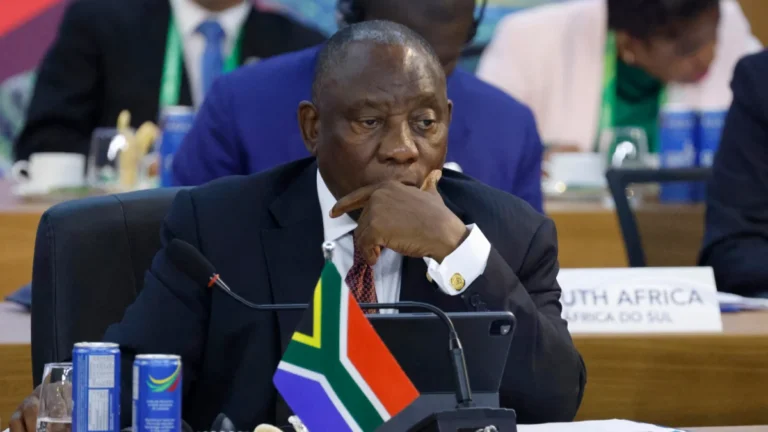
The Western Cape High Court has issued a significant temporary injunction, halting parliamentary impeachment proceedings against South African President Cyril Ramaphosa. This judicial intervention provides the embattled leader with a crucial legal pause in the protracted and politically charged Phala Phala farm scandal, a controversy that has cast a long shadow over his presidency for nearly four years. The court’s decision on Friday ordered Parliament to suspend public hearings conducted by its Section 89 Impeachment Committee, pending the final determination of President Ramaphosa’s legal challenge to the entire impeachment process. While this ruling offers a tactical reprieve, it does not signify the definitive end of the impeachment efforts.
The Genesis of the Phala Phala Scandal
The roots of the impeachment proceedings lie in a highly controversial burglary that occurred in 2020 at President Ramaphosa’s Phala Phala game farm, located in the Limpopo Province. Reports indicate that thieves made off with an estimated $580,000 in cash, allegedly stashed within furniture on the property. President Ramaphosa has consistently asserted that the substantial sum represented legitimate proceeds from the sale of buffaloes to a Sudanese businessman, vehemently denying any illicit activity or financial impropriety.
However, the incident quickly ignited a firestorm of questions and allegations that have relentlessly dogged his administration. Central to the controversy are concerns regarding the rationale behind keeping such a large amount of cash on the farm, the transparency and completeness of reporting the incident to relevant authorities, and crucially, whether state resources were inappropriately deployed in the aftermath of the theft to manage or conceal the incident. These unanswered questions formed the bedrock of the parliamentary panel’s investigation and the subsequent push for impeachment.
A Tumultuous Timeline of Events
The Phala Phala scandal first seriously threatened President Ramaphosa’s tenure in 2022. An independent parliamentary panel, tasked with a preliminary assessment, concluded that there was sufficient prima facie evidence to suggest that the President might have contravened the Constitution. This finding was instrumental in recommending that Parliament initiate formal impeachment proceedings.
Initially, these impeachment efforts were effectively stalled. The ruling African National Congress (ANC), which at the time held an outright majority in Parliament, utilized its legislative dominance to vote against the establishment of an impeachment inquiry, thereby quashing the immediate prospect of Ramaphosa’s removal.
The political landscape shifted dramatically earlier this year when South Africa’s Constitutional Court delivered a pivotal ruling. The Court found that Parliament’s rejection of the preliminary panel’s findings had been irrational. This landmark decision effectively resurrected the impeachment process, creating a pathway for a Section 89 committee to commence formal hearings to investigate the allegations against the President.
In response to this renewed threat, President Ramaphosa sought recourse in the courts. His legal team argued that Parliament should not proceed with impeachment hearings while he was actively challenging the legality and validity of the independent panel’s report, which served as the foundational document for the revived inquiry. The Western Cape High Court’s recent decision to grant a temporary interdict aligns with this argument, agreeing to pause the parliamentary hearings until the President’s substantive legal challenge to the panel’s report can be thoroughly heard and adjudicated.
The Court’s Ruling and Its Immediate Impact
The Western Cape High Court’s order on Friday effectively places a moratorium on the public hearings of the Section 89 Impeachment Committee. This means that lawmakers are temporarily prevented from advancing the inquiry into the Phala Phala scandal. However, it is crucial to understand that this is a procedural pause, not a final resolution. The underlying impeachment process has not been terminated; it has merely been suspended.
If President Ramaphosa’s legal challenge to the independent panel’s report is unsuccessful, Parliament would be at liberty to recommence the Section 89 proceedings. The ruling, therefore, grants the President a vital window of opportunity to pursue his legal avenues without the immediate pressure of an ongoing parliamentary inquiry.
Broader Context and Political Ramifications
The Phala Phala scandal has unfolded against a backdrop of significant political shifts in South Africa. The country recently held general elections in May 2024, which resulted in the ANC losing its outright parliamentary majority for the first time since the advent of democracy in 1994. This loss of majority status has profound implications for the political stability of the nation and the future of President Ramaphosa’s administration.
Even if the impeachment process were to be fully reinstated and advanced, the threshold for removing a sitting South African president from office remains exceptionally high. It requires a two-thirds majority in the National Assembly to vote in favor of impeachment. Analysts suggest that achieving this supermajority, particularly in the current fragmented parliamentary landscape, presents a formidable challenge, even for those intent on removing President Ramaphosa. The election results, while weakening the ANC’s dominance, have also created a complex coalition-building environment, where opposition parties may find it challenging to unite on a common agenda for impeachment.
Official Responses and Analyst Perspectives
While specific official statements from parliamentary leadership and opposition parties regarding the latest court ruling were not immediately available at the time of reporting, the legal fraternity and political analysts have been quick to weigh in.
Legal experts point out that the court’s decision hinges on the principle of due process and the right of an individual to challenge the foundational evidence used against them. The emphasis on the legality of the independent panel’s report suggests that the court is prioritizing a thorough examination of the process that led to the impeachment recommendation.
Political analysts view the ruling as a temporary but significant victory for President Ramaphosa, allowing him to regain some political footing. However, they caution that this is merely a procedural halt. The ultimate fate of his presidency will likely be determined by the outcome of his legal challenge and the subsequent actions of Parliament, which will now operate within a more complex and potentially less predictable coalition environment. The coming months are expected to be crucial in shaping the political future of South Africa, with the Phala Phala scandal remaining a central, albeit temporarily paused, element of the national discourse.
The Phala Phala Farm: A Symbol of Controversy
The Phala Phala farm itself has become a potent symbol of the controversy. Details surrounding its operations, the source of its wealth, and the security measures in place have been scrutinized. The farm is known for its luxury game viewing and cattle breeding, and the immense value of its livestock, including rare breeds of buffalo, has been cited by some as a potential explanation for the large sums of cash held on the property. However, this explanation has not satisfied critics who question the prudence and legality of such practices, particularly for a head of state. The sheer value of the stolen cash – approximately R10 million at the time, translating to roughly $580,000 USD – has been a persistent point of contention and a key figure in the public imagination of the scandal.
Broader Implications for Governance and Trust
The protracted Phala Phala saga has had a tangible impact on public trust in political institutions and leadership in South Africa. For nearly four years, the scandal has diverted attention from pressing socio-economic issues such as unemployment, poverty, and inequality. The repeated legal and political battles have created an atmosphere of uncertainty and instability, which can deter investment and hinder national development.
This latest judicial intervention offers President Ramaphosa a much-needed opportunity to consolidate his position and attempt to draw a line under one of the most damaging controversies of his presidency. However, the underlying allegations and the questions they raise about accountability, transparency, and the rule of law in South Africa remain. The temporary halt in proceedings, while providing breathing room, underscores the ongoing need for clarity and resolution to restore public confidence in the highest offices of the nation. The outcome of President Ramaphosa’s legal challenge and the subsequent parliamentary deliberations will be closely watched, both domestically and internationally, as they are set to shape the trajectory of South African politics and governance.