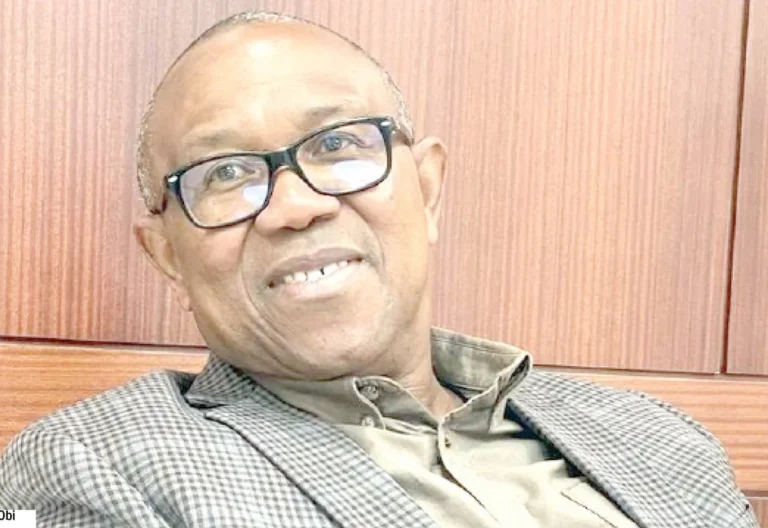
The political landscape of Nigeria has once again turned its focus toward the country’s turbulent history following recent remarks by the presidential candidate of the Nigeria Democratic Congress (NDC), Peter Obi. Addressing public discourse sparked by his recent appearance on Arise News—where he faced probing inquiries regarding the 1966 military coups—Obi asserted that Nigeria’s historical tragedies must be deliberately transformed into foundational stepping stones for enduring national unity, political stability, and economic prosperity.
In a detailed statement shared via his official social media platforms, the former Anambra State governor maintained that avoiding difficult historical conversations has long hindered the nation’s progress. Rather than shying away from questions surrounding the country’s formative traumas, Obi emphasized his readiness to confront the realities of Nigeria’s past head-on, framing transparent dialogue as an essential prerequisite for effective leadership and national healing.
Confronting the Past: The Arise News Appearance and Public Reactions
The controversy emerged shortly after Obi’s appearance on the breakfast television program Arise News, during which anchors pressed him on historical grievances, specifically the military interventions of 1966 that fundamentally altered Nigeria’s political trajectory. The questions struck a chord in a country where ethnic, regional, and religious sensitivities remain deeply entrenched, often acting as undercurrents in contemporary political debates.
While some political analysts and citizens praised the candidate for his willingness to engage with complex historical narratives, others expressed apprehension that revisiting such deeply divisive topics could inflame existing tensions. In response to these concerns, Obi doubled down on his stance, making it clear that a leader seeking to guide a diverse nation of over 200 million people cannot afford to be evasive about the events that shaped its present reality.
“I am ready and able to answer any questions about anything relating to Nigeria. I have a commitment to serve the people, not to hide from them,” Obi stated. He argued that sweeping historical injustices and state-sponsored failures under the rug has only allowed systemic dysfunction to fester, preventing the country from achieving true reconciliation and cohesion.
Leadership Failure and the Rule of Law
Delving deeper into the root causes of Nigeria’s recurring crises, Obi pointed directly to governance and institutional failures as the primary culprits behind the nation’s stunted development. He posited that many of the country’s monumental tragedies—ranging from the counter-coups and the subsequent Nigerian Civil War to modern episodes of mass violence—could have been entirely avoided if successive administrations had consistently upheld and fairly implemented the rule of law.
According to the NDC candidate, the persistent inability of past leaders to guarantee equal rights, protect fundamental freedoms, and enforce constitutional provisions without fear or favor has severely fractured the social contract. When citizens feel marginalized by the state or perceive systemic bias in the distribution of justice and resources, the resulting disenfranchisement creates fertile ground for civil unrest, secessionist agitations, and communal violence.
Obi stressed that moving forward requires a radical departure from the impunity of the past. He called for the establishment of robust, independent institutions capable of holding leaders accountable and ensuring that every Nigerian, regardless of ethnic background or religious affiliation, feels protected by the law.
Learning from Global Parallels: How Nations Rebuilt from Trauma
To illustrate how historical trauma can be successfully leveraged for national transformation, Obi drew comparisons with several international examples. Nations that have emerged from devastating conflicts or profound institutional failures to become global powerhouses, he noted, did so by confronting their histories rather than ignoring them.
He pointed to Japan, which rebuilt its economy and democratic institutions from the absolute devastation of the Second World War to become one of the world’s leading technological and industrial nations. Similarly, he highlighted South Korea’s journey from the ruins of the Korean War and decades of political instability to its current status as a formidable global economic and cultural hub.
Obi also referenced China’s monumental economic turnaround under the leadership of Deng Xiaoping in the late 1970s. By breaking away from rigid ideological dogmas and learning from past governance missteps, China embarked on a path of economic reform that lifted hundreds of millions of people out of poverty.
Closer to home, the NDC candidate cited Rwanda as a contemporary model of post-conflict recovery. Barely three decades after experiencing one of the worst human tragedies of the 20th century—the 1994 genocide against the Tutsi—Rwanda has transformed itself into one of the safest, cleanest, and fastest-growing economies in Africa. Through deliberate policies centered on unity, accountability, and reconciliation, Rwanda demonstrated that a nation defined by recent horror could deliberately engineer a future defined by peace and prosperity.
“For me, my responsibility as Nigerian President is to turn the pains and tragedies of the past into opportunities to make Nigeria united, stable, and prosperous,” Obi emphasized.
A Call for Inclusive Governance and Resource Optimization
Moving from historical critique to policy vision, Obi outlined his framework for a united Nigeria. He advocated for a shift away from divisive identity politics, urging contemporary politicians to abandon strategies that exploit ethnic and religious fault lines for temporary political gain. Instead, he argued, national leadership must focus on policies that foster inclusion and shared prosperity.
Nigeria, Obi noted, is immensely blessed with abundant human and natural resources distributed across every region of the federation. From the agricultural potential of the Middle Belt and the North to the industrial and commercial dynamism of the South and West, every part of the country possesses unique assets that, if properly harnessed, can contribute to national wealth.
The NDC candidate pledged that an administration under his leadership would intentionally create an enabling environment for every region to become economically productive. By prioritizing merit, productivity, and equitable resource allocation over primordial sentiments, the government could dismantle the zero-sum political culture that has long dominated Nigerian elections.
“Our past is important, but our past is not our destiny. Our future is what we do with our past,” Obi reiterated. He maintained that leadership must serve as a bridge rather than a barrier, uniting disparate ethnic nationalities under a common Nigerian identity.
Broader Implications and Political Landscape
Obi’s recent remarks and his broader socio-political philosophy arrive at a critical juncture for Nigeria. As the nation grapples with multifaceted challenges—including widespread insecurity, sluggish economic growth, high inflation, and escalating national debt—the debate over governance philosophy has taken center stage.
Political analysts note that Obi’s deliberate framing of national history as an economic and social asset rather than a permanent curse resonates strongly with a growing demographic of young, urban Nigerians. This constituency, largely detached from the visceral ethnic loyalties of the past, increasingly demands competence, transparency, and structural reform from those seeking public office.
At the same time, critics argue that visionary rhetoric must be backed by pragmatic, actionable policy blueprints, particularly given the deeply entrenched interests that benefit from Nigeria’s current political economy. Overhauling institutions, reforming the civil service, and decentralizing governance to empower local economies will require immense political will—qualities that critics often argue are difficult to measure until leaders are tested in office.
Nevertheless, Obi’s insistence on confronting difficult historical truths marks a distinct departure from the status quo of political evasion. By reframing the conversation around the 1966 coups and subsequent national crises, the NDC candidate has challenged both his political rivals and the electorate to view history not as a chain anchoring the country to failure, but as a severe lesson guiding the construction of a stronger, more resilient republic.