The persistent challenge of medical financial accessibility in Nigeria has reached a critical juncture, prompting urgent calls for systemic reform from leading healthcare stakeholders. Dr. Lekan Ogunlowo, Chief Executive Officer of ZenithCare Hospital, has formally appealed to federal and state governments, as well as private sector leaders, to establish more robust support mechanisms for indigent patients who find themselves unable to afford essential medical care.
This appeal was issued on Monday in Ibadan during the commencement of a high-impact free medical and surgical outreach program, a collaborative initiative between the Pistis Foundation and ZenithCare Hospital. The program serves as a tangible response to the growing number of Nigerians who are effectively excluded from the formal healthcare system due to economic constraints.
The Anatomy of the Healthcare Funding Crisis
The cost of specialized medical care in Nigeria has seen a steady, often sharp, upward trajectory over the last decade. Inflation, the rising cost of imported medical equipment, and the devaluation of the naira have combined to push life-saving procedures far beyond the reach of the average citizen. Dr. Ogunlowo highlighted that many illnesses—ranging from chronic conditions to acute surgical needs—require financial resources that the vast majority of the population simply does not possess.
When patients are faced with high-cost procedures, they are often forced to choose between personal bankruptcy and the total abandonment of treatment. This leads to a public health crisis characterized by delayed diagnoses, worsened health outcomes, and, in many cases, preventable mortality. According to Dr. Ogunlowo, private foundations and hospitals currently fill this void, but their resources are inherently finite. Without structural government intervention, these efforts, while noble, remain isolated incidents rather than a sustainable healthcare model.
Chronology of the Pistis Foundation and ZenithCare Outreach
The current outreach in Ibadan represents a strategic partnership designed to provide immediate relief to the most vulnerable. The chronology of this specific intervention began with extensive logistical planning, identifying the most critical medical needs in the region.
- Phase 1: Screening and Diagnostics: The outreach began with a comprehensive registration process, where potential beneficiaries underwent laboratory investigations to confirm their medical status.
- Phase 2: Clinical Assessment: Medical personnel from ZenithCare evaluated the severity of conditions to prioritize patients for surgery.
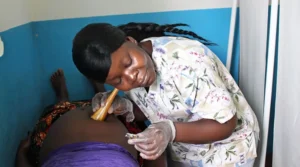
- Phase 3: The Surgical Initiative: On Monday alone, approximately 20 patients received life-changing surgical interventions. The total target for the current outreach is 100 beneficiaries, with procedures covering a broad spectrum of medical needs.
- Phase 4: Ongoing Care: Beyond the operating theater, the outreach includes dental screenings, vision care, and the distribution of medications, ensuring a holistic approach to patient health.
Clinical Scope and Surgical Interventions
The surgical team at ZenithCare Hospital, under the guidance of clinical directors, has focused on procedures that address both chronic pain and life-threatening conditions. The specific interventions being offered include, but are not limited to:

- Laparotomy: Exploratory or corrective abdominal surgery.
- Appendectomy: The removal of the appendix, a common yet urgent requirement for many in the community.
- Myomectomy: A crucial procedure for women suffering from uterine fibroids, which significantly impact quality of life.
- Lipoma Removal: Addressing benign soft tissue tumors that can cause discomfort and physical limitation.
- Aneurysm-related Procedures: High-stakes interventions designed to prevent catastrophic vascular events.
The inclusion of eye care and dental services further underscores the outreach’s commitment to addressing the "silent" health issues that often go untreated in low-income populations due to the high costs associated with optical and dental clinics.
Analysis of the Financial Burden on Healthcare
The argument put forward by Dr. Ogunlowo is supported by broader economic data regarding out-of-pocket expenditure (OOPE) in Nigeria. The World Health Organization (WHO) has frequently identified high out-of-pocket payments as a major barrier to Universal Health Coverage (UHC) in sub-Saharan Africa. In Nigeria, it is estimated that over 70% of total health expenditure is out-of-pocket, leaving households highly vulnerable to financial shocks.
The implication of this data is clear: when a family is faced with a medical emergency, they are often pushed into poverty. Government support for foundations such as the Pistis Foundation could serve as a catalyst for a "Social Health Safety Net." By providing tax incentives for hospitals that dedicate a portion of their capacity to pro-bono work, or by establishing a state-funded pool for emergency surgeries, the government could leverage existing private infrastructure to deliver public goods.
The Role of Public-Private Partnerships (PPP)
Dr. Ogunlowo’s proposal emphasizes that the government does not necessarily need to build new facilities from scratch to solve these issues. Instead, a partnership model—where the government provides funding or subsidies and the private sector provides the technical expertise and infrastructure—is arguably more efficient.
"If government can actually support this kind of foundation or create an avenue by which hospitals could attend to such people, it will be a welcome idea in the society," Dr. Ogunlowo stated. This approach would allow for:
- Increased Capacity: Hospitals could utilize downtime or under-capacity units to treat indigent patients, with the government covering the cost of consumables.
- Standardized Care: By formalizing these partnerships, the quality of care provided to the poor would be held to the same high standards as private, fee-paying patients.
- Data Collection: A centralized government-led database for these programs could help identify health trends, allowing for better public health planning.
Broader Implications for National Health Policy
The current outreach serves as a microcosm of what could be achieved on a national scale. However, the reliance on ad-hoc, donor-funded medical camps is not a substitute for a comprehensive health insurance scheme. While the National Health Insurance Authority (NHIA) continues its efforts to expand coverage, there remains a massive "missing middle"—those who are neither employed in the formal sector (where insurance is common) nor wealthy enough to afford private insurance.
The call from ZenithCare Hospital highlights the need for the NHIA and the Ministry of Health to integrate these philanthropic surgical initiatives into the broader national strategy. By recognizing and subsidizing the work of organizations like the Pistis Foundation, the government could effectively bridge the gap between the haves and the have-nots in the medical sector.

A Commitment to Compassionate Care
For ZenithCare Hospital, this partnership is more than just a corporate social responsibility (CSR) exercise; it is an organizational philosophy. Dr. Ogunlowo reaffirmed that the hospital’s mission is rooted in the provision of quality healthcare with compassion. By dedicating its top-tier medical personnel to the Pistis Foundation’s "Ubomi" medical and surgical outreach, the hospital is demonstrating that private institutions have a moral obligation to act as pillars within their communities.
The Ubomi outreach is designed to be comprehensive. It is not merely about surgery; it is about providing the diagnostic foundation—laboratory services and screenings—that allows patients to understand their health status. Without this, many patients would remain unaware of the underlying conditions that threaten their longevity.
Conclusion: A Call for Unified Action
As the outreach continues in Ibadan, the message remains resonant: the burden of healthcare should not fall solely on the shoulders of the individual or the private hospital. The intersection of economic poverty and medical need is a systemic issue that requires a systemic solution.
Dr. Ogunlowo’s advocacy serves as a benchmark for hospital leadership across the country. It challenges policymakers to look beyond traditional budgetary allocations and consider innovative funding mechanisms that empower existing medical infrastructure to serve all segments of society. Whether through direct funding, public-private partnerships, or the institutionalization of charity-based care, the path forward must prioritize the dignity and health of every Nigerian citizen, regardless of their financial status.
The success of the Pistis Foundation and ZenithCare collaboration in Ibadan is a testament to what is possible when professional expertise meets charitable intent. However, the true measure of success will be whether this model can be scaled, sustained, and eventually adopted as a standard practice in the Nigerian healthcare landscape. The time for reactive, temporary measures is passing; the time for proactive, government-backed healthcare support has arrived.