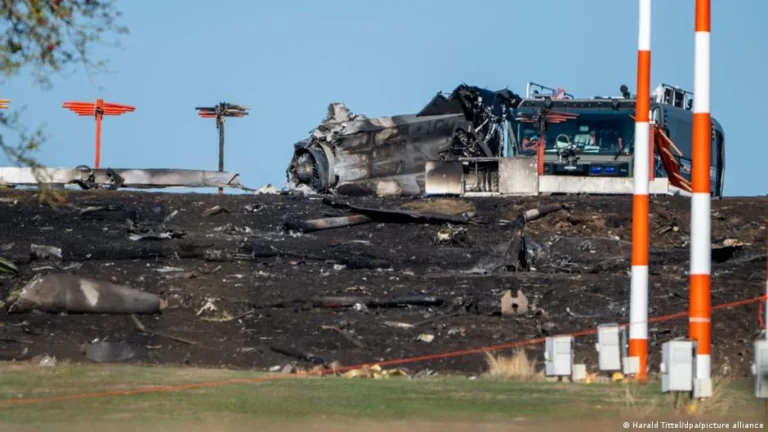
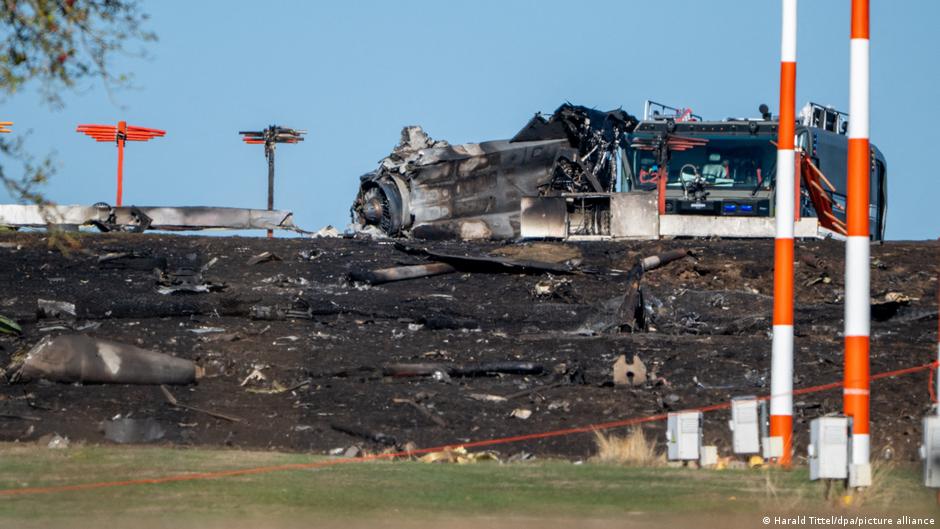
An F-16 Fighting Falcon assigned to the United States Air Force’s 52nd Fighter Wing crashed on Tuesday in the vicinity of Spangdahlem Air Base in the Eifel region of Germany. The incident, which occurred at approximately 2:30 p.m. local time (12:30 UTC), prompted an immediate mobilization of local emergency services and US military support teams. While the aircraft was destroyed upon impact, military officials confirmed that the pilot successfully ejected from the cockpit before the crash, averting a potential fatality. The pilot is currently under medical evaluation, and authorities have launched a formal investigation to determine the technical or mechanical factors that led to the catastrophic failure of the multi-role fighter.
Chronology of the Incident
The sequence of events began shortly after midday on Tuesday when the F-16, a cornerstone of NATO’s tactical aviation capabilities, encountered an inflight emergency. While the Air Force has not disclosed the specific nature of the malfunction, radio silence and distress protocols were initiated as the aircraft lost altitude. At 2:30 p.m., the jet descended into a remote area near the base, located in the Bitburg-Prüm district.
Within minutes of the impact, local fire and emergency response teams from the Eifel region were dispatched to the site to contain potential fuel fires and secure the perimeter. Simultaneously, the 52nd Fighter Wing activated its own crash recovery and safety protocols. By mid-afternoon, the US military released a brief statement confirming the identity of the aircraft and the safety of the pilot. Local German authorities, including district spokespeople, maintained a restricted access zone around the crash site to allow for the recovery of flight data recorders and the preservation of evidence necessary for the ensuing safety investigation board.
The Strategic Significance of Spangdahlem Air Base
Spangdahlem Air Base serves as a vital component of the United States’ strategic footprint in Europe. Established in the early 1950s during the early stages of the Cold War, the installation has evolved into a critical NATO operations center. It provides the US Air Force with the ability to project power across the European theater, acting as a forward-deployed hub for aerial deterrence and training.
The base is currently home to the 52nd Fighter Wing, which oversees a squadron of approximately 20 F-16 Fighting Falcons. These aircraft are frequently deployed to support NATO’s Enhanced Air Policing missions and various joint-force exercises designed to integrate the air forces of member nations. Geographically, the base is situated north of Trier in the state of Rhineland-Palatinate, placing it within a sensitive airspace corridor that borders Luxembourg. Along with Ramstein Air Base, located near Kaiserslautern, Spangdahlem is considered one of the two pillars of US airpower in Germany. The facility hosts roughly 5,000 personnel, including active-duty service members, civilian contractors, and their families, alongside a significant local German workforce of nearly 800 people who provide logistics, maintenance, and facility management support.
Technical Overview: The F-16 Fighting Falcon
The F-16 Fighting Falcon remains one of the most successful and widely utilized fighter jets in history. Since its introduction in the late 1970s, the platform has undergone numerous upgrades, moving from a lightweight air-superiority day fighter to a sophisticated all-weather multi-role aircraft. The variants operated by the 52nd Fighter Wing are equipped with advanced avionics, radar systems, and precision-guided munitions capabilities.
However, the intensive nature of flight operations in Europe—often involving high-speed maneuvers and complex training sorties—subjects these airframes to significant mechanical stress. While the F-16 is renowned for its safety record, the complexity of its fly-by-wire flight control systems and the high-performance F100 or F110 engines mean that even minor technical anomalies can lead to emergency situations. Investigators will likely focus on the engine performance, hydraulic integrity, and the pilot’s interaction with the ejection sequence, which is designed to function at a wide range of altitudes and speeds.
Official Responses and Preliminary Findings
The response to the crash was characterized by a high degree of coordination between the US military and German civil authorities. In the immediate aftermath, the Eifel District of Bitburg-Prüm issued a public notice confirming that emergency responders were on the ground, though they remained tight-lipped regarding specific casualty counts or environmental impacts. The statement from the District authorities noted that "no comments can be made on the further details of the event from the side of the Eifel district at this time," emphasizing the priority of the ongoing US-led investigation.
The US military has committed to a transparent but thorough investigative process. In cases involving military aviation accidents, a Safety Investigation Board (SIB) is typically convened. This board consists of experts in aeronautics, propulsion, and human factors who are tasked with identifying the root cause of the crash. The findings of the SIB are used to prevent future occurrences, while a separate Accident Investigation Board (AIB) may be formed to determine legal and administrative accountability.
Broader Implications and Safety Protocols
The crash serves as a reminder of the inherent risks associated with high-performance military flight training. In recent years, the US Air Force has placed a renewed emphasis on pilot training and aircraft maintenance following a series of incidents across its global fleet. The fact that the pilot was able to eject safely is being viewed by military analysts as a success of the aircraft’s life-support systems, specifically the ACES II (Advanced Concept Ejection Seat) or similar integrated egress systems standard in the F-16.
From a diplomatic and logistical perspective, the crash highlights the deep integration between US forces and their German hosts. The presence of such a high-density training environment in a civilian-populated area necessitates rigorous safety standards. The local reaction, while concerned, reflects a long-standing acceptance of the base’s presence, though environmental groups or local municipal leaders may request further briefings on debris cleanup and any potential soil contamination resulting from jet fuel or specialized materials utilized in the F-16’s construction.
Future Outlook for the 52nd Fighter Wing
Operations at Spangdahlem are expected to continue with minimal disruption, although the loss of an F-16 is a significant tactical blow to the squadron’s immediate operational capacity. The squadron will likely undergo a temporary "stand-down" or a period of intensified maintenance inspections to ensure that the remaining fleet does not share the same technical failure that downed the aircraft on Tuesday.
As the investigation progresses, the US Air Force will likely issue periodic updates to satisfy public and parliamentary interest in Germany. For the local community in the Eifel region, the incident marks a rare interruption to the standard operations of the base, which remains an essential component of regional security. The focus will now shift to the recovery of the wreckage and the subsequent analysis of the flight data recorder, which will ultimately provide the definitive answer to how and why this incident occurred.
The safety of the pilot remains the primary success story in this narrative. As he receives medical care, the military community will reflect on the incident, ensuring that the necessary precautions are taken to maintain the readiness and safety of the remaining F-16 fleet. The transparency displayed by the base command in the immediate aftermath of the crash is a hallmark of the collaborative relationship between the US military and its German partners, ensuring that even in the face of a loss of equipment, the mission of maintaining regional stability remains uninterrupted.