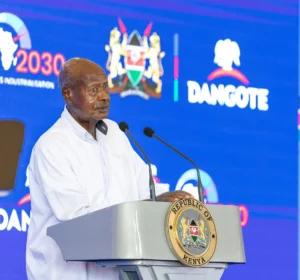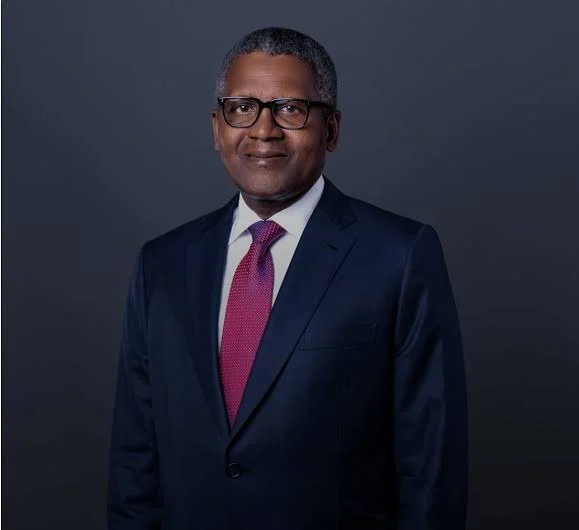
Aliko Dangote, President and Chief Executive Officer of Dangote Industries Limited, has announced a landmark philanthropic initiative aimed at transforming the economic futures of approximately two million vulnerable women across Nigeria. Speaking on the global stage in New York during the proceedings of the United Nations General Assembly, Dangote revealed that the Aliko Dangote Foundation is forging strategic partnerships with state governments to facilitate the acquisition of equity stakes in the multi-billion-dollar Dangote Petroleum Refinery and Petrochemicals Limited.
The ambitious program is explicitly designed to target widows, survivors of conflict, and economically distressed households, integrating them directly into the wealth-generation potential of Africa’s largest single-train refinery. By combining accessible initial public offering (IPO) participation with direct equity donations from the foundation, the initiative seeks to establish a resilient financial safety net for marginalized populations, particularly within regions impacted by insurgency, communal clashes, and economic instability.
The announcement underscores a growing emphasis on inclusive capitalism and public-private synergy in addressing systemic poverty and post-conflict recovery within the West African sub-region.
Genesis of the Initiative: Dialogue in New York
The historic disclosure was made during a high-level interactive session at the United Nations General Assembly. The announcement materialized in response to a targeted inquiry posed by Dr. Goje Mohammed, Secretary to the Yobe State Government. Dr. Mohammed had sought expert perspectives on actionable public-private frameworks that could effectively assist conflict-affected communities—with a specific focus on destitute widows—to construct sustainable financial futures and break generational cycles of poverty.
Yobe State, located in Nigeria’s northeastern geopolitical zone, has borne the brunt of protracted security challenges over the past decade and a half. The region has witnessed severe displacement, loss of primary breadwinners, and systemic economic erosion, leaving thousands of women as sole heads of households with limited access to formal financial systems, capital markets, or income-generating assets.
In addressing Dr. Mohammed’s query, Dangote highlighted that corporate philanthropy must evolve beyond traditional humanitarian aid, such as food distribution and temporary relief materials, to embrace structural empowerment mechanisms. Equity ownership, according to the industrialist, offers a permanent pathway to wealth creation, inflation-hedging, and long-term financial independence.
Mechanics of the Empowerment Program: The "People’s IPO" and Foundation Subsidies
At the core of this initiative is the broader Dangote Refinery "People’s IPO," a strategic corporate maneuver designed to democratize ownership of the colossal 700,000-barrel-per-day refining facility situated in the Lekki Free Zone of Lagos State. The refinery, which commenced operations to much global acclaim, represents a monumental shift in Nigeria’s energy landscape, transitioning the nation from a petroleum-importing state to a self-sufficient refining hub capable of exporting refined products across the globe.
However, the leadership of Dangote Industries recognized that without deliberate structural interventions, capital market instruments like an IPO risk remaining inaccessible to grassroots populations, particularly impoverished women in remote or conflict-ravaged states.
To bridge this accessibility gap, the Aliko Dangote Foundation has structured a dual-pronged support mechanism:
- State-Facilitated IPO Acquisition: The foundation will collaborate directly with various state governments to identify, vet, and register eligible beneficiaries—predominantly widows and vulnerable female heads of households. These state governments will act as localized administrative conduits, ensuring that outreach penetrates deeply into marginalized rural and semi-urban communities.
- Direct Equity Grants and Matching Shares: Recognizing that initial capital outlay, even for an IPO, can be prohibitive for indigent citizens, the foundation will not merely facilitate access; it will actively supplement it. Dangote announced that the foundation will donate additional shares directly to women who successfully participate in the IPO. This matching and donation model ensures that beneficiaries immediately secure a substantive portfolio of long-term financial assets that they can hold as dedicated savings for the future.
Through this comprehensive methodology, the initiative aims to systematically incorporate two million women into the formal corporate economy, granting them dividend-earning power and a direct stake in one of the continent’s most profitable industrial assets.
Background Context: The Aliko Dangote Foundation and Corporate Philanthropy
Established with a profound commitment to alleviating poverty, improving health outcomes, and driving economic empowerment, the Aliko Dangote Foundation (ADF) stands as one of the largest private philanthropic organizations in sub-Saharan Africa. Over the years, the foundation has deployed billions of naira into humanitarian crises, educational infrastructure, nutritional programs, and healthcare delivery across Nigeria and the wider African continent.
In northeastern Nigeria specifically, the foundation has played a pivotal role in post-conflict reconstruction, food security interventions, and the rehabilitation of internally displaced persons (IDPs). The new venture into equity-based empowerment represents a sophisticated evolution in the foundation’s operational strategy. Moving past grant-based charity, ADF is leveraging the immense balance sheet and market capitalization of Dangote Group subsidiaries to transfer tangible wealth directly to the grassroots.
Analysts note that this approach aligns with contemporary global development paradigms, which emphasize financial inclusion and asset-building as the most effective antidotes to chronic poverty. By endowing vulnerable citizens with corporate equity, the foundation ensures that beneficiaries are insulated against inflationary pressures through ownership of tangible, dividend-yielding productive capital.
Chronology of the Dangote Refinery Project and Public Ownership Roadmap
To fully contextualize the magnitude of the women’s empowerment initiative, it is essential to examine the developmental timeline of the Dangote Petroleum Refinery and its trajectory toward public equity participation:
- 2013–2015: Aliko Dangote announces plans to construct a mega-refinery with an initial projected capacity of 400,000 to 500,000 barrels per day, later scaling up the design to a staggering 700,000 barrels per day to address Nigeria’s crippling reliance on imported petroleum products.
- 2016–2019: Groundbreaking and extensive civil engineering works commence at the Lekki Free Zone in Lagos. Financing is secured through a complex mix of equity, commercial bank loans from Nigerian and international lenders, and support from African development finance institutions.
- 2020–2022: Global supply chain disruptions caused by the COVID-19 pandemic and geopolitical tensions create substantial delays in equipment delivery and project execution. Despite these headwinds, construction of the world’s largest single-train refinery presses forward.
- May 2023: The physical inauguration of the Dangote Refinery takes place amidst high-level attendance from African heads of state, international dignitaries, and industry captains.
- Late 2023–Early 2024: Mechanical completion is finalized, and the facility receives its maiden shipments of crude oil feedstocks. Commercial production of aviation turbine fuel (Jet A1), diesel, and subsequently Premium Motor Spirit (PMS) commences progressively.
- 2024–Present: With the plant successfully integrated into the domestic and international energy supply chains, attention shifts toward corporate restructuring and broad-based public participation. The conceptualization of the "People’s IPO" takes center stage, laying the groundwork for retail investors and institutional funds to acquire equity. The newly announced partnership with state governments to absorb two million vulnerable women into this IPO marks the latest phase of this inclusive ownership drive.
Broader Economic Implications and Analyst Perspectives
Economists and market analysts have reacted favorably to the announcement, hailing the initiative as a masterclass in inclusive capitalism. By democratizing equity ownership on such a massive scale, the Aliko Dangote Foundation is effectively addressing two critical national imperatives simultaneously: economic inclusion for marginalized demographics and the deepening of the Nigerian capital market.
In developing economies, capital market participation is frequently skewed toward high-net-worth individuals and institutional investors, leaving ordinary citizens alienated from the wealth generated by large-scale industrial complexes. By absorbing the financial friction for two million women, the foundation is creating a historic precedent for corporate social responsibility in Africa.
Furthermore, focusing on women in conflict-affected regions carries profound macroeconomic benefits. Extensive developmental research consistently demonstrates that increasing the financial agency of women yields exponential returns for household welfare, child nutrition, educational attainment, and community resilience. When women control assets, spending patterns shift decisively toward human capital development, creating a stabilizing multiplier effect within fragile societies.
Dr. Chinwe Uche, a development economist based in Lagos, noted that the initiative could serve as a blueprint for other conglomerates operating in developing nations.
"Corporate philanthropy in Africa has historically focused on palliative measures—handouts that solve immediate hunger but leave systemic vulnerability untouched," Dr. Uche observed. "By transitioning to asset-based philanthropy, where vulnerable citizens are transformed into shareholders of premier industrial entities, the Aliko Dangote Foundation is rewriting the playbook. Two million women holding equity in Africa’s largest refinery translates to two million households with a vested, long-term stake in economic stability and national productivity."
Implementation Challenges and Safeguards
While the strategic vision has drawn widespread acclaim, financial analysts and governance experts emphasize that successful execution will require rigorous administrative architecture and transparency. Ensuring that the intended beneficiaries—specifically widows and conflict-affected women in remote states like Yobe, Borno, Adamawa, and beyond—are accurately identified without bureaucratic leakage or political patronage will be a paramount operational hurdle.
To mitigate these risks, the collaborative framework between the Aliko Dangote Foundation and state governments is expected to deploy transparent digital identity verification, localized community committees, and robust auditing protocols. By utilizing structured channels, the partners aim to ensure that the equity grants reach the grassroots demography for whom they were explicitly designed.
Moreover, financial literacy training is expected to accompany the share distribution. Empowering women with equity must be complemented by education on how capital markets function, the nature of stock ownership, dividend management, and the importance of long-term asset retention over short-term liquidation. Industry insiders suggest that the foundation’s outreach programs will likely incorporate educational modules to equip beneficiaries with the financial acumen necessary to maximize the utility of their new portfolio assets.
Conclusion: A Transformative Vision for Nigeria’s Future
The commitment articulated by Aliko Dangote in New York signals a pivotal moment for corporate citizenship in Nigeria. By leveraging the monumental success of the Dangote Petroleum Refinery to uplift the most fragile segments of society, the initiative bridges the gap between macro-industrial achievement and micro-level human development.
As the operational details of the partnership between the Aliko Dangote Foundation and participating state governments take shape in the coming months, millions of Nigerian women stand on the threshold of financial emancipation. Through targeted IPO facilitation and generous equity donations, this pioneering program promises to convert vulnerability into ownership, securing a more prosperous, inclusive, and stable financial future for generations to come.