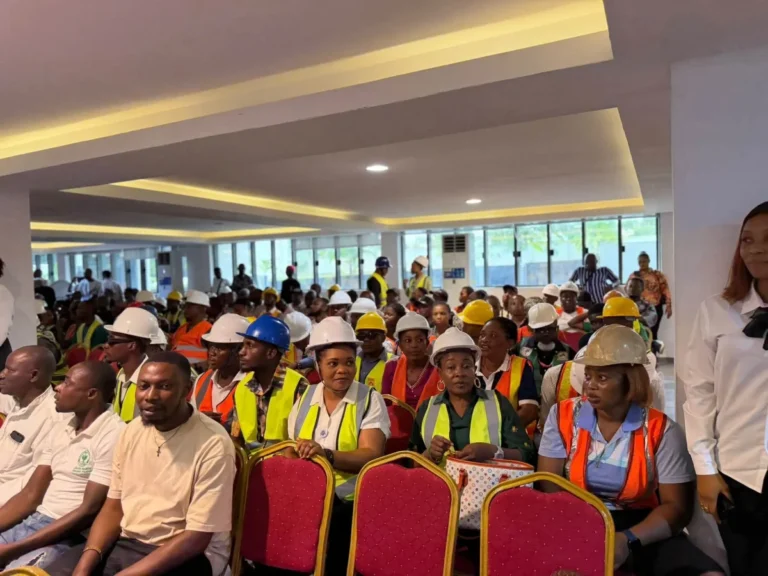
The Cross River State Government has officially inaugurated a comprehensive oil and gas skills acquisition initiative, marking a strategic pivot toward industrial capacity building for the state’s burgeoning youth population. The programme, branded as Skill Up in the Season of Sweetness, seeks to provide 2,000 participants with CPD-accredited certificate and diploma training, bridging the gap between local talent and the technical requirements of the global energy sector. The initiative was formally launched on Thursday in Calabar, with the Speaker of the Cross River State House of Assembly, Elvert Ayambem, representing Governor Bassey Otu.
This development arrives at a critical juncture for Nigeria’s energy landscape. As the federal government pushes for deeper local content participation in the petroleum industry, state-level interventions like this are increasingly viewed as essential for ensuring that regional workforces are not sidelined by international expertise. By focusing on professional certification, the Cross River government aims to position its youth as competitive candidates for roles in exploration, production, logistics, and environmental management.
Contextualizing the People First Agenda
The launch of the training programme is rooted in Governor Bassey Otu’s "People First Agenda," a policy framework that prioritizes human capital development as the primary driver of the state’s economic recovery. In recent years, Cross River has sought to diversify its revenue streams beyond traditional agriculture and tourism, eyeing a more robust role in the broader energy value chain.
Official government documents suggest that the current administration views youth unemployment as an existential threat to regional stability. By investing in specialized technical education, the government intends to shift the focus from state-provided welfare to individual economic self-reliance. The "Season of Sweetness" branding, while colloquial, serves as a narrative anchor for the administration’s broader goal of improving living standards across the state’s urban and rural clusters.
A Curriculum for the Modern Energy Sector
The training modules selected for the 2,000 beneficiaries are designed to meet the rigorous standards of the energy sector. Unlike generalized vocational training, this programme offers CPD (Continuing Professional Development) accreditation, which carries weight in international professional circles.
The curriculum covers a spectrum of essential disciplines, including:
- Engineering and Maintenance: Technical training on facility operations, mechanical repairs, and infrastructure maintenance.
- Logistics and Supply Chain: Management of maritime and terrestrial logistics, a critical component given the state’s proximity to coastal energy hubs.
- Safety and Environmental Management: Training on HSE (Health, Safety, and Environment) protocols, which are non-negotiable for anyone seeking employment with international oil companies.
- Data Services and Procurement: Digital literacy and administrative skills tailored for the energy industry’s operational needs.
During the launch event, representatives of the technical partners emphasized that the certificates awarded upon completion would be recognized by major industry regulators. This is a crucial detail, as the lack of certified credentials has historically been a barrier for many Nigerian youths attempting to break into the oil and gas sector.
Chronology of the Initiative
The road to this launch began several months ago, following a state-wide assessment of the labor market.
- Q1 2026: Preliminary discussions between the state government and technical consultants to identify high-demand skills in the energy sector.
- Q2 2026: Procurement of training equipment and the identification of qualified instructors to lead the modules.
- Q3 2026: Registration portal opened to youths across the 18 local government areas of Cross River, ensuring geographical spread.
- September 24, 2026: Official launch and commencement of the first cohort’s training sessions.
Economic Implications and Labor Market Analysis
The decision to train 2,000 individuals in oil and gas skills is not without its macroeconomic implications. Cross River, while not a primary oil-producing state in the same vein as Bayelsa or Rivers, has a significant stake in the maritime economy. As the region positions itself as a hub for services supporting offshore operations, the availability of a skilled local workforce becomes a competitive advantage.
Economic analysts point out that the success of this programme depends largely on post-training absorption. While the government provides the training, the private sector must provide the jobs. If the state can successfully integrate these 2,000 youths into the supply chain, it could significantly boost the state’s internally generated revenue (IGR) and reduce reliance on federal allocations. Furthermore, the emphasis on entrepreneurship suggests that the government hopes some of these graduates will establish their own service companies, effectively becoming job creators rather than mere job seekers.
Official Statements and Government Vision
Speaker Elvert Ayambem, speaking on behalf of Governor Otu, underscored the moral and economic responsibility of the government to prepare the next generation. "The responsibility of government is to ensure that young people acquire the knowledge, technical competence, and professional credentials required to compete effectively for opportunities in the evolving global energy sector," he stated.
The Governor’s message to the beneficiaries was clear: the training is not merely an academic exercise but a gateway to professional elevation. By encouraging participants to "skill up and stand out," the administration is signaling a shift toward a merit-based economic model. Otu noted that the certificates provided would serve as a baseline for future professional growth, whether the beneficiaries choose to work for established firms or pursue independent ventures.
Challenges and Sustainability
While the initiative is ambitious, observers note that long-term success will require consistent funding and rigorous quality control. The energy industry is highly dynamic, with technology and safety standards changing rapidly. If the curriculum remains stagnant, the skills acquired may become obsolete within a few years.
To mitigate this, the government has stated that it will continue to introduce subsequent programmes aimed at expanding access to skills and enterprise opportunities. The focus on public-private partnerships is expected to play a vital role here. By involving industry experts in the training phase, the government ensures that the knowledge being transferred is practical and relevant to current market needs.
Broader Impact on Youth Empowerment
The "Season of Sweetness" programme acts as a litmus test for the Otu administration’s commitment to youth development. In a region where youth restiveness has been a concern, providing a constructive outlet for talent is a strategic security move as much as an economic one.
The inclusion of 2,000 youths is a significant scale, but it represents only a fraction of the state’s total youth population. If this pilot project proves successful in terms of placement rates and entrepreneurial output, it is likely to serve as a blueprint for future initiatives in other sectors, such as agriculture, digital technology, and renewable energy.
Conclusion
As the 2,000 beneficiaries begin their journey toward certification, the Cross River State Government has set a high bar for itself. The success of this programme will be measured not by the number of students enrolled, but by the number of graduates who successfully transition into meaningful employment or business ownership.
The commitment to "skill up" is a direct response to the demands of the modern, globalized economy. As Nigeria continues to navigate the complexities of its energy sector, the ability of states like Cross River to provide a workforce that is not only ready but certified to international standards will define their place in the national economic hierarchy. The initiative stands as a testament to the idea that sustainable development is best achieved through the empowerment of the individual, providing them with the tools to build their own futures and, by extension, the future of the state.