Cairo has taken a decisive and potentially transformative step in Middle Eastern geopolitics after the Egyptian parliament officially authorized President Abdel Fattah al-Sisi to implement all necessary measures to safeguard Saudi Arabia’s national security. The legislative green light paves the way for Cairo to engage more directly in the protracted and volatile conflict involving the kingdom and Yemen’s Iran-backed Houthi movement. While Egypt has historically exercised extreme caution regarding military entanglements beyond its borders, the escalating threats to regional stability, critical maritime choke points, and vital national economic interests have forced a re-evaluation of its foreign policy posture.
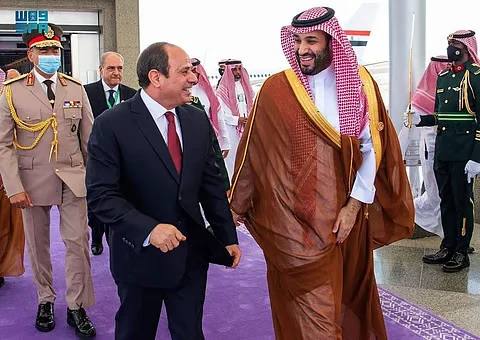
The parliamentary authorization follows a formal request submitted by President Sisi, aligning with Cairo’s recent pledges to extend comprehensive military and strategic assistance to its primary Gulf Arab ally. Saudi Arabia, the world’s largest oil exporter and a pivotal financial benefactor to Cairo, faces mounting security challenges along its southern frontier. By empowering the executive branch to deploy military assets or enact robust defensive strategies, the Egyptian government is signaling a hardened stance against threats directed at Riyadh and the wider Arabian Peninsula.
Strategic Vulnerabilities in the Red Sea and the Suez Canal
At the core of Egypt’s heightened vigilance is the grave security threat posed by Houthi advances near the Bab el-Mandeb Strait. Serving as the strategic southern gateway to the Red Sea and the Suez Canal, this narrow body of water is a critical artery for global commerce and a fundamental source of national revenue for Egypt. Any disruption to maritime traffic through the Suez Canal directly impacts the Egyptian economy, which relies heavily on transit fees as a stable stream of foreign currency.
The prospect of a hostile, Iran-backed movement controlling territory immediately adjacent to this vital shipping lane has alarmed military planners in both Cairo and Riyadh. Egyptian authorities recognize that ensuring the security of the Bab el-Mandeb Strait is not merely an act of regional solidarity with Saudi Arabia, but an absolute necessity for safeguarding domestic economic stability. The convergence of national security interests has thus created a powerful incentive for Cairo to step beyond its traditional posture of diplomatic condemnation and consider active defense cooperation.
A Retrospective Chronology of the Yemeni Conflict
The roots of the current escalation stretch back more than a decade, transforming Yemen into one of the most devastating humanitarian and geopolitical crises of the modern era. Understanding the urgency behind Egypt’s recent parliamentary decision requires examining the chronological unfolding of the Yemeni civil war:
- 2014: Houthi insurgent forces launch a sweeping offensive from their northern strongholds, ultimately seizing control of the Yemeni capital, Sanaa, and plunging the central government into disarray.
- 2015: The internationally recognized, Saudi-backed government is forced out of the capital entirely. In response, a coalition led by Saudi Arabia initiates a massive military intervention, codenamed Operation Decisive Storm, aimed at rolling back Houthi gains and restoring the legitimate government.
- 2016–2021: The conflict settles into a grinding, multi-sided war of attrition characterized by periodic airstrikes, cross-border drone and missile attacks into Saudi territory, and a severe humanitarian catastrophe marked by mass displacement, famine, and the collapse of local infrastructure. International aid organizations report tens of thousands of casualties.
- 2022–2024: A fragile UN-brokered truce brings a relative lull in large-scale combat, allowing for tentative diplomatic engagements. However, underlying tensions remain unresolved, and low-level skirmishes persist.
- Mid-2024: Regional hostilities flare up dramatically against the backdrop of wider Middle Eastern instability involving Iran and its regional proxies. In July, Saudi aircraft launch targeted airstrikes against the runway at Sanaa airport, successfully intercepting and preventing a Houthi delegation returning from Iran from landing. In response to renewed cross-border provocations, Saudi-led forces initiate a fresh military campaign to retake strategic territory from Houthi control.
- Late 2024: Amid deteriorating security conditions along the southern frontier, Saudi Arabia seeks enhanced assurances from key regional partners, prompting Cairo to formalize its legislative backing for potential military intervention.
Cairo Weighs Regional Defense Partnerships and Diplomatic Channels
While the Egyptian parliament has granted broad authorization for military support, Cairo’s approach to regional security remains multifaceted. Historically, Egypt has sought to balance its deep strategic alliances with the Gulf monarchies against a steadfast aversion to entangling foreign wars. A stark historical precedent weighs heavily on the collective memory of Egyptian military planners: Cairo’s involvement in the North Yemen civil war during the 1960s devolved into a costly, prolonged quagmire often referred to as Egypt’s Vietnam, draining state resources and human capital over several years.
Mindful of this history, contemporary Egyptian leadership has carefully calibrated its diplomatic and military maneuvers. Over recent months, Cairo has consistently condemned Iranian-sponsored attacks against Gulf states but has largely avoided direct engagement in combat operations. Notably, Egypt initially refrained from joining a high-profile mutual defense pact signed in Mecca in August by Saudi Arabia, Pakistan, and Turkey—an agreement designed to bolster collective security architecture against external threats.
However, shifting geopolitical realities are prompting a reassessment. Egyptian Foreign Minister Badr Abdelatty recently confirmed that Cairo is seriously considering formal participation in regional defence arrangements that include Saudi Arabia, Pakistan, and Turkey. This potential integration into a broader security framework reflects a growing consensus among regional powers that conventional deterrence must be reinforced through multilateral cooperation.
In parallel with military preparations, diplomatic channels remain active. Senior officials representing the newly formed defence pact met with Iranian leadership in Tehran to explore avenues for de-escalation and crisis management. Whether these diplomatic overtures can yield sustainable peace or if military deterrence will ultimately take precedence remains one of the defining questions for the region’s immediate future.
Regional Reactions and Strong Warnings from Sanaa
The prospect of direct Egyptian military involvement in the Yemeni theatre has not gone unnoticed by the Houthi leadership, who have voiced vehement opposition to Cairo’s parliamentary resolution. Yahya Ali al-Rai, speaker of the Houthi-run parliament in Sanaa, issued a direct warning to Egyptian lawmakers, urging them to reject President Sisi’s proposal. Al-Rai cautioned that any military intervention by Cairo would constitute a hostile act against the Yemeni people and could ultimately jeopardize Egypt’s internal stability and national security by drawing the nation into an intractable asymmetric conflict.
Despite these warnings, the foundational ties between Cairo and Riyadh remain exceptionally strong. Saudi Arabia has long served as an indispensable political and financial pillar for Egypt, injecting billions of dollars through central bank deposits, direct financial aid, and crucial energy supplies during periods of acute economic pressure in Cairo. This deep-seated economic interdependence ensures that Egypt cannot remain indifferent to existential threats facing the Saudi kingdom.
Fact-Based Analysis of Broader Implications and Economic Fallout
The decision by Egypt’s parliament to authorize President Sisi to take all necessary measures in defense of Saudi Arabia carries profound implications for the Middle East, global energy markets, and international shipping lanes.
From a strategic perspective, the move signifies a crystallization of a Sunni-led alignment aimed at containing Iranian influence across the Arabian Peninsula and the Red Sea corridor. If Egyptian military assets—such as naval units or air support—are formally deployed to assist Saudi operations, it would mark a significant escalation, transforming the conflict from a localized civil war into a more generalized regional confrontation. Such a shift could embolden the Saudi-led coalition but would simultaneously risk intensifying asymmetric retaliation by the Houthis against commercial shipping, critical energy infrastructure, and regional aviation hubs.
Economically, the stakes could not be higher. The Bab el-Mandeb Strait handles millions of barrels of oil and refined products daily, alongside a vast proportion of global containerized trade moving between Asia and Europe. Any disruption or escalation in this maritime zone inevitably triggers spikes in global energy prices and elevates insurance premiums for international shipping companies. For Egypt specifically, protecting the security of the Red Sea is an existential economic imperative, as any sustained threat to the Suez Canal strikes directly at the nation’s financial lifeblood.
Ultimately, the parliamentary authorization grants Cairo maximum strategic flexibility. It provides President Sisi with the legal and political leverage required to deter hostile actors, reassure jittery Gulf allies, and project power across a vital strategic perimeter. Whether this deterrence framework succeeds in bringing the Houthis to the negotiating table or instead precipitates a wider military escalation will depend heavily on the next phase of diplomatic engagements and the operational calculus of all parties involved in the unfolding crisis.