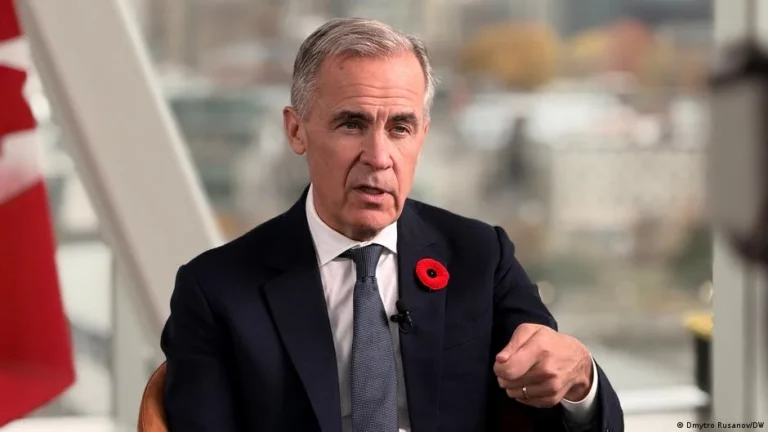
The geopolitical landscape of North America is undergoing a profound transformation as Canadian Prime Minister Mark Carney leads an aggressive diplomatic push to secure a new, formalized partnership with the European Union. Following high-level discussions in Montreal this past Friday with European Commission President Ursula von der Leyen and European Council President Antonio Costa, it has become increasingly clear that Ottawa is moving to recalibrate its economic and strategic alignment. This shift follows a period of volatile trade negotiations with the United States under President Donald Trump, a relationship that has been strained by unpredictable tariff threats and unorthodox diplomatic maneuvers.
For Ottawa, the objective is to forge an "associate membership" status with the EU—a novel framework that would offer the deepest possible integration for a non-European state. While the proposal faces skepticism from some EU member states, most notably the government of German Chancellor Friedrich Merz, the momentum behind the talks signals a long-term Canadian strategy to diversify its economic portfolio and insulate its domestic market from the volatility of its southern neighbor.
A Chronology of Strained Transatlantic Ties
The current rapprochement between Canada and the EU is not a sudden development but the culmination of months of mounting pressure. The timeline of this shifting alliance can be traced back to the onset of the current US administration’s "America First" trade policies:
- Early 2026: Tensions escalate as the Trump administration floats proposals for aggressive tariffs on Canadian steel, aluminum, and critical energy exports.
- Mid-2026: Public friction between Washington and Ottawa reaches a nadir when President Trump initiates symbolic, provocative actions, including attempts to unilaterally rename cross-border landmarks and the dissemination of AI-generated digital content mocking Prime Minister Carney.
- September 2026: Canadian officials begin quiet, high-level diplomatic outreach to Brussels to explore formalizing a deeper, non-accession partnership.
- October 30, 2026: The Montreal Summit convenes. Prime Minister Carney and EU leadership publicly embrace the concept of "associate membership," setting the stage for a new era of transatlantic cooperation that operates independently of the US-Canada bilateral framework.
The Economic Case for Diversification
The economic imperative for Canada’s pivot is rooted in data that illustrates a heavy, and perhaps unsustainable, reliance on the United States. Canada’s trade landscape remains overwhelmingly dominated by the US, which accounts for approximately 75% of Canadian exports and roughly 65% of its imports. This concentration leaves the Canadian economy uniquely vulnerable to changes in US regulatory environments or shifts in executive policy.
Economists have long argued that Canada’s proximity to the US is both its greatest strength and its most significant structural risk. By expanding the Comprehensive Economic and Trade Agreement (CETA)—which has already served as a robust foundation for trans-Atlantic commerce—Canada aims to capture higher-value partnerships in emerging sectors.
According to government reports, the focus of the new "associate" partnership will prioritize:
- Critical Minerals: Securing supply chains for the energy transition, ensuring that Canadian resources are integrated into European manufacturing hubs rather than solely relying on the US market.
- Artificial Intelligence and Tech: Leveraging Canada’s AI research infrastructure to foster cross-continental standards, separate from the US-dominated regulatory models.
- Space Technologies: Collaborative research initiatives that pool European and Canadian resources to compete with the rapid advancements in the US private and public space sectors.
Official Responses and Diplomatic Nuance
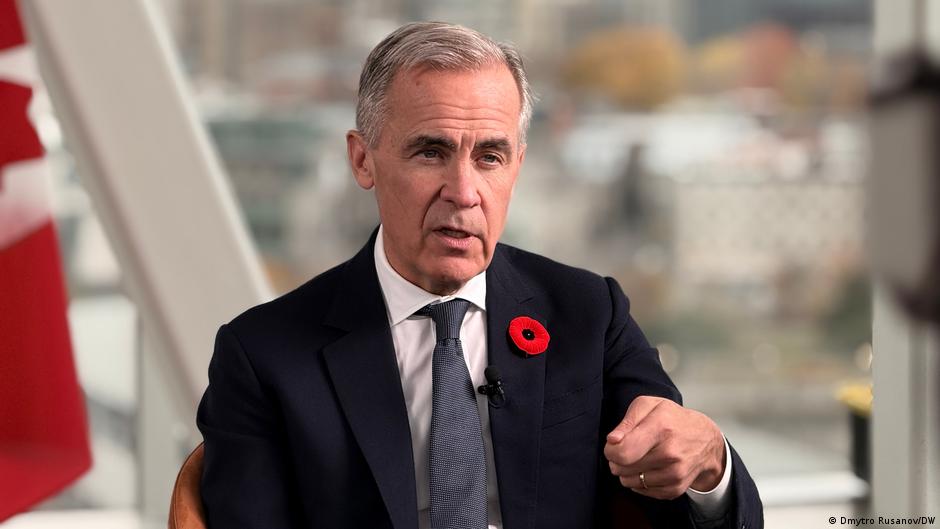
Prime Minister Carney, during his interview with DW, was careful to frame the move as an act of "positive association" rather than a pivot away from the North American alliance. "We’re both partners of the United States, obviously close partners, alliance partners in NATO," Carney stated. "But in many cases, there will be much deeper cooperation between Canada and Europe than between Canada and the United States."

This rhetoric is a strategic necessity. By emphasizing that the EU-Canada partnership is about solving global challenges—such as climate change, digital sovereignty, and global security—Carney hopes to neutralize potential accusations of anti-Americanism from Washington. However, the move is being closely watched by US trade representatives, who view any attempt by a US neighbor to formalize deeper ties with a competing trade bloc as a potential threat to the integrity of the North American trade zone.
The European perspective is similarly complex. While President von der Leyen has championed the "associate membership" model as a way to extend European influence and standards, the German government’s hesitation reflects a broader EU concern: the administrative burden of managing a non-member state that is deeply integrated into the single market. The challenge for the EU is to create a legal mechanism that grants Canada the benefits of integration without compromising the EU’s internal decision-making processes.
Analytical Implications: A New Transatlantic Paradigm
The pursuit of this partnership represents a fundamental shift in Canadian foreign policy. For decades, the "special relationship" with the United States was treated as an immutable constant. Now, however, Ottawa appears to be adopting a "hedging" strategy. By institutionalizing ties with the EU, Canada is effectively purchasing a form of economic and political insurance.
The implications of this move are three-fold:

1. Regulatory Standardization: If Canada successfully adopts EU standards for AI, privacy, and environmental protection, it may find itself caught between two competing regulatory giants. Canadian companies may have to navigate a bifurcated compliance environment—one for the US market and one for the EU-aligned Canadian domestic market.
2. Increased Strategic Autonomy: The "associate" status would provide Canada with a stronger voice in international forums. By acting in concert with the EU, Canada could exert more influence on global trade rules, climate accords, and security pacts than it could by attempting to negotiate with Washington alone.
3. The "Trump Factor" and Long-term Stability: Carney’s acknowledgment that the bonds between Canadians and Americans are "longstanding" is an attempt to de-personalize the conflict. However, the reality is that the volatility of the current US administration has made such stability a luxury. The Canadian government is betting that even if the US political climate shifts back toward a more traditional stance, a deeper, structural connection with the European Union will remain a permanent asset to the Canadian economy.
Conclusion
The Montreal summit has effectively signaled the end of an era of unchallenged US-centric trade for Canada. As the world moves toward a more fragmented, multipolar economic order, Prime Minister Carney’s push for a closer, quasi-member status with the European Union is a calculated response to the realities of 21st-century geopolitics. While the path to "associate membership" remains fraught with legislative and diplomatic hurdles—both in Brussels and in the halls of the US Congress—the intent is clear. Canada is no longer content to be a junior partner in a singular North American orbit; it is actively seeking to redefine its place in the global order by tethering its future to a broader, more diversified network of allies. Whether this bold move succeeds will depend on the resolve of the European bloc to accommodate a new kind of partner and the ability of the Canadian government to manage the inevitable friction with its southern neighbor.