In the rapidly modernizing capital of Astana, where steel skyscrapers pierce the vast Central Asian sky and the infrastructure of the 21st century rushes to outpace the past, 22-year-old Yunna Kinereish acts as a bridge to a darker era. As a member of the 223,000-strong Kazakh German community, Kinereish is part of a generation tasked with reconciling a dual identity: a profound sense of belonging to the Kazakh nation and a deep, ancestral duty to the memory of ethnic Germans who were forcibly displaced to the region under the iron rule of Joseph Stalin.
Kinereish, a public relations student, is not merely a witness to history; she is an active participant in its preservation. Through her involvement with the Wiedergeburt (Revival) Association of Germans in Kazakhstan, she utilizes theater and documentary filmmaking to bring the harrowing experiences of her forebears into the public consciousness. Her work highlights the often-ignored narrative of the Soviet Gulag system, which transformed the Kazakh steppe into a sprawling archipelago of forced labor camps.
A Chronology of Displacement and Repression
The history of Germans in the Russian Empire and the subsequent Soviet Union is one defined by shifting political tides and catastrophic displacement. The presence of ethnic Germans in the region began in the 18th century, invited by Catherine the Great to develop agricultural settlements in areas like the Black Sea region and the Volga. For nearly two centuries, these communities maintained their language, religious customs, and distinct cultural identity.
The trajectory of this community changed irrevocably with the advent of World War II. Following the German invasion of the Soviet Union in 1941, the Soviet leadership issued a series of decrees that transformed ethnic Germans from loyal subjects into "enemies of the people."
- August 1941: The Presidium of the Supreme Soviet issues a decree liquidating the Volga German Autonomous Soviet Socialist Republic, citing the presence of "thousands of spies and saboteurs" among the population.
- 1941–1945: Massive, systematic deportations begin. Hundreds of thousands are transported in cattle cars to the harsh, inhospitable climates of Siberia and Kazakhstan.
- 1945–1956: The era of "special settlements." Deportees are stripped of their rights, subjected to forced labor, and confined to restricted zones under the constant surveillance of the NKVD.
- 1956: Following the Khrushchev Thaw and the denunciation of Stalinist crimes, restrictions on the movement of deported peoples are formally lifted, though many remain in Kazakhstan due to the destruction of their ancestral homes.
The Geography of Suffering: ALZhIR and Karlag
The physical evidence of this repression remains etched into the Kazakh landscape. Outside the gates of modern-day Astana lies the ALZhIR memorial (Akmolinsk Camp for Wives of Traitors to the Motherland). Established during the height of the Great Terror in the late 1930s, the camp held approximately 18,000 women whose only crime was their familial association with those labeled as political traitors. Among these prisoners were 167 ethnic German women, many of whom were subjected to extreme temperatures, back-breaking labor, and psychological torment.
Further south, near the city of Karaganda, stood the Karaganda Corrective Labor Camp, or Karlag. Spanning an area roughly 22 times the size of New York City, Karlag functioned as a brutal economic engine of the Soviet state. Between 1931 and 1959, an estimated one million people passed through its gates. Historical records suggest that between 1940 and 1950 alone, at least 10,000 prisoners perished within the camp’s perimeter due to systemic malnutrition, freezing conditions, and the exhaustion of forced labor.
The Challenge of Remembrance in Modern Kazakhstan
Despite the historical weight of these sites, the process of memorialization is fraught with complexity. Katherine M. Erdman, an anthropologist and archaeologist at Nazarbayev University, has spent a decade documenting the physical remnants of the Gulag system. Her research, which employs modern drone technology to map abandoned camp foundations and industrial sites, often encounters a societal wall of apathy.

"In many regions, the landscape has been shaped by forced labor," Erdman notes. Her findings suggest that the very architecture of the Soviet-era industrial boom—factories, brickworks, and residential blocks—was built upon the foundation of incarcerated labor. Yet, as Kazakhstan pursues rapid economic development and global integration, the government and segments of the public have shown a marked reluctance to dwell on the "inglorious" aspects of the past.
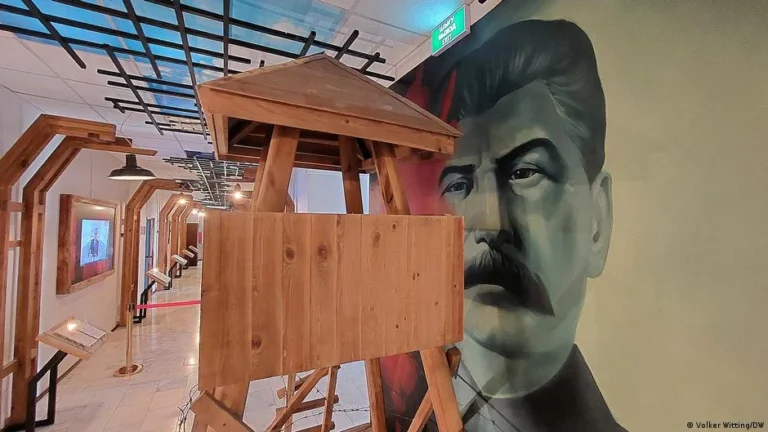
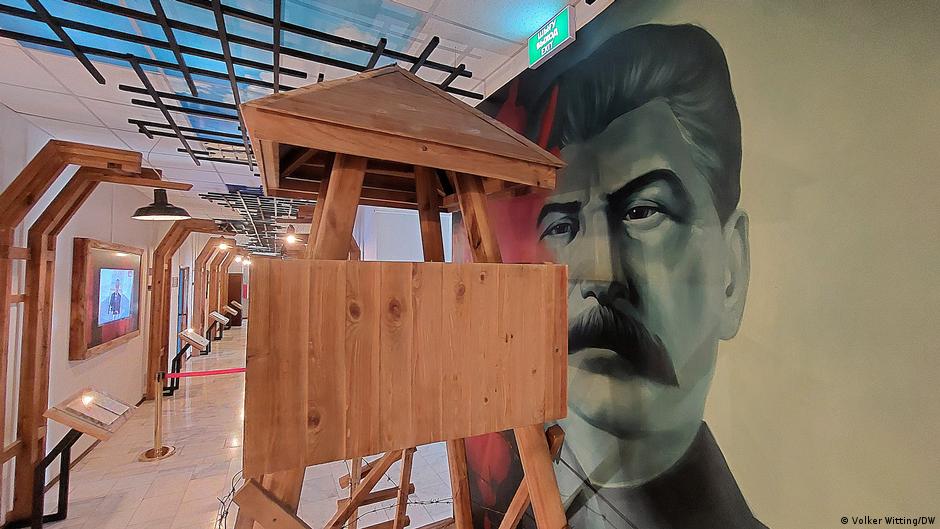
The Karlag museum itself serves as a case study in the difficulties of curation. While the museum attempts to educate, visiting historians have criticized the use of melodramatic soundscapes and reconstructed torture cells, arguing that such techniques risk trivializing the authentic, lived trauma of the prisoners. Furthermore, the lack of state funding for ongoing research into these sites suggests that the official appetite for confronting the legacy of the Great Terror is limited.
The Cultural Imperative: Why Memory Matters
For young Kazakh Germans like Yunna Kinereish, the push for remembrance is not an act of political agitation, but an act of familial preservation. Her 2025 film, which chronicles the lives of German women incarcerated in ALZhIR, seeks to humanize the statistics. By focusing on individual stories—such as that of Gertrud Platais, who spent years in the gulag after her husband was arrested—Kinereish aims to ensure that the suffering of the past is not erased by the indifference of the present.
The broader implications of this work are significant. As Kazakhstan balances its national identity, the history of its minority populations remains a critical component of its social fabric. The German community, which has largely integrated into Kazakh society while maintaining its cultural ties to Germany, provides a unique perspective on the resilience of ethnic identity under totalitarian pressure.

Institutional Analysis: The Role of External Support
The preservation of this history is heavily bolstered by the Federal Foundation for the Study of the Communist Dictatorship in Germany. This German taxpayer-funded institution has been instrumental in supporting research, study trips, and documentation efforts across the former Soviet bloc.
From an objective, journalistic standpoint, the tension between the Foundation’s mission and the local Kazakh context is palpable. While Germany views the reappraisal of communist history as a fundamental pillar of democratic education, the Kazakh state remains focused on projecting an image of forward-looking prosperity. This leads to a persistent "memory gap" where academic researchers often find their work relegated to the margins, receiving little institutional support from local administrations.
Looking Ahead
The story of the Kazakh Germans is far more than a footnote in 20th-century history; it is a testament to the survival of culture in the face of state-sponsored erasure. As the last generation of survivors passes away, the onus falls on youth leaders like Kinereish to keep the narrative alive.
The archival and archaeological work being conducted by scholars like Erdman is essential for creating a factual, unvarnished record of the era. However, the future of these memorials—and the willingness of the Kazakh public to acknowledge the skeletons within their own foundation—remains an open question. Whether through the stage, the lens of a camera, or the empirical data of an archaeologist, the effort to "keep history alive" remains a vital, if uphill, battle. The history of the Kazakh steppe is a history of forced labor, deportation, and state terror, but it is also a history of endurance—a legacy that continues to define the modern Kazakh identity, whether the nation chooses to acknowledge it or not.