The escalating wave of pre-election violence across Nigeria has triggered profound alarm among political stakeholders, civil society organisations, and technocrats alike. As political parties intensify mobilization and nationwide consultations ahead of the 2027 general elections, the country’s political landscape has unfortunately witnessed an upsurge in hostile rhetoric, physical confrontations, and targeted attacks on high-profile political figures. This volatile environment has not only compromised the security of candidates and their supporters but has also cast a dark shadow over the prospects of participatory democracy, civic engagement, and the institutional integrity of the electoral process.
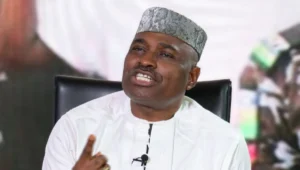
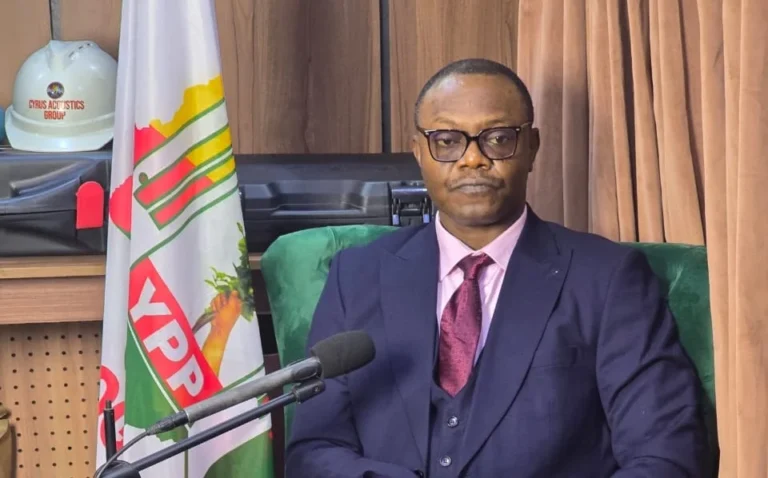
Addressing journalists and supporters during the high-profile unveiling of his policy manifesto in the nation’s capital, Abuja, the presidential candidate of the Young Progressives Party (YPP), Peter Agada, delivered a scathing critique of the growing lawlessness. Agada explicitly condemned the recent series of violent attacks directed at the campaign convoys of prominent opposition leaders, including the presidential candidate of the Nigeria Democratic Congress (NDC), Peter Obi, and his running mate, Senator Rabiu Kwankwaso. According to the YPP standard-bearer, the pervasive climate of intimidation—manifested through the systematic destruction of campaign billboards, the vandalism of opposition properties, and violent clashes between rival political factions—is systematically poisoning the democratic well and alienating critical segments of the population.
The Shrinking Political Space and the Exodus of Professionals
A central pillar of Agada’s address in Abuja was the alarming retreat of Nigerian professionals and technocrats from the active political sphere. For decades, governance experts, economists, legal luminaries, and industry leaders have argued that Nigeria’s complex developmental challenges require the infusion of empirical, technocratic expertise. However, the hostile and perilous nature of contemporary Nigerian politics is serving as an effective deterrent, driving qualified individuals away from public service and political participation.
Agada noted with grave concern that many well-meaning citizens who possess the capacity to contribute meaningfully to national transformation are choosing to remain on the sidelines, watching developments unfold with apprehension rather than engaging in the democratic process.
"A good number of Nigerian professionals seem to be stepping back and folding their arms to watch the violence going on right now in the political scene," Agada stated during the manifesto launch. "It is increasingly becoming very unpalatable to watch the fights and violence between all the different juggernauts and attacks on these convoys. Sometimes, opposition campaign banners and billboards are pulled down and vandalised. This situation is giving Nigerians and people who really love this country a lot of concern."
The YPP candidate’s observations reflect a broader sociological reality in Nigerian electoral politics: the high cost of campaigns, coupled with the omnipresent threat of political thuggery, creates an environment where intimidation supersedes ideological debate. When political competition degrades into a test of physical might rather than a contest of ideas and manifestos, the ultimate casualty is national development.
A Chronology of Escalating Hostilities
Agada’s condemnation did not occur in a vacuum; it serves as a timely response to a string of violent incidents that have plagued the early stages of the 2027 election cycle. In recent weeks, the safety of key opposition figures has been severely compromised in separate geopolitical zones, highlighting the nationwide scope of the security challenge.
The most recent high-profile security breach occurred in Kano State, a critical political battleground in North-West Nigeria. The campaign convoy of Senator Rabiu Kwankwaso, the NDC vice-presidential candidate, alongside the party’s Kano State governorship candidate, Aminu Abdussalam Gwarzo, was ambushed by suspected political thugs. The incident, which transpired in the Bichi Local Government Area, resulted in tense moments, vehicle damage, and renewed concerns over the safety of politicians campaigning in volatile northern strongholds. Bichi, a densely populated political hub, has historically experienced fractional tensions, but the direct targeting of a major vice-presidential hopeful marks a dangerous escalation in the region’s political hostility.
Compounding these security failures, another major incident unfolded in the southern coastal city of Calabar, Cross River State. The convoy of Peter Obi, alongside several key NDC supporters, came under a coordinated attack shortly after the former Anambra State governor touched down in the state capital. Obi was visiting Calabar to headline the party’s high-stakes presidential town hall meeting held at the historic Metropolitan Hotel.
The violence erupted near the popular Watt Market area, a bustling commercial center where large crowds had gathered to catch a glimpse of the opposition leader. According to eyewitness accounts and security reports, unidentified hoodlums hurled stones, broken bottles, and other dangerous missiles at the convoy and accompanying supporters. While security personnel managed to shield the principal figures and secure safe passage, the attack left several vehicles damaged and underscored the fragility of public order during political tours in southern Nigeria.
These successive security breaches have intensified anxieties regarding political intolerance. As political parties ramp up their grassroots mobilization, the failure to guarantee the physical security of candidates poses a direct threat to the peaceful conduct of the 2027 elections, potentially suppressing voter turnout and dampening civic enthusiasm.
Legislative Intervention: The Senate’s Ultimatum to INEC
As political violence dominates public discourse, the National Assembly has stepped up to assert its oversight mandate and demand decisive action from electoral authorities. On Tuesday, coinciding with Agada’s public address, the Nigerian Senate dedicated significant legislative time to debating the rising tide of electoral violence across the federation.
Lawmakers expressed profound dismay over the apparent impunity with which political actors and their foot soldiers violate electoral laws and incite violence. Taking a firm stance, the upper legislative chamber formally urged the Independent National Electoral Commission (INEC) to wield its statutory powers and invoke the provisions of the electoral framework against violent offenders. Specifically, the Senate called on INEC to immediately disqualify any political candidate whose supporters are found to have instigated, sponsored, or directly participated in acts of political violence, subject to established court convictions and the robust provisions of the Electoral Act.
The President of the Senate, Godswill Akpabio, lent his powerful voice to the legislative consensus, demanding strict, impartial enforcement of the electoral laws regardless of a candidate’s political affiliation or party color. Akpabio emphasized that the legal architecture to combat electoral impunity already exists within the current electoral framework, requiring only political will and aggressive implementation by the electoral umpire.
"Any candidate or supporter caught instigating violence, INEC has the right to disqualify them," Akpabio declared during the legislative session. "We should call the attention of INEC to the Electoral Act; no matter the political party, such a candidate should immediately be disqualified. They are embedded in the Electoral Act and require strong implementation."
The Senate’s position represents a critical warning shot to political parties and overzealous campaign organizations. By linking a candidate’s political survival directly to the behavior of their support base, the legislature aims to compel political leaders to rein in thugs and adopt peaceful campaign strategies. However, legal analysts note that successful implementation will depend heavily on robust, independent investigations by security agencies and swift adjudications by election tribunals, as wrongful disqualifications could trigger unprecedented political crises.
Coalition Realities and the Search for Collective Leadership
Amid the turbulent backdrop of political violence and institutional warnings, Peter Agada also used his platform in Abuja to address ongoing political realignments and speculations surrounding his own presidential campaign. Persistent rumors within political circles had suggested that the YPP candidate might step down from the presidential race to endorse either incumbent President Bola Tinubu or prominent opposition heavyweights such as Atiku Abubakar or Peter Obi.
Addressing these speculations directly, Agada dismissed rumors of an imminent withdrawal, asserting that his immediate priority remains the robust articulation of his policy blueprint, encapsulated in his "Labour Direct" manifesto. He maintained that his candidacy is built on a distinct ideological foundation aimed at restructuring Nigeria’s economic and political architecture, making a premature exit counterproductive to his vision.
Nevertheless, the YPP standard-bearer left the door wide open for strategic alliances and coalition-building, provided such collaborations are anchored on shared policy frameworks and genuine ideological alignment rather than opportunistic political horse-trading.
"If we see persons with a framework, policy document and architecture that resembles what we are talking about today, and I see those numbers aligning with what I just read, I’m going to connect with them, and we’re going to give this a fight until Nigeria changes and aligns," Agada stated.
He argued that the monumental challenges facing Nigeria—ranging from systemic insecurity and macroeconomic instability to infrastructural decay—are far too complex to be resolved by a single individual operating within a monolithic political framework. Rejecting the traditional "messiah complex" that often characterizes Nigerian presidential politics, Agada advocated for a collective leadership model where diverse minds pool their expertise to rescue the nation from its current dire straits.
Drawing an analogy from military organization, Agada likened the formation of a viable political coalition to a disciplined chain of command where vision and strategic competence dictate leadership roles, regardless of individual egos.
"In the military rank and file, it is the man with the vision who calls the numbers and delineates the pathway accurately who should lead," he explained. "Once we align, whoever takes the leadership doesn’t really matter then. I believe that we can all work together and tackle Nigeria from different sides."
He concluded with a sobering assessment of the nation’s socio-economic realities, reiterating that Nigeria is in a state of emergency that demands unprecedented cooperation across party and ethnic lines.
"We are in a dire strait. The country does not need just one man. We need many people looking at Nigeria’s challenges and trying to solve the problem. It’s not a one-man thing. Nigeria’s problem is complex; hence we need good minds working together," Agada affirmed.
Broader Implications for Nigeria’s 2027 General Elections
The convergence of rising political violence, legislative threats of candidate disqualification, and ongoing opposition coalition talks highlights the high-stakes nature of the unfolding 2027 electoral cycle. As security agencies struggle to contain localized thuggery, the intersection of physical intimidation and institutional oversight will likely define the integrity and credibility of the upcoming polls.
For the electorate, the growing hostility reinforces the urgent need for structural reforms that guarantee the safety of voters and candidates alike. If institutions like INEC heed the Senate’s call to strictly enforce disqualification clauses against violent actors, it could fundamentally alter political campaign behaviors, compelling candidates to police their own supporters. Simultaneously, the willingness of opposition figures like Agada to contemplate policy-driven coalitions suggests that the political opposition may seek strength through unity, provided ideological coherence can be achieved.
Ultimately, the months leading up to 2027 will serve as a definitive litmus test for Nigeria’s democratic maturity. Whether the political class heeds the warnings against violence and prioritizes nation-building over political brigandage will determine not only the success of the upcoming elections but the long-term viability of the Nigerian state.