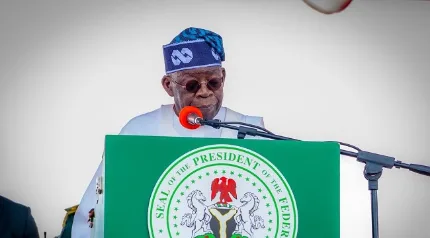
As the political landscape intensifies ahead of the upcoming national elections, President Bola Ahmed Tinubu is scheduled to arrive in Jos, Plateau State, on Saturday, November 14, 2026. The visit, which serves as the North-Central anchor for the All Progressives Congress (APC) presidential campaign, has transformed the atmosphere in the state capital into a hub of anticipation. While the political machinery of the ruling party is fully mobilized to ensure a grand reception at the Zaria Road Stadium, the citizens of Plateau—a state historically defined by its agricultural prowess and resilience—are signaling that their support is contingent upon substantive policy commitments rather than traditional political rhetoric.
The visit marks a pivotal moment for Governor Caleb Mutfwang, who formally joined the APC in January 2026. Since his defection, the political synergy between the Plateau State government and the federal center has been a focal point of discussion. For many residents, the transition represents a potential gateway to federal interventions that have long been delayed, particularly in the critical sectors of security, energy infrastructure, and agricultural modernization.
The Security Imperative: A Precondition for Prosperity
For the agrarian communities spanning the 17 local government areas of Plateau, the primary concern remains the security of life and property. The state, often referred to as the "Food Basket of the Middle Belt," has suffered significantly from cycles of insecurity that have hindered farming activities.
"Abundance without security is a harvest left to rot," says Bako Michael, a prominent yam trader in the Yan Trailer community of Jos North. His sentiments are shared by farmers in the fertile belts of Riyom, Bokkos, and Mangu, who argue that the economic potential of the state is being stifled by the inability of producers to access their lands safely. Dachung Pam, a farmer from Riyom, emphasizes that the federal government’s responsibility must transcend the deployment of security personnel. He calls for the establishment of "safe corridors" that allow farmers to cultivate and transport their goods to urban markets without the constant fear of criminal interference.
The call for security is not merely a plea for peace; it is an economic necessity. Statistics from regional agricultural boards indicate that when farming communities in Plateau are destabilized, the ripple effect is felt in food prices across the country, particularly in major hubs like Lagos and Abuja. Residents contend that until the sound of gunshots is replaced by the routine sounds of rural life, the state’s agricultural output will remain below its true capacity.
Bridging the Gap: Education and Human Capital Development
A significant portion of the public discourse in Jos currently centers on the Nigerian Education Loan Fund (NELFUND), which has been a flagship reform under the Tinubu administration. For many students and parents, the initiative has fundamentally altered the accessibility of higher education.
Yusuf Ibrahim, a student from Barkin Ladi, describes NELFUND as a transformative tool that dismantles the socioeconomic barriers that have historically kept brilliant, underprivileged children out of the classroom. "When a young Plateau son or daughter enters the university without the paralyzing fear of tuition fees, we are not just funding education; we are investing in the next generation of engineers, doctors, and innovators," Ibrahim noted.
However, there is a growing consensus among stakeholders that education must be tethered to economic reality. Grace Davou, a graduate from Jos South, argues that while access is a major hurdle cleared, the curriculum must evolve to emphasize competence and technology-driven agriculture. She advocates for an educational framework where the classroom meets the farm, ensuring that graduates possess the technical skills required to modernize Plateau’s traditional agricultural practices.
The Energy Crisis: A Bottleneck to Industrialization
The agricultural potential of Plateau is vast, yet it remains largely untapped due to a lack of reliable power. The state is renowned for its Irish potatoes, vegetables, and dairy production, but the lack of cold-storage facilities and processing plants leads to massive post-harvest losses.
Toma Markus, a potato farmer in Bokkos, highlights the irony of the state’s situation: "Our land is pregnant with abundance, but without power, our produce rots before it reaches the market." The residents are calling for a decentralized energy strategy that prioritizes farming clusters. They envision a future where stable electricity allows for the operation of cold rooms and local processing plants, enabling the conversion of raw commodities into high-value exports like potato chips and flour.
This vision aligns with the broader economic goal of integrating Plateau’s production capabilities with the consumer demand in Nigeria’s southern markets. As Chinedu Okonkwo, a local businessman, puts it, the "Plateau bargain" is clear: "If the federal government provides the power and the security, we will provide the food security that the nation needs to move away from its dependence on oil."
Official Preparations and the Political Context
The Local Organising Committee (LOC), headed by the Secretary to the State Government, Samuel Jatau, has confirmed that all logistics are in place for the November 14 rally. During a press briefing at the Nigeria Union of Journalists (NUJ) Secretariat in Jos, Jatau described the event as more than a political rally; he framed it as a "historic opportunity to reaffirm Plateau’s place in the national political conversation."
The guest list for the Zaria Road Stadium event is extensive, featuring President Tinubu, First Lady Oluremi Tinubu, Vice-President Kashim Shettima, Senate President Godswill Akpabio, and Speaker of the House of Representatives, Tajudeen Abbas. The heavy attendance from the national APC leadership underscores the strategic importance of Plateau in the party’s North-Central campaign strategy.
Jatau also highlighted the tangible results of the state’s alignment with the federal government, noting significant infrastructure projects currently underway. These include the rehabilitation of the Sharram-Garram-Babban Lamba Road and the high-priority approval for the Mararaban Jama’a-Kanke-Langtang-Shendam-Ibi Road, which will create vital transport links to Taraba State. Furthermore, the state government has touted the procurement of advanced surveillance cameras and the planned recruitment of 1,000 forest guards as evidence of a coordinated effort to address the state’s security challenges.
Analytical Perspective: Implications for 2026
The President’s visit comes at a time when the administration is under pressure to deliver on promises of economic stability and national cohesion. For Plateau, the stakes are exceptionally high. The state’s history of intermittent communal conflict and economic hardship makes it a bellwether for the effectiveness of federal policies in the Middle Belt region.
If the administration can move beyond the "ceremony" of the campaign rally and deliver on the requests for decentralized power and enhanced security, it could set a template for federal-state cooperation that would be difficult for political opponents to challenge. Conversely, if the visit is perceived as purely symbolic, it may alienate a population that is increasingly demanding evidence of governance over political posturing.
The introduction of modern initiatives like the Central Drug Warehouse, the subsidization of farm inputs, and the expansion of the Plateau Express Service fleet serves as the Mutfwang administration’s argument for continued federal collaboration. By positioning these successes alongside the national APC platform, the state government is attempting to create a unified narrative of progress.
As the Zaria Road Stadium prepares to host thousands on Saturday, the overarching sentiment is one of cautious optimism. The people of Plateau are ready to listen, but they are also ready to hold their leaders accountable. They view the presidential visit not as an end, but as a beginning—a chance to formalize a partnership that could ultimately transform the state from a region of latent promise into the economic powerhouse of the North-Central.
For the administration, the success of the rally will not be measured by the size of the crowd, but by the credibility of the commitments made to the citizens of this resilient and resourceful state. As the countdown continues, the people of Plateau remain clear: give them the tools, and they will help build a more secure and food-sufficient Nigeria.