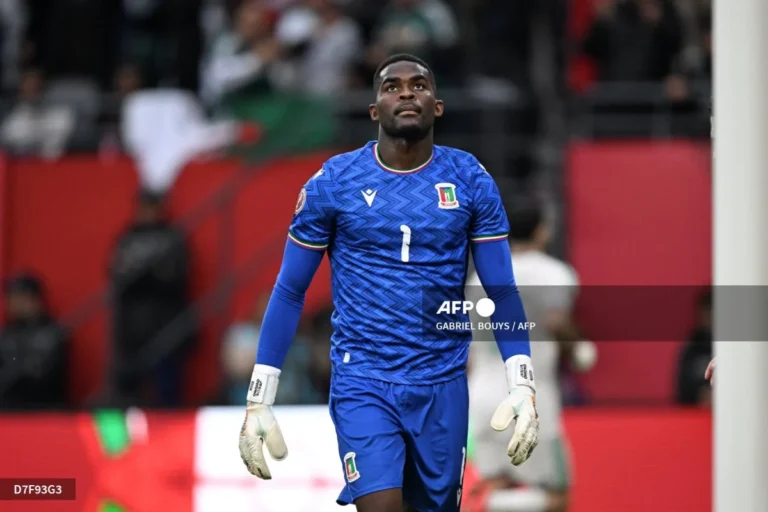
The Spanish football landscape remains in a state of profound mourning following the tragic passing of Tenerife striker Jesus de Miguel, an event that has now culminated in a significant disciplinary ruling by the Spanish Football Federation. On Friday, the federation’s disciplinary committee officially handed down a 12-match suspension to FC Andorra goalkeeper Jesus Owono, citing the use of excessive force during a second-division match that ultimately led to the fatal injury of the 30-year-old forward.
The incident, which occurred on November 2, has sent shockwaves through the sport, raising difficult questions regarding player safety, the intensity of professional competition, and the legal repercussions of on-field actions. As the football community continues to grapple with the loss, the disciplinary committee’s decision marks a rare and somber milestone in the history of Spanish professional football, underscoring the severity of the collision that occurred at the Estadi Nacional.
Chronology of a Tragedy
The sequence of events began during a high-stakes second-division encounter on November 2. As the match progressed, a tactical situation developed that required FC Andorra’s goalkeeper, Jesus Owono—a prominent international player for Equatorial Guinea—to intervene. Racing out of his penalty area and into the midfield to contest an aerial ball, Owono engaged in a challenge with Jesus de Miguel.
The referee’s match report, which served as the primary evidence for the federation’s subsequent investigation, stated that Owono was sent off immediately for "violently striking an opponent in the chest with his leg, using excessive force, while the ball was in play." The impact was catastrophic. De Miguel collapsed on the pitch, requiring immediate emergency medical intervention. Following stabilization, he was rushed to a nearby hospital and admitted to the intensive care unit. Despite the efforts of the medical staff, De Miguel succumbed to his injuries on November 3.
Following his death, Spanish authorities initiated a formal judicial inquiry. Police sources confirmed to Agence France-Presse (AFP) that an investigation is currently underway under judicial supervision to determine whether the incident warrants criminal charges beyond the sporting sanctions already imposed.
The Disciplinary Ruling: A Justification of Severity
The 12-match suspension issued by the Spanish Football Federation is the maximum penalty permitted under the current disciplinary code for the nature of the conduct described. In its official statement, the committee emphasized that its judgment was strictly bound by the facts recorded in the match official’s documentation.
"The assessment of the conduct under consideration in these proceedings must be based on the facts expressly recorded in the referee’s report," the committee noted. "The tragic outcome of the incident, resulting in the death of Jesus de Miguel Alameda, is public knowledge. In view of the nature of the conduct described and the accompanying circumstances… the maximum sanction, 12 matches of suspension, is justified."
Legal analysts suggest that while the 12-match ban is a significant sporting penalty, it functions primarily as a mechanism of accountability within the governing body’s framework. The interplay between this sporting sanction and the ongoing judicial investigation remains the focus of legal observers, as the courts must determine if the "excessive force" described by the referee crosses the threshold into criminal negligence or manslaughter.
The Human Toll and Public Reaction
The emotional weight of the tragedy has been felt far beyond the confines of FC Andorra and Tenerife. In the days following the announcement of De Miguel’s death, tributes poured in from across the football world. On the Saturday following the incident, fans and players gathered at the Tenerife stadium for a memorial service, marking a somber farewell to a player who was a key figure in the club’s attacking lineup.
The funeral, held on the following Thursday, was attended by approximately 400 mourners, reflecting the stature De Miguel held within the sport. High-profile figures, including Spain national team coach Luis de la Fuente and Real Madrid president Florentino Perez, were in attendance, signaling the collective grief of the Spanish football establishment.
For Jesus Owono, the aftermath has been described as an internal struggle. In a statement released through FC Andorra, the goalkeeper expressed his profound distress. "These are the hardest days of my life," Owono said. "I struggle to find the words and it is very difficult for me to process anything that has happened. I feel immense pain over the loss of Jesus. I think of him, of his family, and of all the people who loved him. I know there will be many issues to address, and I will face whatever comes with the utmost respect."
FC Andorra has remained supportive of their player while acknowledging the gravity of the situation. Coach Carles Manso stated on Thursday that the club would not pressure Owono to return to training or competition, noting that the decision regarding his future career path rests entirely with the player as he processes the trauma.
Broader Implications for Player Safety
This incident has reignited the debate regarding the physical limits of professional football. While goalkeepers are frequently tasked with aggressive challenges to neutralize threats, the "sweeper-keeper" role, which requires keepers to act as an auxiliary defender, involves an inherent risk of high-velocity collisions.
Sporting physiologists and safety experts have long debated the balance between the competitive requirement for defensive pressure and the necessity of player protection. While the Laws of the Game, governed by the International Football Association Board (IFAB), dictate that excessive force is a red-card offense, the rarity of a fatal outcome suggests that the current deterrents may need to be re-evaluated.
The 12-match ban sets a precedent that the Spanish federation is prepared to impose the absolute maximum penalty when an on-field challenge results in catastrophic loss of life. Whether this will lead to a systemic change in how keepers approach aerial challenges remains to be seen. Industry experts suggest that federations may look toward implementing stricter video assistant referee (VAR) protocols for challenges occurring outside the penalty area, where the speed of the game often leads to the most dangerous interactions.
The Path Forward: Legal and Ethical Considerations
As the legal proceedings continue, the footballing world remains in a state of suspended animation regarding the future of those involved. The judicial investigation will likely look into the specific mechanics of the collision, analyzing video footage from multiple angles to determine if there was any deviation from standard defensive techniques that could indicate malicious intent.
However, many legal experts caution against drawing premature conclusions regarding criminal liability, noting that the distinction between a "footballing accident" and "criminal recklessness" is a narrow one in the eyes of the law. The defense will likely argue that the incident occurred within the normal flow of play, while the prosecution may focus on the "excessive force" terminology used by the referee to suggest a departure from the expected standards of professional conduct.
For the clubs involved, the focus is now on recovery and support. Both FC Andorra and Tenerife have received widespread support from the league, with fellow clubs expressing solidarity through public messages and moments of silence before matches. The tragedy serves as a grim reminder that professional sport, despite its high commercial value and tactical complexity, is fundamentally a human endeavor where the safety of the individual must remain the paramount concern.
The 12-match suspension of Jesus Owono will eventually expire, but the shadow cast by the death of Jesus de Miguel will persist. For the Spanish Football Federation, the immediate task is to ensure that the investigation is conducted with full transparency, providing the family of the deceased with the closure they deserve while upholding the integrity of the sport’s disciplinary processes. As the investigation progresses, the case of Jesus de Miguel will undoubtedly become a foundational case study in sports law, shaping how future incidents of on-field violence are categorized, prosecuted, and punished.