For many Nigerian parents, the true cost of private education is rarely reflected in the tuition figure printed on the termly bill. As basic school fees continue to climb due to macroeconomic pressures, a web of auxiliary expenses—ranging from mandatory graduation levies and specialized textbooks to compulsory feeding programs and end-of-year parties—has transformed the simple act of schooling into a significant financial hurdle. Across several states, including Lagos, Abuja, Kaduna, Katsina, and Benue, families are increasingly finding that tuition is merely the entry point to a growing list of financial obligations.
The financial strain became particularly pronounced during the end-of-session and graduation ceremonies held in July. For Mrs. Kuburat, a parent in Abuja whose children attend Megaliy International School, celebrating her children’s academic progression came with an unexpected bill of nearly N100,000. With three children graduating at different educational tiers—nursery, junior secondary, and senior secondary—she was billed N20,000, N25,000, and N50,000 respectively, alongside standard end-of-session levies for non-graduating years. Similar accounts resonate across the country, where parents are forced to weigh the financial cost against the emotional toll on children who risk exclusion from milestones shared by their peers.
An Escalating Burden Across Regions
The experiences of parents in Abuja mirror those in major commercial centers like Lagos, where auxiliary costs frequently overshadow baseline tuition. Damilola Ojuolape, a Lagos-based caterer, recounted how her nine-year-old daughter’s primary school graduation fee of N45,000 was merely the beginning. Additional expenses, including a specific colored dress, matching accessories, photography, and footwear, pushed her total out-of-pocket expenditure for the single event to nearly N154,000.
In northern states such as Katsina and Kaduna, while the absolute monetary figures are lower, their impact on household budgets is equally significant relative to regional income levels. Parents at institutions like Mariamoh Ajiri Memorial International School and Ayak Academy reported paying distinct charges for speech and prize-giving events, certificates, and yearbooks. In some instances, payments categorized by schools as optional carry immediate social consequences. Children whose parents opt out of paying for refreshments or party packages may find themselves excluded from celebratory activities or forced to bring provisions from home, exposing young learners to social isolation.

Regulatory Pushback and Government Interventions
Recognizing the unsustainable financial pressure placed on families, federal and state authorities have increasingly moved to curb extra-budgetary school practices. The intervention intensified in January when the federal government announced sweeping education reforms. These included restricting official graduation ceremonies strictly to terminal classes: Primary Six, Junior Secondary School Three (JSS3), and Senior Secondary School Three (SSS3). Concurrently, the Ministry of Education introduced a reusable textbook policy aimed at curbing recurring material costs by allowing books to be passed down across academic sessions and siblings.
State governments have similarly sought to enforce regulatory boundaries. In June, the Ogun State government prohibited graduation and end-of-session parties for non-terminal classes across both public and private institutions, stipulating that ceremonies for terminal classes must be modest and incur no financial cost to parents. Similarly, the Anambra State government issued directives warning that unauthorized levies or mandatory graduation charges could lead to severe sanctions, including school closure. Benue State implemented comparable restrictions in August, targeting nursery graduations and the requirement of un-transferable educational materials.

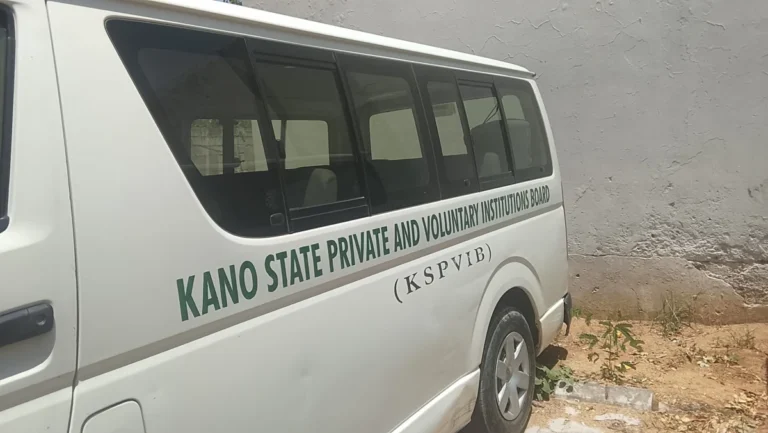
In Kano State, legislative measures have been tightened to mandate broader institutional oversight. The Kano State House of Assembly passed amendments requiring private and voluntary institutions to consult extensively with Parent-Teacher Associations (PTAs) before implementing any upward review of school fees, a move designed to introduce transparency and predictability into educational budgeting.
The Institutional Rationale and Operating Realities
Private school proprietors and administrators defend the additional charges, pointing to the harsh economic realities of running educational institutions in Nigeria without government subsidies. Speaking on behalf of school owners, operators emphasize that rising inflation, escalating maintenance costs, high utility tariffs, and heavy tax burdens leave them heavily reliant on internally generated revenue.

Administrators argue that levies for end-of-session programs directly cover logistical expenses such as venue rentals, canopies, chairs, catering, and awards for outstanding pupils. Furthermore, the mandatory purchase of textbooks directly from schools is frequently defended as a quality-control measure designed to protect students from substandard or pirated publications circulating in the open market, while ensuring curriculum alignment.
The National Association of Proprietors of Private Schools (NAPPS), through its leadership in states like Katsina, maintains that compulsory graduation fees are not standard practice among the majority of its compliant members, asserting that formal examinations and basic operational fees should suffice. However, school managers frequently caution that heavy-handed enforcement measures—such as abruptly sealing non-compliant schools—disrupt learning and penalize students rather than addressing the structural issues at hand.
Broader Economic Implications for Families

The accumulation of fragmented, out-of-pocket expenses presents a complex challenge for economic forecasting at the household level. While organized resistance has occasionally succeeded in rolling back arbitrary tuition hikes—such as parent-led petitions in Lagos—isolated auxiliary fees are considerably more difficult to challenge collectively.
As inflation continues to compress purchasing power, the widening gap between official tuition fees and actual school expenditure threatens to price middle- and lower-income families out of private educational options entirely. Without harmonized enforcement of existing regulatory frameworks and transparent dialogue between school administrators and parent-teacher associations, the true cost of private schooling in Nigeria will remain an unpredictable and heavy burden for households striving to secure a foundational education for their children.