The landscape of international trade is undergoing a seismic shift as traditional allies and emerging economies alike recalibrate their commercial strategies in response to aggressive protectionist measures from Washington. Canadian Prime Minister Mark Carney has adopted an unyielding stance, declaring that Ottawa will refuse to sign any new trade agreement with the United States that fails to explicitly safeguard the viability of Canada’s domestic automotive sector. This resolute position comes on the heels of a broader international trend where nations are actively seeking economic autonomy and diversifying their export markets to insulate themselves from sudden shifts in U.S. tariff policy.
The friction between Ottawa and Washington reached a critical juncture three months ago when Canada abruptly withdrew from bilateral trade negotiations. The walkout was precipitated by last-minute, stringent demands introduced by the U.S. administration that Canadian officials argued would cripple domestic vehicle manufacturing plants and threaten thousands of unionized jobs across Ontario and the broader rust-belt regions of Canada.
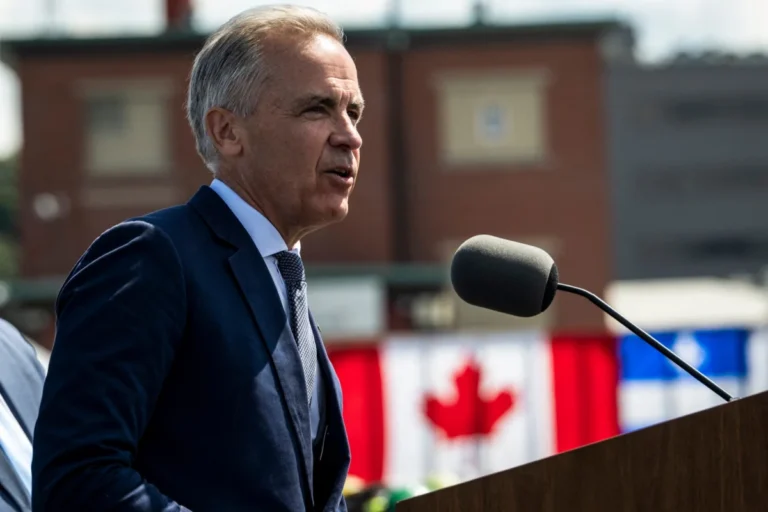
Following a high-stakes, prolonged discussion with U.S. President Donald Trump on the sidelines of an international summit in Manila, Prime Minister Carney reiterated his government’s red lines to the press.
"This government will not settle for a deal with the United States that is not consistent with a viable Canadian auto sector," Carney asserted, emphasizing that a collaborative and stable agreement remains in the mutual interest of workers on both sides of the border.
The standoff highlights the deep integration of North American supply chains, where auto parts cross the border multiple times before a vehicle is fully assembled. However, Ottawa’s calculus has shifted from mere cooperation to defensive resilience. Rather than capitulating to American pressure, Canadian policymakers are actively restructuring the nation’s economic foundations to pivot away from an over-reliance on the U.S. market, which has historically absorbed the vast majority of Canadian exports.
A Bold Domestic Strategy: The "Masters of our Destiny" Budget
To combat external economic vulnerabilities, the Canadian federal government unveiled a sweeping C$142.1 billion national budget aptly titled "Masters of our Destiny." This aggressive fiscal package represents one of the most significant overhauls of Canada’s economic growth model in decades.
Funded in substantial part by robust domestic oil revenues, the multi-billion-dollar injection is designed to supercharge several key sectors. The budget allocates massive capital investments toward critical mineral mining—vital for the global transition to electric vehicles and renewable energy—as well as domestic energy production, infrastructural housing developments, and targeted financial safety nets for auto and steel workers who have borne the brunt of U.S. tariffs.
Canadian Finance Minister François-Philippe Champagne elaborated on the strategic vision behind the fiscal package during a policy address in Ottawa.
"At its core, our plan is about changing Canada’s growth model," Champagne stated. He further emphasized the administration’s defensive posture, declaring that "no matter what happens south of the border, no matter what happens in the world, we will be more resilient, we will be stronger, we will be more independent."
Economic analysts note that while decoupling from the U.S. market entirely is virtually impossible given the sheer volume of cross-border commerce, Canada’s proactive industrial policy establishes a crucial buffer. By investing heavily in critical minerals and localized manufacturing, Ottawa is positioning itself as an indispensable player in the global green economy, reducing its vulnerability to the whims of American trade negotiators.
Chronology of the North American Trade Standoff
The deterioration of bilateral trade harmony did not happen overnight. The timeline of the current crisis traces back through a series of escalating trade disputes and policy adjustments:
- Early Phase: Following the renegotiation of historic North American trade pacts, tensions simmered as the U.S. administration implemented generalized tariffs on steel and aluminum, prompting retaliatory measures from Ottawa.
- Six Months Ago: Preliminary rounds of bilateral talks began with the objective of modernizing supply chain security and addressing digital trade and labor standards.
- Three Months Ago: Negotiations collapsed abruptly when Washington introduced eleventh-hour demands regarding regional value content rules and stricter domestic sourcing quotas that Canadian negotiators deemed commercially unviable. Ottawa officially walked away from the bargaining table.
- Recent Weeks: Prime Minister Carney and President Trump engaged in tense diplomatic exchanges at international forums, notably in Manila, where Carney drew a hard line regarding the preservation of the Canadian automotive industry.
- Present Day: Canada introduces the "Masters of our Destiny" budget, officially signaling a structural pivot toward economic self-reliance and domestic industrial fortification.
Global Ripple Effects: South Africa Pivots Toward Asian Markets
Canada’s friction with Washington is far from an isolated incident; it mirrors a global phenomenon of trade diversification. On the African continent, South Africa is executing a parallel strategy following disruptive shifts in U.S. commercial policy.
South Africa recently lost its prized duty-free trade access to the American market under the framework of the African Growth and Opportunity Act (AGOA). Faced with the sudden imposition of tariffs on traditional exports, Pretoria wasted little time in aggressively broadening its commercial partnerships across Asian markets, most notably with China.
This pivot has been significantly accelerated by a zero-tariff policy implemented by Beijing for qualifying African exports. The results have been immediate and striking. Between May and August of this year, South African shipments to China surged by nearly 25%, while imports from the world’s second-largest economy rose by 23%.
During a press briefing in Pretoria, Chinese Ambassador Wu Peng welcomed the booming trade metrics and expressed strong confidence in the trajectory of bilateral relations, predicting that "more high-value-added South African products would enter the Chinese market in the future."
The simultaneous recalibration of trade relationships by middle powers like Canada and major developing economies like South Africa points to a fractured global trading order. As traditional multilateral frameworks face strain from rising protectionism, nations are increasingly forming bilateral alliances or regional pacts to safeguard their domestic industries.
Economic Implications and Future Outlook
The broader implications of these developments are profound. For the United States, the aggressive deployment of tariffs and stringent trade demands risks isolating American industries from deeply integrated regional supply chains, potentially driving up manufacturing costs and dampening consumer demand. In the case of the auto industry, the interdependence of American and Canadian plants means that a prolonged stalemate could lead to widespread assembly line shutdowns on both sides of the border.
Conversely, Canada’s aggressive defensive posture carries its own fiscal risks. Funding a C$142.1 billion restructuring package relies heavily on commodity revenues, particularly oil and critical minerals, which are notoriously susceptible to global price volatility. However, the political consensus in Ottawa is that the long-term cost of economic dependency on an unpredictable southern neighbor far outweighs the short-term fiscal expenditure required to build national resilience.
As prime ministers, presidents, and finance ministers navigate this volatile new era of international commerce, the message is clear. The era of frictionless, frictionless globalization dominated by predictable U.S. trade policy has given way to an era of pragmatic nationalism. Whether Canada can successfully protect its automotive sector without triggering a full-scale trade war, and whether South Africa can successfully cement its economic future in Asian markets, will serve as bellwether tests for middle-power diplomacy in the years to come.