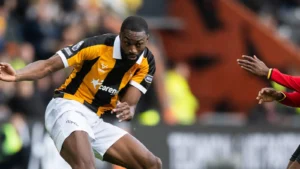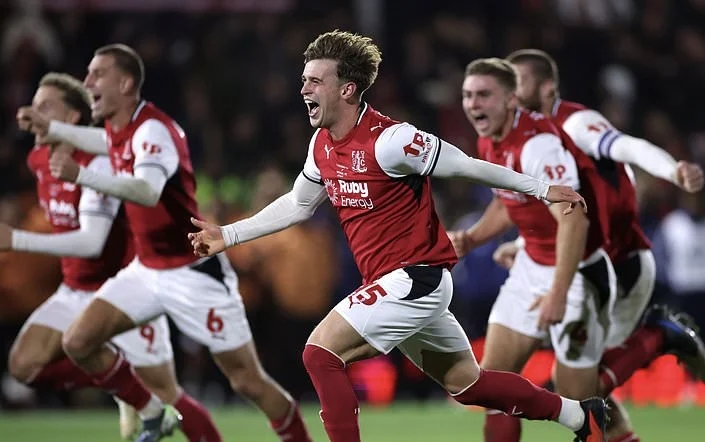
The atmosphere at Highbury Stadium was nothing short of electric as the League One underdogs dismantled the aura of invincibility surrounding Mikel Arteta’s Premier League titleholders. In a result that will be etched into the annals of English football folklore, Fleetwood Town—currently positioned 84 places below Arsenal in the competitive football pyramid—secured their path to the Carabao Cup quarter-finals following a tension-filled penalty shootout that concluded a grueling 120 minutes of play.
A David and Goliath Encounter
The fixture, which saw the North London giants travel to the Fylde Coast, was initially viewed as a routine progression for the Gunners. However, the reality on the pitch proved far more complex. From the opening whistle, Fleetwood Town adopted a disciplined, high-intensity defensive structure that stifled Arsenal’s creative outlets.
The pivotal moment of the first half arrived in the 21st minute. A lightning-quick counter-attack orchestrated by the Fleetwood midfield allowed Aaron Loupalo-Bi to break through the Arsenal backline. With composure that belied his standing in the lower tiers, Loupalo-Bi slotted the ball home, sending the home crowd into a state of disbelief. The goal forced Arsenal to abandon their patient buildup, as they scrambled to regain control of a match that was rapidly turning into a nightmare for the traveling Premier League side.
Chronology of the Clash
As the match progressed into the second half, the physical toll of the game began to show. Viktor Gyokeres, acting as the primary offensive catalyst for Arsenal, eventually leveled the scoreline shortly after the interval. The equalizer seemed to signal the start of an inevitable Arsenal comeback; however, the Fleetwood defensive unit, marshaled by a resolute backline, refused to buckle.
The match turned fractious as the clock ticked toward the final whistle. In the 86th minute, Arsenal’s teenage sensation Max Dowman was dismissed following a confrontation with Fleetwood’s Harrison Neal. The resulting red card left Arsenal a man down, forcing them to defend against a rejuvenated Fleetwood side during the closing stages of regulation time and the entirety of extra time.
Goalkeeper Jay Lynch emerged as the hero of the evening during the dying moments of the match. With Arsenal desperate to avoid a penalty shootout, Lynch pulled off two world-class saves to deny Ben White and Martin Odegaard, both of whom struck shots that seemed destined for the back of the net. These saves were the defining moments of the fixture, forcing the game into the lottery of a penalty shootout.
The Penalty Decider
In the shootout, the pressure reached a fever pitch. Both sides traded successful strikes until Jay Lynch intervened once more, denying Bruno Guimaraes a critical goal from the spot. The stadium reached a crescendo when Conor Haughey stepped up to take the decisive penalty. With the composure of a veteran, Haughey struck the ball past the Arsenal goalkeeper, confirming a victory that will be remembered for generations.
The aftermath saw scenes of unbridled emotion, with thousands of supporters storming the pitch. Manager Matt Lawlor, visibly moved, was seen in tears during the post-match celebrations—a testament to the gravity of the achievement for a club of Fleetwood’s stature.
Contextualizing the Upset
To understand the magnitude of this result, one must look at the historical context of the Carabao Cup. The competition has long been a theater for "giant killings," yet rarely does an outcome involve a disparity as wide as 84 places in the league structure. For Arsenal, the defeat marks a significant setback in their quest for domestic silverware, particularly given the squad’s current depth and their ambitions for a quadruple this season.
For Fleetwood Town, the victory represents the pinnacle of the club’s modern history. While the team has enjoyed periods of success in the EFL, reaching the quarter-finals of a major domestic cup competition against a side of Arsenal’s pedigree is unprecedented. Data regarding possession and shot accuracy reveals that while Arsenal dominated the ball, they lacked the clinical finishing required to put the match to bed, a criticism that has occasionally plagued the team in high-pressure cup ties.
Tactical Analysis and Implications
Tactically, Matt Lawlor’s side utilized a compact 4-5-1 formation that effectively neutralized Arsenal’s wide players. By congesting the central midfield areas, Fleetwood forced the visitors into playing peripheral passes that rarely threatened the core of the penalty area.
From an Arsenal perspective, the loss raises questions regarding the rotation policy employed by Mikel Arteta. While integrating youth talent like Max Dowman is vital for the long-term health of the squad, the lack of experience in critical moments proved costly. Furthermore, the reliance on high-profile signings such as Viktor Gyokeres and Bruno Guimaraes suggests that, despite the star power, the team is still vulnerable when faced with organized, low-block defensive setups.
The broader implications of this result are significant. For Arsenal, this exit will undoubtedly intensify the pressure during the upcoming January transfer window. Reports have already linked the club with defensive reinforcements, and this defeat may accelerate those negotiations to ensure the squad is sufficiently bolstered for the remainder of the Premier League campaign.
Official Reactions and Looking Ahead
While formal statements from the clubs were brief, the body language of both managers told the story of the night. Mikel Arteta, speaking in his post-match press conference, acknowledged the difficulty of the defeat, stating that his side "failed to manage the intensity of the game" and that credit must be given to the home side for their unwavering discipline.
Matt Lawlor, meanwhile, praised the collective spirit of his squad. "This isn’t just a win for the club; it’s a win for the community," Lawlor noted, reflecting on the emotional toll and the ultimate reward of the victory.
As the dust settles, Fleetwood Town now prepares for the quarter-final draw, which is scheduled to take place following the conclusion of the Chelsea vs. Liverpool fixture. Regardless of the opponent, the club has already secured its place in the history books. For Arsenal, the task is now to recalibrate and focus on the Premier League and remaining cup competitions, fully aware that in English football, no lead or advantage can ever be taken for granted.
The Carabao Cup continues to prove why it remains one of the most unpredictable tournaments in world football. By bridging the massive gap between the elite tier of the Premier League and the grit of League One, Fleetwood Town has provided a reminder of the fundamental beauty of the sport: on any given night, with enough discipline, determination, and a bit of luck, the impossible can become reality.
As the football world turns its attention to the quarter-final draw, the narrative of this season’s Carabao Cup will be dominated by the events at Highbury Stadium. Whether this serves as a wake-up call for the Gunners or a springboard for a historic run for Fleetwood Town, the match will remain a cornerstone of the 2023-2024 domestic season. The challenge for Fleetwood now lies in maintaining this momentum as they return to league action, knowing that they have effectively signaled their intent to compete with the very best.