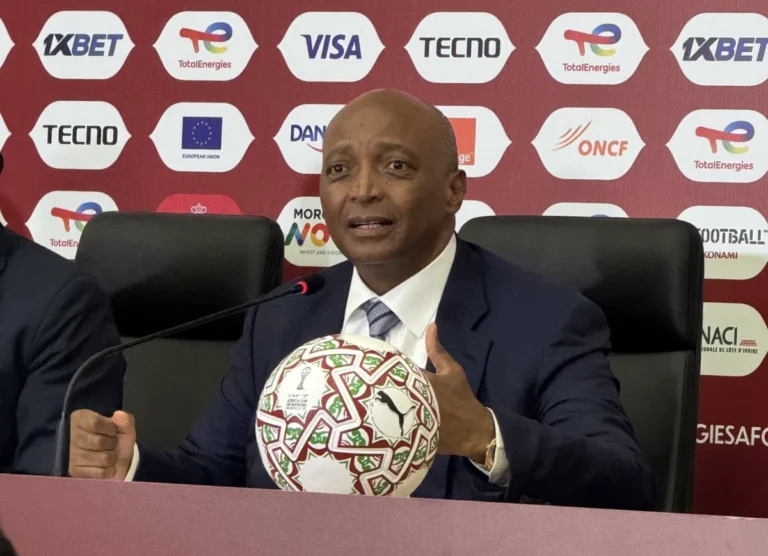
The President of the Confederation of African Football (CAF), Patrice Motsepe, touched down at the Nnamdi Azikiwe International Airport in Abuja on Wednesday evening, marking the commencement of a high-stakes week for African football. His private jet arrived at 5:51 p.m., signaling the start of a diplomatic and administrative marathon that positions Nigeria at the epicenter of the continental game. This visit is particularly significant as it precedes the 48th CAF General Assembly, an event that returns to Nigerian soil for the first time in 17 years.
Mr. Motsepe was welcomed by a high-level delegation, reflecting the strategic importance the Nigerian government places on this event. Leading the reception party was the Chairman of the National Sports Commission, Shehu Dikko, alongside CAF Special Advisor and former Nigeria Football Federation (NFF) President, Amaju Pinnick. Also in attendance were CAF Secretary General Samson Adamu, and key project leads Christian Emeruwa and Ademola Olajire. Following the formal arrival, the delegation transitioned to the Transcorp Hilton Hotel, which serves as the primary hub for VVIPs, delegates, and international stakeholders throughout the week.
A Historic Return to Nigeria
The hosting of the 48th CAF General Assembly is a milestone for Nigeria, ending a nearly two-decade hiatus. The last time Nigeria hosted such a gathering was in 2008, a period characterized by different challenges and goals for the continent’s governing body. The current assembly is expected to be the largest gathering of football administrators in Africa, drawing leaders from all 54 member associations.
Beyond the member nations, the event is bolstered by the presence of FIFA’s top brass, including President Gianni Infantino and the FIFA General Secretary, as well as representatives from other global confederations. The assembly is not merely a ceremonial gathering; it serves as a critical forum for debating policy, addressing structural challenges in African football, and aligning the continental vision with the broader objectives of global football governance.
Convergence of Governance and Celebration
In a unique administrative and logistical alignment, Nigeria is the first nation to host both the CAF General Assembly and the prestigious CAF Awards in the same window. The General Assembly is scheduled for Saturday, November 30, at the Bola Ahmed Tinubu International Conference Centre in Abuja, while the CAF Awards ceremony will follow on December 2 in Lagos, hosted at the newly renovated Wole Soyinka Centre for Culture and Creative Arts, formerly known as the National Theatre.

This dual-hosting structure creates a significant narrative arc for the week: the assembly focuses on the "business" of football, while the awards ceremony serves as the "cultural" celebration of the sport’s greatest achievers. By concentrating these events in Nigeria, the CAF is leveraging the country’s significant football infrastructure and its deep-rooted passion for the sport to foster greater unity among member states.
The Landscape of African Football: Supporting Data
The choice of Nigeria as a host is supported by the country’s consistent contribution to the African football ecosystem. As one of the most successful nations in terms of player output and continental titles, Nigeria remains a powerhouse. Data from the CAF records indicate that African football is currently experiencing a period of significant commercial growth. Broadcast rights and sponsorship revenues for the African Cup of Nations (AFCON) have seen a steady upward trajectory under the current administration, with television viewership numbers hitting record highs during the last tournament.
The inclusion of the CAF Awards ceremony—which celebrates the best players, coaches, and administrators—highlights the professionalization of the sport. The recent nomination of Flamingos coach Akeem Busari for the CAF Women’s Coach of the Year award underscores the growing prominence of the women’s game in Nigeria. Such recognitions are critical, as they signal a shift in focus toward gender parity and grassroots development, areas that are expected to be central themes during the General Assembly’s discussions.
Strategic Implications and Stakeholder Perspectives
Analysts suggest that the presence of Motsepe and the FIFA leadership in Abuja serves as a confidence booster for Nigeria’s sports economy. By hosting the 48th General Assembly, Nigeria is signaling its readiness to compete for future major tournaments, including the possibility of hosting continental finals in the coming decade.
The logistics involved in hosting such a massive event require the coordination of the National Sports Commission, the NFF, and various state agencies. The shift from Abuja to Lagos for the awards ceremony requires a seamless transition that demonstrates organizational excellence. For the local sports industry, the influx of international delegates provides a unique opportunity for networking, the promotion of local sports hospitality, and the potential for long-term investment in football infrastructure.
Timeline of the Week’s Events
- Wednesday, Nov 27: Official arrival of CAF President Patrice Motsepe and executive committee members in Abuja.
- Thursday, Nov 28 – Friday, Nov 29: Preparatory meetings, committee workshops, and bilateral discussions between member association presidents and FIFA/CAF leadership.
- Saturday, Nov 30: The 48th CAF General Assembly at the Bola Ahmed Tinubu International Conference Centre, focusing on administrative reforms and constitutional amendments.
- Sunday, Dec 1: Travel day for delegates and media to Lagos for the final phase of the festivities.
- Monday, Dec 2: The CAF Awards at the Wole Soyinka Centre for Culture and Creative Arts, honoring the best in African football for the year.
The Road Ahead: Challenges and Opportunities
While the spectacle of the General Assembly and the Awards is undeniably positive, the real work begins after the delegates depart. The African football landscape currently faces challenges related to infrastructure standards, financial transparency, and the need for more consistent development pathways for young talent. The 48th General Assembly is expected to address these, with rumors of new developmental grants for member associations and stricter compliance measures for hosting continental matches.

The leadership of the National Sports Commission has emphasized that the event is a reflection of Nigeria’s "open for business" approach to sports. By providing a platform for the most influential figures in the game, the nation is positioning itself to be a central player in the decision-making processes that will define the future of African football.
The presence of the FIFA delegation, including the President, signifies that the global body is closely watching the developments in Africa. With the next World Cup cycles approaching, the collaboration between FIFA and CAF is more critical than ever. Decisions made in the hallways of the Transcorp Hilton and the conference rooms of the Tinubu Centre will likely dictate the regulatory environment for football in Africa for the next several years.
Conclusion: A Legacy in the Making
As Nigeria prepares to host this massive influx of football dignitaries, the focus remains on the organizational capacity of the host. Hosting the General Assembly after a 17-year wait, combined with the grandeur of the CAF Awards, is a testament to the growth of the Nigerian sports sector. As the week unfolds, the global football community will be observing not just the awards and the speeches, but the efficiency and vision displayed by the host nation.
The success of these events will be measured by the policy outcomes of the assembly and the seamless execution of the awards night. For the fans, the events represent a homecoming of the game’s leaders, while for the administrators, it represents a pivotal moment to refine the trajectory of the most popular sport on the continent. With the eyes of the world on Abuja and Lagos, the stage is set for a landmark week in the history of African football.