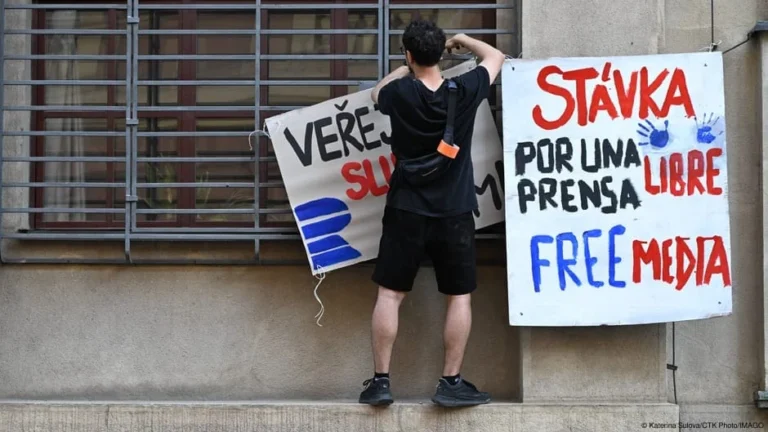
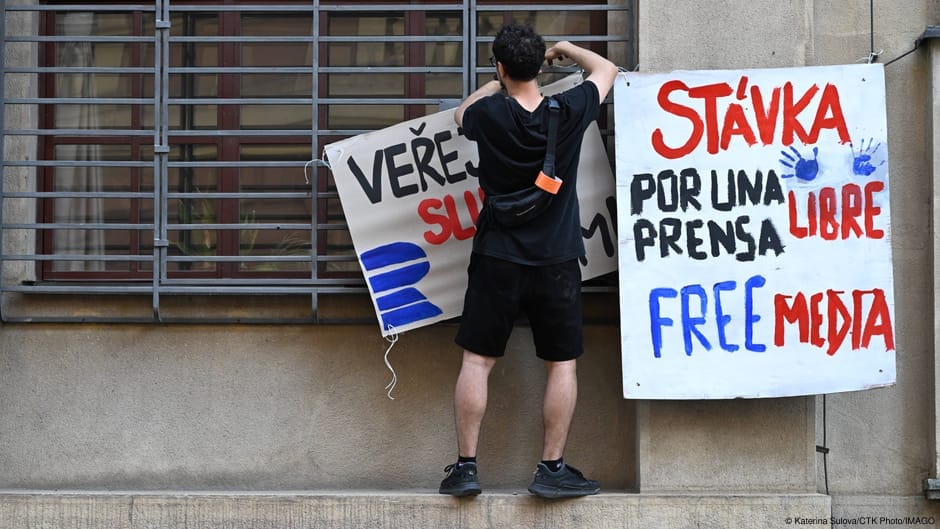
Hundreds of thousands of citizens are expected to descend upon Prague’s historic Letna Park this weekend, marking a significant escalation in the ongoing civil unrest triggered by the government’s aggressive push to overhaul the funding model for Czech Television (CT) and Czech Radio (CRo). The protest comes in the wake of a highly contentious legislative maneuver on October 24, when the populist coalition led by Prime Minister Andrej Babis utilized a surprise overnight session to fast-track the first reading of a bill that would replace the current license fee system with direct state budget funding. The vote, which concluded at 4:36 a.m., has served as a catalyst for nationwide strikes and mounting public outcry, signaling a deep-seated fear among the populace that the independence of the nation’s most trusted media outlets is under direct threat.
The Legislative Impasse: A Breakdown of the Proposal
At the heart of the controversy is the government’s legislative proposal to dismantle the existing license fee model, which has historically provided a buffer between public broadcasters and the political executive. The ruling coalition, a tripartite alliance comprising Prime Minister Babis’s centrist ANO party, the far-right SPD, and the radical conservative Motorists faction, argues that the current fee acts as an "unfair tax" on the public. They contend that shifting the burden of funding to the state budget will streamline operations and increase fiscal efficiency.
Proponents of the bill have pointed toward budgetary adjustments in other European Union member states to justify the change, promising an initial 15% reduction in funding for both CT and CRo. However, the lack of robust, legally binding safeguards for editorial independence in the draft bill has fueled intense skepticism. Critics, including journalists, constitutional law experts, and opposition members of parliament, argue that without a secure, independent revenue stream, the broadcasters will become vulnerable to political pressure, budgetary manipulation, and potential censorship—a trend they warn is consistent with "media capture" seen in other parts of Central and Eastern Europe.
Chronology of the Crisis
The current tension is the culmination of months of friction between the Babis administration and the Czech media landscape. The timeline of this escalating conflict is marked by several key turning points:
- June 2026: Initial proposals to scrap the license fee surfaced, sparking the first wave of public demonstrations outside Czech Television headquarters. Critics began calling for the dismissal of the Culture Minister, labeling the proposal an act of "cultural vandalism."
- October 23–24, 2026: In a move that shocked the political opposition, the government convened an emergency overnight session of parliament. The first reading of the bill was pushed through during the early hours of October 24, prompting immediate picketing outside the parliamentary building.
- Early November 2026: Broadcasters and unions initiated a coordinated strike, causing significant disruptions to radio and television schedules. This move was intended to demonstrate the reliance of the nation on public media and the fragility of current operations under the threat of funding cuts.
- November 15, 2026: Anticipation reaches a fever pitch as organizers, led by the civic movement "Million Moments for Democracy," prepare for the largest protest in recent memory, strategically timed just before the anniversary of the 1989 Velvet Revolution.
The Symbolic Weight of Public Media
To understand the intensity of the protests, one must look at the unique status of public broadcasting in the Czech Republic. Unlike in some nations where public media is viewed merely as a government service, CT and CRo are widely regarded as the bastions of democratic integrity. This perception is rooted in the "Czech TV crisis" of 2000–2001, a watershed moment in post-communist history where staff and citizens occupied studios to prevent political interference.

Vaclav Stetka, a researcher at the European New School of Digital Studies, suggests that this historical memory makes the current conflict existential. "The fight over public service media is not merely about fiscal policy; it has become a symbolic battleground for the defense of liberal democratic values," Stetka noted. Analysts argue that the political elite in many post-communist states have historically struggled to accept the autonomy of public media, and for many Czechs, the current bill is seen as a regression toward that autocratic mindset.
Data and Economic Context
The proposed 15% budget cut in the first year has been met with alarm by administrative heads at both CT and CRo. Projections indicate that such a reduction would necessitate widespread staff layoffs and a contraction in investigative and regional programming. Data from the European Broadcasting Union (EBU) regarding public service media funding suggests that while there are various models for financing, the most successful systems are those that provide "multi-annual funding" and clear insulation from the executive branch—elements that appear to be absent from the current Czech proposal.
Furthermore, economic analysts point to the potential for the "media issue" to become a lightning rod for broader societal discontent. While the current protests are specific to the bill, there are signs that they are absorbing wider frustrations regarding the cost of living and housing. This follows a pattern seen in other European nations where student-led movements have successfully connected specific policy grievances to broader demands for systemic political accountability.

Official Responses and Government Maneuvering
In response to the mounting pressure, Prime Minister Babis has adopted a more cautious rhetoric. Recognizing the potential for civil unrest to disrupt the political stability of his administration, he has suggested that a "revised" version of the proposal might be tabled for a more transparent and open public debate. However, these conciliatory gestures have been met with profound cynicism from civil society organizations.
"Words are worth nothing," a spokesperson for Million Moments for Democracy stated, noting that the government has yet to provide concrete details or amendments to the original bill. The lack of clarity has only served to strengthen the resolve of the protest organizers, who demand that the bill be withdrawn entirely rather than merely modified.
Broader Implications for Democracy
The government currently maintains a parliamentary majority capable of overriding potential vetoes from the Senate and President Petr Pavel. This structural advantage gives the administration the power to force the legislation through, but the political cost may be substantial. Experts at the Prague-based EUROPEUM Institute for European Policy warn that the government’s confrontational approach risks alienating a significant portion of the electorate and damaging the country’s international reputation regarding press freedom.

The political scientist Otto Eibl of Masaryk University notes that the administration’s strategy of fast-tracking legislation has exacerbated the public backlash. "The confrontational approach, the attempts to limit parliamentary debate, and the rhetoric towards journalists have turned a policy debate into a crisis of legitimacy," Eibl explained.
Prospects for Future Stability
As the nation approaches the symbolic anniversary of the Velvet Revolution, the question remains whether the protests will lead to a retreat by the government or an entrenched standoff. While the prime minister has opted to skip this year’s anniversary commemorations in a bid to lower the temperature, the atmosphere remains highly charged.
Despite the intensity of the rhetoric, most observers agree that the protests are unlikely to devolve into violence. The Czech Republic has a long-standing tradition of "large, peaceful, and civic" protest culture. Even during the most turbulent moments of the 1989 revolution and the 1993 "Velvet Divorce," the Czech approach to political dissent remained rooted in non-violence and civic participation.

Nevertheless, the outcome of this weekend’s gathering will be a critical indicator of the government’s future trajectory. Should the turnout exceed the massive numbers seen in 2019, it may force a significant pivot in the government’s legislative agenda. For now, the nation remains in a state of watchful waiting, as the battle over the future of public media continues to test the resilience of Czech democracy. The government’s ability to navigate this challenge without further eroding public trust will likely define the remainder of the current administration’s term. As the rallies move toward their peak, the message from the streets is clear: for a large segment of the Czech public, the independence of the media is not a negotiable asset, but the very foundation of their hard-won democratic order.