The foundational pillars of European security, established in the wake of the Cold War and solidified through the expansion of NATO and the European Union, are currently under intense scrutiny. As the United States pivots toward an ambitious, high-stakes diplomatic initiative involving direct engagement with the Kremlin, European capitals are grappling with a profound sense of uncertainty. The prospect of a "big, beautiful" deal—as described by US President Donald Trump—that would fundamentally reshape the security framework of the entire continent has sparked alarm among allies who fear that such an agreement may come at the expense of Ukrainian sovereignty and the integrity of the transatlantic alliance.
This diplomatic push, spearheaded by US envoy Jared Kushner and a team of high-level representatives, recently saw back-to-back meetings in Abu Dhabi, Moscow, and Dublin. The goal appears to be the establishment of a "broader" security architecture that moves beyond the immediate cessation of hostilities in Ukraine. However, the ambiguity surrounding what constitutes "all of Europe" in the eyes of Washington has left European leaders, including EU foreign policy chief Kaja Kallas, insisting that the existing security structures—primarily NATO and the European Union—remain the only legitimate vehicles for ensuring continental stability.
A Chronology of Escalating Tensions and Diplomatic Shifts
The current impasse is the culmination of decades of deteriorating trust and shifting geopolitical realities. To understand the gravity of the current negotiations, one must view them through the lens of recent history:
- 1990s – The Era of Integration: Following the collapse of the Soviet Union, the prevailing hope was for a "common European home." During this period, Russia was engaged in various partnership programs, and there were even preliminary, informal discussions regarding the possibility of future Russian integration into Western institutions.
- 2008 – The Turning Point: Russia’s invasion of Georgia signaled a definitive break from the post-Cold War consensus. Moscow began framing NATO’s eastward expansion as an existential threat and a betrayal of alleged, though often disputed, verbal assurances given during the reunification of Germany.
- 2014 – The Annexation of Crimea: The occupation and subsequent illegal annexation of the Crimean Peninsula marked the end of the post-Cold War security order. Western sanctions were introduced, and the breach of international law became a permanent fixture of the Russia-Ukraine relationship.
- 2022 – The Full-Scale Invasion: The launch of a full-scale war by Russia against Ukraine transformed regional tension into a total continental crisis, prompting unprecedented Western military and financial support for Kyiv.
- Late 2024/Early 2025 – The Abu Dhabi Initiative: Recent diplomatic efforts led by the US administration have signaled a departure from previous policy, with Washington exploring a comprehensive security settlement that prioritizes the Russian demand for a renegotiated "European security architecture" over the immediate restoration of pre-war borders.
The Anatomy of the Russian Demand
Russian officials have consistently utilized the concept of "European security architecture" as a central pillar of their propaganda and diplomatic strategy. Historian Michael Kimmage notes that this rhetoric is designed to frame the war not as an act of aggression, but as a necessary defensive response to an encroaching Western alliance.
By insisting that any peace deal in Ukraine must be preceded by a broader agreement on European security, the Kremlin is attempting to force a return to a "sphere of influence" model—a system where major powers effectively dictate the security arrangements of smaller, sovereign nations. For European nations, particularly those in the Baltic and Central European regions, this is an unacceptable premise. They argue that the right of sovereign states to choose their own alliances is a non-negotiable principle of international law, as codified in the Helsinki Accords and the Charter of Paris.
Supporting Data and Institutional Perspectives
The disparity between Russian demands and Western policy is highlighted by the sheer scale of the investment in current security structures. As of early 2025, NATO’s collective defense spending has reached record levels, with the majority of member states now meeting or exceeding the 2% GDP target.
- Defense Spending: NATO members collectively committed over $1.3 trillion to defense in the last fiscal year, a direct response to the perceived Russian threat.
- Economic Integration: The EU’s single market, encompassing over 450 million people, serves as the economic bedrock of European stability. Critics of the current US diplomatic approach argue that any deal which weakens the political autonomy of Ukraine would inherently undermine the stability of the EU’s eastern flank.
- Legal Frameworks: The European Union has repeatedly cited the Budapest Memorandum of 1994, in which Russia pledged to respect the sovereignty and existing borders of Ukraine in exchange for the surrender of its nuclear arsenal. The breach of this treaty remains the primary reason for the current lack of trust in Moscow’s diplomatic overtures.
Official Responses and the "Coalition of the Willing"
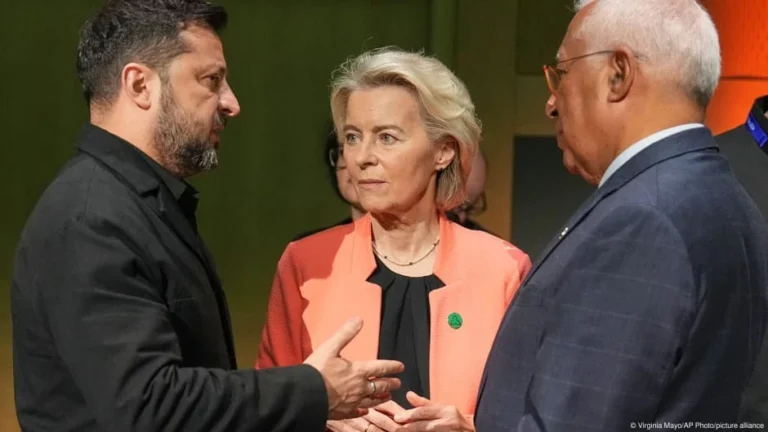
The reaction from European capitals has been one of cautious, and occasionally overt, pushback against the US-led negotiations. During recent consultations, German government representatives emphasized the necessity of a unified European position. Berlin has begun organizing a "Coalition of the Willing" to ensure that, regardless of the outcome of US-led talks, there remains a durable financial and military mechanism to support Ukraine’s defense.
Kaja Kallas, in her role as the EU’s top diplomat, has been clear: "We already have European security architecture in place. NATO and the European Union both have their respective roles. We must make sure Ukraine is integrated into this architecture." This stance reflects the broader consensus among EU member states that any "deal" which effectively neutralizes Ukraine or forces a reduction in its military capability would merely create a power vacuum, inviting future aggression.
Broader Impact and Geopolitical Implications
The implications of the current US diplomatic trajectory are significant. If Washington succeeds in pressuring a settlement that addresses Russian security concerns, it may temporarily halt the kinetic fighting in Ukraine. However, many analysts warn that this could come at the cost of long-term European stability.
- Strategic Autonomy: The current situation has accelerated the debate regarding European "strategic autonomy." If the US is seen as prioritizing a deal with Moscow over the security concerns of its European partners, the European Union may be forced to accelerate its own independent defense capabilities, potentially leading to a decoupling of transatlantic security priorities.
- The Risk of "Horizontal Escalation": Experts like Balazs Jarabik have warned that even if a settlement is reached, the fundamental nature of the Russia-Europe relationship has shifted. Russia is currently viewed as a revisionist power, and the risk of "horizontal escalation"—where conflict spreads to other areas, such as cyber warfare, energy coercion, or political destabilization in the Balkans—remains high.
- The Precedent of Power: Perhaps most importantly, the international community is watching to see if the use of force as a "form of bargaining" succeeds. If the redrawing of borders through military invasion is validated by a major diplomatic treaty, it could signal to other revisionist powers that the postwar rules-based order is effectively defunct.
The Path Forward: A Question of Trust
The core issue remains the absence of a shared vision for the future. While the US administration views the current moment as a window for a "big agreement," European leaders largely view it as a moment to hold the line. Hiski Haukkala of the Finnish Institute of International Affairs argues that as long as Russia views war as a legitimate tool for negotiation, a sustainable peace remains out of reach.
"Russia walked away from these principles and smashed them to pieces in the process," Haukkala stated. "They are not interested in reinstating the previous security architecture order. They want something different in its stead. And as long as this is not on the table, the Russian form of negotiation is to wage war."
As the diplomatic mission continues to move between Washington, Moscow, and European capitals, the primary challenge for the international community is to reconcile the desire for peace with the necessity of preserving the sovereignty of nations. Whether the emerging security framework will be a genuine attempt at long-term stability or a fragile arrangement built on the concessions of the weak remains the defining question of the decade. For now, the "Coalition of the Willing" in Europe remains focused on the pragmatic reality that without a secure and sovereign Ukraine, the broader European project—built on peace, integration, and the rule of law—will remain under constant, existential threat.