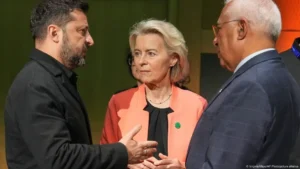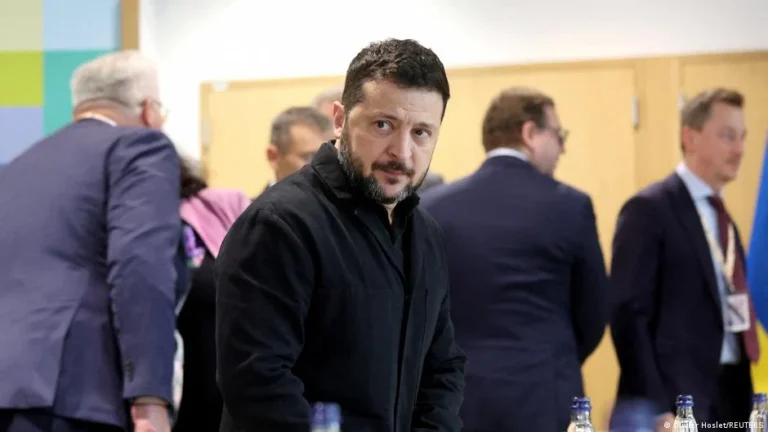
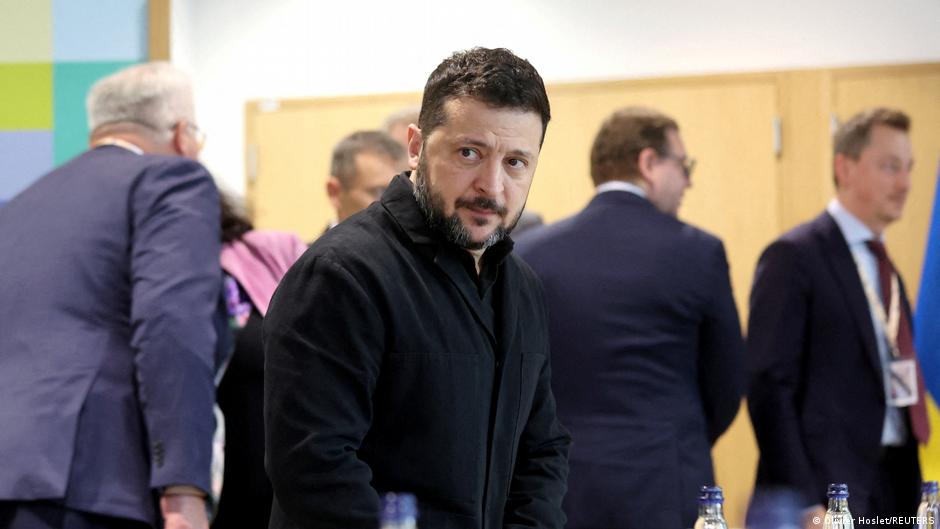
The diplomatic landscape shifted dramatically following a whirlwind tour by presidential advisers Jared Kushner and Steve Witkoff. After engaging in preliminary discussions in Abu Dhabi, the envoys traveled directly to Moscow for a face-to-face meeting with Russian President Vladimir Putin. They subsequently arrived in Dublin to debrief Ukrainian President Volodymyr Zelenskyy, leaving European leaders to grapple with a new reality where the parameters of a potential ceasefire are being drafted by Washington and the Kremlin with minimal direct European input.
A Struggle for Unified Representation
The frustration within the European corridors of power is palpable. During the Dublin summit, when asked by DW why the United States appears to have two seats at the negotiating table while the entire European continent is vying for one, EU foreign policy chief Kaja Kallas responded with a wry, ironic laugh. Her reaction underscored a broader institutional anxiety: the fear that the EU is being treated as a spectator in a conflict that represents the most significant threat to its security architecture since the end of the Cold War.
There is no consensus on who should act as the face of Europe. Kallas herself, along with European Council President Antonio Costa, has been identified as a leading candidate to represent the bloc. However, the appointment process is fraught with internal competition. Many national leaders, wary of delegating authority to Brussels, have expressed a desire to be physically present at the talks themselves, leading to a fragmented, and at times public, dispute over strategy.
Italian Prime Minister Giorgia Meloni recently penned an excoriating letter to Antonio Costa, explicitly criticizing the lack of unity among member states. "By projecting the image of a Europe that is in disarray, we are merely serving the interests of those who want this war to continue," Meloni wrote. This sentiment reflects a deeper crisis of confidence, as leaders like Slovenian Prime Minister Janez Jansa have openly lamented the "bad mood" permeating the summit, while others, such as Latvia’s government, attempt to project a sense of outward stability.
The Chronology of Escalating Tensions
The current diplomatic crunch is the culmination of months of deteriorating trust and shifting geopolitical priorities. The timeline of recent events highlights the speed at which the situation has evolved:
- October 2026: The European Commission identifies a €70 billion funding shortfall in the aid pledged to Ukraine’s economy, signaling the start of a major internal budgetary crisis.
- Early November 2026: Jared Kushner and Steve Witkoff hold high-level meetings in Abu Dhabi, signaling a shift in the US approach toward direct engagement with regional brokers.
- Mid-November 2026: The US envoys travel to Moscow to meet with President Vladimir Putin, who outlines his requirements for a ceasefire, including the potential rollback of NATO’s presence in Sweden and Finland.
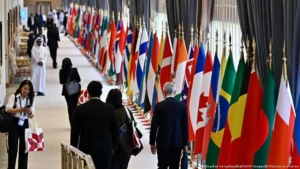
- Late November 2026: The European Political Community summit convenes in Dublin, where leaders are confronted with the reality of US-led negotiations and the urgent need for a unified European position.
Security Implications and the Ghost of Broken Treaties
The primary concern for European leaders—particularly those on the Eastern flank—is that the United States may be willing to trade European security guarantees for a rapid, "beautiful" peace deal, as described by President Donald Trump. Putin’s rhetoric has done little to assuage these fears. In his meeting with the US envoys, the Russian president warned that any immediate deployment of European troops in Ukraine following a peace agreement would be viewed as a "legitimate target," effectively threatening a resumption of hostilities.
Estonian Prime Minister Kristen Michal encapsulated the existential dread felt by Baltic states, describing the current diplomatic situation as a "Russian trap." The central question for these leaders is whether the US will adhere to the principle of "nothing about Ukraine without Ukraine," or if the negotiations will expand to include the restructuring of the European security order without the consent of the countries most directly affected.
European officials frequently point to a history of broken promises from Moscow as the foundation for their skepticism. They cite the 1994 Budapest Memorandum—which guaranteed Ukraine’s territorial integrity in exchange for the surrender of its nuclear arsenal—alongside the 1975 Helsinki Accords and the 1997 NATO-Russia Founding Act, as evidence that Russian commitments are rarely honored. The fear is that a new agreement might simply provide Moscow with a tactical pause to rearm rather than a sustainable peace.
The Fiscal Battleground
While the debate over the "seat at the table" dominates the headlines, a secondary and equally critical conflict is unfolding regarding the sustainability of European support for Kyiv. The €70 billion hole in promised funding has created a rift between member states.

German Chancellor Friedrich Merz has taken a hardline stance, suggesting he may block the EU’s entire seven-year budget unless there is a firm commitment from all member states to share the burden of financing Ukraine’s defense and economic recovery. This move has been characterized by some critics as "blackmail," but it highlights the desperation in Berlin to prevent a collapse of Ukrainian state functions as the winter approaches. Slovakia’s Prime Minister, Robert Fico, continues to oppose further financial and military aid, highlighting the deep ideological fissures that persist within the Union.
Analysis: A Continent at a Crossroads
The challenge for Europe is two-fold: it must reconcile its internal divisions to present a single voice, and it must assert its relevance in a negotiation process that has increasingly bypassed traditional diplomatic channels.
From a strategic perspective, the "one seat" dilemma is symbolic of a larger power imbalance. By failing to designate a representative, the EU risks being excluded from the granular details of the ceasefire terms, which could have long-term consequences for the continent’s defense posture. If the US and Russia reach an accord that mandates the reduction of NATO activity or places restrictions on the future of European security, the EU will have little recourse if it does not have a formal, recognized participant at the table.
Furthermore, the fiscal impasse suggests that even if a peace deal is reached, the economic burden of reconstruction and continued security assistance will remain a source of significant political friction. If Germany continues to tie the EU’s long-term budget to Ukraine funding, it may alienate skeptical member states further, potentially leading to a broader institutional crisis within the Union.
As the Dublin summit concludes, the pressure on leaders to move past internal squabbles and select a clear, authorized negotiator has reached a breaking point. For Europe, the coming weeks will determine whether it can evolve from a collection of fragmented voices into a unified geopolitical actor capable of safeguarding its own security interests in an era of renewed great-power competition. The goal is no longer just to participate in the talks; it is to ensure that the eventual resolution does not come at the expense of the very security architecture that has defined European peace for decades. Whether that can be achieved remains, as of now, an open and increasingly urgent question.