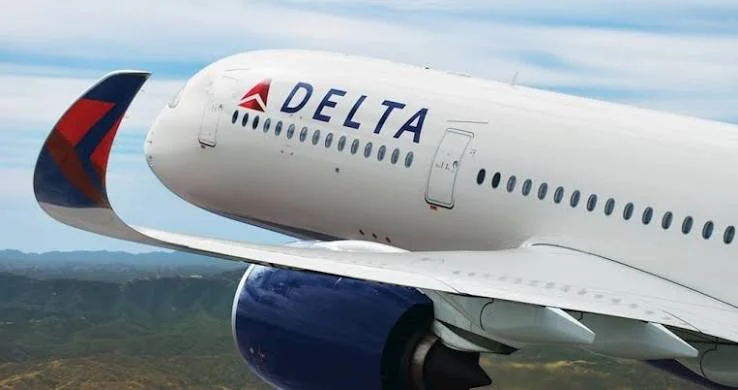
This achievement marks a significant milestone in the aviation industry, underscoring Delta’s strategic pivot toward a premium-focused service model that balances operational reliability with high-touch customer hospitality. The announcement, released by the airline on Monday, confirms that the carrier has successfully fended off intense competition from both domestic legacy carriers and burgeoning low-cost competitors.
A Three-Year Reign of Excellence
The Forbes Travel Guide Verified Air Travel Awards are widely regarded as one of the industry’s most rigorous benchmarks. Unlike consumer-voting surveys that rely solely on subjective sentiment, these awards incorporate an extensive auditing process. Forbes inspectors evaluate airlines based on hundreds of objective criteria, including service quality, facility cleanliness, and the technical performance of digital interfaces.
Retaining this title for three consecutive years—2024, 2025, and 2026—suggests that Delta’s operational consistency is not a momentary success but a structural feature of its current business model. In an era where air travel has been plagued by staffing shortages, fluctuating fuel costs, and increased passenger volume, Delta has managed to maintain a standard that resonates with both business and leisure travelers.
Beyond the Top Tier: A Sweeping Victory
While the "Best U.S. Airline" award serves as the centerpiece of the recognition, Delta’s dominance was further cemented by five additional category wins. These awards reflect a holistic approach to the passenger journey, from the moment a ticket is booked to the arrival at the final destination.
The specific categories awarded to Delta include:
- Best U.S. First Class: Specifically for the cabin experience on the Airbus A321neo.
- Best U.S. Business Class: Awarded to the flagship Delta One product.
- Best U.S. Airline Lounge: The newly unveiled Delta One Lounge at John F. Kennedy International Airport.
- Best Loyalty Programme: The SkyMiles ecosystem.
- Best Airline App: The Fly Delta mobile application.
This broad spectrum of recognition indicates that Delta is no longer competing solely on its route network or aircraft fleet. Instead, the airline is competing on the integration of digital tools and physical luxury, a strategy that has become increasingly critical as passenger demographics shift toward a preference for personalized, seamless travel experiences.
The Evolution of the Premium Cabin: Delta One
Perhaps the most notable component of Delta’s recent success is its commitment to the premium cabin, particularly the Delta One experience. In a post-pandemic travel market, premium seating has shifted from a luxury for the few to a standard expectation for long-haul business travelers.
Delta One’s success is anchored in a redesign that prioritizes the "ground-to-air" experience. The airline has invested heavily in cabin hardware, such as lie-flat seats that offer increased privacy, a direct response to the "suite-style" demand in international aviation. Furthermore, the partnership with luxury brands, such as Missoni for amenity kits and Grown Alchemist for skincare, positions the airline as a lifestyle brand rather than a mere transport utility.
This focus on the "soft product"—the fine details of dining and comfort—has allowed Delta to command higher price points in its premium cabins, providing a buffer against the commoditization of the airline industry. By curating a wine program that features selections from Napa Valley and international vineyards, Delta has successfully replicated a high-end restaurant experience at 35,000 feet.
The JFK Delta One Lounge: Setting a New Standard
The recognition of the Delta One Lounge at JFK International Airport as the Best U.S. Airline Lounge serves as a case study in infrastructure investment. For years, the U.S. airline industry lagged behind international counterparts—particularly those in the Middle East and Asia—in terms of ground-side luxury.
The JFK facility marks a departure from the traditional "crowded gate" environment. By incorporating features such as private relaxation pods, full-service dining, and dedicated shower suites, Delta has effectively transformed the airport lounge from a waiting area into a destination in itself. Industry analysts suggest that this investment is essential for retaining high-value, corporate frequent flyers who view the lounge as a secondary office space.
SkyMiles: A Milestone in Loyalty
The first-ever Forbes Travel Guide award for the SkyMiles loyalty program is arguably the most significant shift for the airline’s bottom line. Historically, frequent flyer programs were seen as simple transactional mechanisms. Under current management, however, SkyMiles has been re-engineered as an engagement platform.
By allowing members to accrue miles through everyday retail and lifestyle activities, Delta has successfully extended its brand presence far beyond the airport. This "ecosystem" approach ensures that even when passengers are not flying, they remain engaged with the Delta brand, creating a psychological lock-in that is highly prized by investors and stakeholders.
A Year of Industry Accolades
The 2026 Forbes awards are merely the latest in a series of victories for the carrier. In June 2026, The Points Guy named Delta the No. 1 U.S. airline for the eighth consecutive year, a testament to its long-term operational resilience. Furthermore, Delta’s inclusion in the top 100 of TIME’s America’s Best Companies 2026 list highlights the airline’s corporate stability and its reputation as a preferred employer and public-facing institution.
The consistency across these various indices suggests that Delta has reached a state of "operational maturity." Unlike competitors that often fluctuate in performance due to labor disputes or fleet transitions, Delta has maintained a steady trajectory that is increasingly difficult to replicate.
Implications and Future Challenges
While these accolades represent a significant marketing advantage, they also bring heightened pressure. Maintaining a "best-in-class" status in a high-volume, low-margin industry is a difficult balancing act. As passenger expectations continue to rise, the challenge for Delta will be to maintain this level of service without incurring unsustainable operational costs.
Industry analysts note that the next frontier for the airline will be in the sustainability sector and the integration of artificial intelligence in customer service. While the 2026 awards focus on the current experience, the competitive landscape is rapidly evolving. The integration of the Fly Delta app, which already allows for real-time tracking and baggage management, will likely need to incorporate more predictive features to satisfy the tech-savvy traveler of the late 2020s.
Furthermore, the focus on "premium" experiences must be balanced against the needs of the broader economy-class passenger base. Any perceived decline in the quality of the "main cabin" experience in favor of premium cabin investments could potentially erode the loyalty that the airline has worked so hard to cultivate.
Conclusion
Delta Air Lines’ performance at the 2026 Forbes Travel Guide Verified Air Travel Awards is a definitive statement on the current state of American aviation. By prioritizing a seamless, technology-driven, and high-comfort experience, the airline has successfully differentiated itself from a crowded market.
As the industry moves toward the latter half of the decade, Delta’s strategy—a blend of high-end premium amenities, robust loyalty integration, and reliable infrastructure—will serve as the blueprint for other carriers. Whether this success can be sustained for a fourth consecutive year remains to be seen, but for now, Delta stands as the clear leader in a field where excellence is increasingly difficult to define and even harder to deliver.