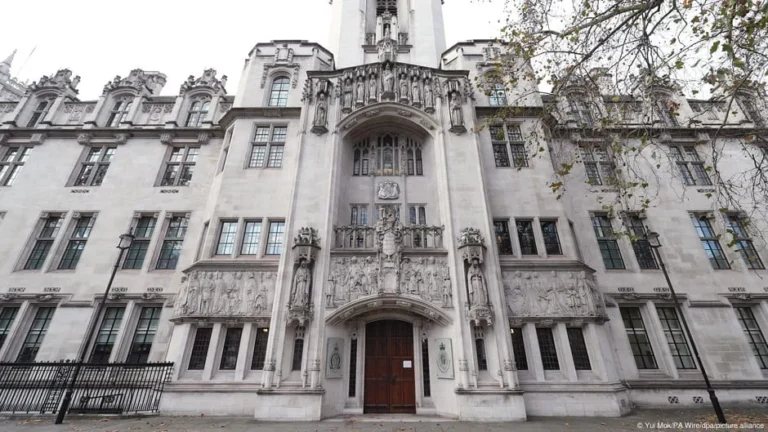
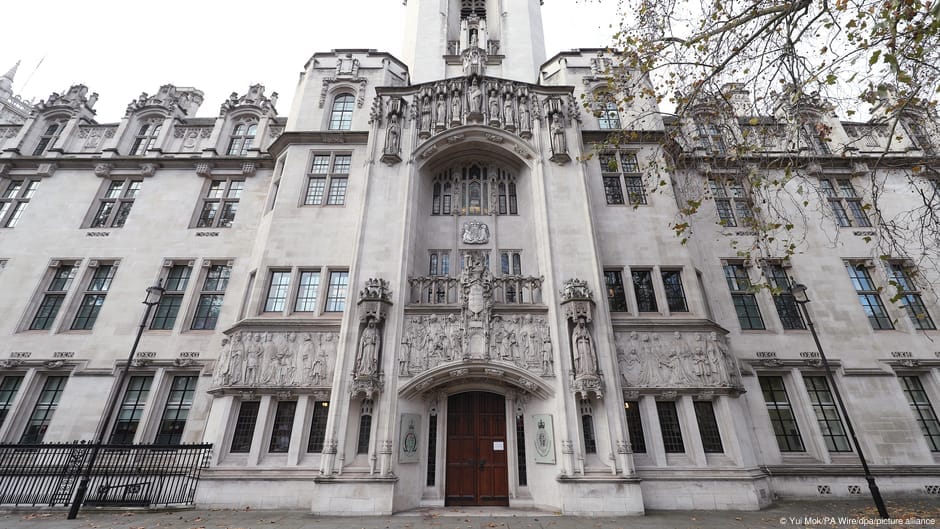
After a decade-long legal odyssey, a landmark ruling from the Judicial Committee of the Privy Council in London has brought a definitive end to the criminalization of consensual same-sex acts in Trinidad and Tobago. The final court of appeal for the Caribbean nation issued a unanimous decision that strikes down sections of the Sexual Offences Act of 1986, which had long classified private sexual activity between adult males as a criminal offense. This ruling represents a seismic shift in the legal landscape of the Caribbean and marks a historic victory for Jason Jones, the 61-year-old activist who spearheaded the challenge.
The Privy Council’s panel of five judges concluded that the colonial-era statutes, which carried potential prison sentences of up to five years, were incompatible with the constitutional protections of privacy and family life. By declaring these provisions unconstitutional, the court has effectively dismantled the legal framework that allowed for the state-sanctioned discrimination of LGBTQ+ individuals in the country.
A Chronology of a Legal Battle
The origins of this case trace back to 2017, when Jason Jones, who had lived in self-imposed exile for years due to the hostile climate toward gay citizens in his home country, initiated his formal challenge. The progression of the case reflects the deep-seated friction between modern human rights jurisprudence and conservative social structures within the Caribbean.
- 2017: Jason Jones files a constitutional motion in the High Court of Trinidad and Tobago, arguing that the Sexual Offences Act violates his fundamental rights.
- 2018: The High Court delivers an initial victory for Jones, ruling that the laws are unconstitutional. However, the government and various religious organizations mount a vigorous defense, leading to a period of protracted legal stagnation.
- 2025: A local appellate court partially reverses the High Court’s 2018 ruling, creating a legal limbo.
- 2026: The case is elevated to the Privy Council in London, the final court of appeal for Trinidad and Tobago.
- The Ruling: The Privy Council issues its final judgment, dismissing the Attorney General’s counter-appeal and permanently striking down the disputed clauses of the 1986 Act.
The Constitutional and Legal Rationale
At the heart of the Privy Council’s decision was the interpretation of the 1976 Constitution of Trinidad and Tobago. Government attorneys had argued that because the 1986 Act was passed with a super-majority, it constituted "existing law" that remained immune to constitutional challenges based on individual rights. They posited that colonial-era moral standards should continue to hold legal weight in the absence of a legislative move to repeal them.
The Privy Council, however, dismantled this argument by invoking the "proviso" clause within the constitution. The judges noted that even if a law is considered "existing," it cannot be maintained if it is not "reasonably justifiable in a society that has proper respect for the rights and freedoms of the individual."
Judge Philip Sales, speaking on behalf of the panel, emphasized that the fundamental right to respect for private and family life is intrinsically linked to sexual orientation. "Laws which seek to criminalize such activities cannot be justified," the ruling stated, asserting that the ability to form intimate, loving relationships is a core component of human identity. This interpretation reinforces the notion that constitutional rights are not subject to the shifting tides of popular opinion or religious sentiment, but are instead an immutable shield for the individual against state overreach.
The Human Cost: Jason Jones’ Journey
For Jason Jones, the victory is as personal as it is legal. Openly gay since the age of 16, Jones experienced firsthand the psychological toll of residing in a society where his very existence was defined by a criminal code. In 1996, he fled Trinidad and Tobago, citing rampant homophobic violence and systemic discrimination.
Jones has described his long-term battle as being fueled by a mixture of anger and a sense of duty to those who could not fight for themselves. He often points to his formative years in the 1980s, particularly a 1984 meeting with the legendary singer Nina Simone, as a catalyst for his activism. Simone’s advice—to "get off this rock and go see the world"—encouraged him to seek a broader perspective on equality, eventually leading him to return to the legal arena to challenge the very laws that had pushed him into exile.
"Society has treated me worse than a criminal," Jones remarked following the verdict. "There is a real sense of vindication. Finally, the courts are seeing that they need to step up because our politicians are so toothless."
Broader Implications for the Caribbean
The ruling carries significant weight for the wider Caribbean region, where many nations still retain "buggery" laws rooted in British colonial influence. The Privy Council’s decision acts as a potent precedent that will likely embolden activists in jurisdictions where similar legislation persists.
While countries like the Bahamas (1991), Barbados (2022), and Antigua and Barbuda (2022) have already moved toward decriminalization, the Caribbean remains a patchwork of differing legal statuses. Jurisdictions such as Jamaica, Grenada, and St. Vincent and the Grenadines still maintain laws that criminalize same-sex activity.
Legal experts suggest that this ruling will make it increasingly difficult for these governments to defend similar statutes in court. The Privy Council’s clear assertion that such laws are not "reasonably justifiable" in a modern democracy provides a roadmap for human rights advocates across the Commonwealth.
Societal Response and the Role of the Church
The legal challenge was met with intense opposition from influential religious organizations, including the Council of Evangelical Churches and the Sanatan Dharm Maha Sabha. These groups argued that the law reflected the traditional moral fabric of the nation and that any change should come through the democratic parliamentary process rather than judicial decree.
Anand Ramlogan, a former Attorney General of Trinidad and Tobago and a key member of Jones’ legal team, countered this during the proceedings. "Constitutional rights exist precisely because majorities are not always right," Ramlogan stated. "They ensure that the dignity and equality of every citizen are not left to the changing tides of public opinion."
Analysis: A Shift in Legal Sovereignty
The fact that this decision had to be made in London highlights the complex relationship between Caribbean nations and the Privy Council. While the court provides a final arbiter for justice, its existence as a colonial-era holdover has been a topic of debate within the region. Proponents of the court argue that it provides an essential check against political interference in local judicial systems, while critics argue that it undermines the sovereignty of independent nations.
However, in this instance, the Privy Council has acted as a mechanism for the protection of minority rights against a political class that had remained largely stagnant on the issue of LGBTQ+ equality. By invalidating the 1986 Act, the court has effectively forced the hand of the state, requiring a reassessment of the relationship between religious morality and secular law.
The long-term impact of this ruling will likely extend beyond the courtroom. While the laws were rarely enforced in recent years, their presence served as a symbolic tool for state-sponsored homophobia, fueling a culture of intimidation. By removing this legal basis for prejudice, the ruling creates the space for a broader cultural conversation regarding equality, safety, and the fundamental rights of all citizens, regardless of their sexual orientation. As the region continues to grapple with the legacy of colonial-era statutes, the Privy Council’s decision stands as a clear signal that the arc of the law is bending toward the recognition of individual dignity as a universal, rather than conditional, right.