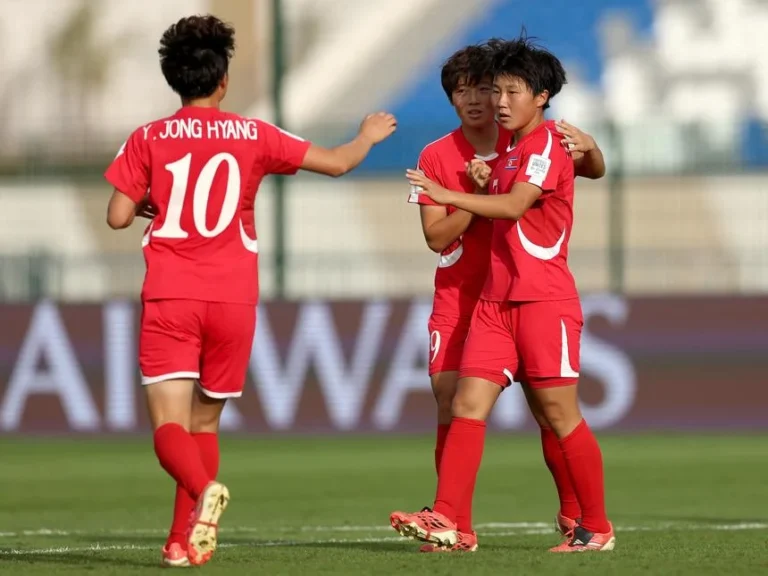
DPR Korea secured a resounding third-place finish at the FIFA U-17 Women’s World Cup Morocco 2026, dismantling Brazil with a comprehensive 6-0 victory in the bronze medal match held at the Mohammed VI Football Complex in Rabat. The performance, which saw six different attacking sequences result in goals, served as a powerful statement from the defending champions, who ended their tournament campaign with a display of technical superiority and tactical discipline that left their South American counterparts with no defensive answers.
The match, which took place on Saturday, saw the North Korean side dictate the tempo from the opening whistle. By the time the final whistle blew, DPR Korea had not only secured the bronze medal but had also etched their name into the history books, shattering the record for the highest number of goals scored by a single nation in a single edition of the U-17 Women’s World Cup.
A Masterclass in Tactical Dominance
The encounter began with a high-pressing intensity that forced Brazil into a defensive retreat. As early as the 12th minute, the pressure bore fruit. Following a blocked effort by Ri Ye-rim, Kim Won-sim showed remarkable composure and alertness to pounce on the loose ball, firing it into the back of the net. This opening goal marked Kim’s seventh of the tournament, cementing her status as one of the competition’s most prolific strikers.
Despite the early setback, Brazil attempted to stabilize their formation, utilizing their trademark wing play to stretch the Korean defense. However, the North Korean midfield, anchored by the creative brilliance of Yu Jong-hyang, effectively stifled any Brazilian transition play. The second goal arrived just before the halftime interval in the 44th minute. Yu Jong-hyang orchestrated a surgical break through the center of the pitch, threading a pass to Ri Ui-gyong. Ri’s clinical left-footed strike into the top-right corner gave her team a comfortable 2-0 cushion heading into the locker room.
The second half was a showcase of attacking depth. In the 61st minute, Yu Jong-hyang—who would later be named Player of the Match—again turned provider, squaring a pass for Ri Ye-rim to slot home the third. With the Brazilian defense visibly tiring, the floodgates opened. Ri Ui-gyong doubled her personal tally in the 71st minute, utilizing individual flair to bypass a defender before driving a low, powerful shot into the bottom corner.
In the closing stages, the intensity remained undiminished. Yu Jong-hyang added her own name to the scoresheet in the 86th minute, capping an exceptional individual outing. Just sixty seconds later, Ri Kyong-im struck the final blow, completing a 6-0 rout that left the Brazilian side, which finished fourth for the second consecutive tournament, searching for answers.
Record-Breaking Offensive Statistics
The 2026 edition of the U-17 Women’s World Cup will be remembered for the sheer offensive output of the North Korean squad. By scoring six times against Brazil, DPR Korea brought their tournament total to an extraordinary 29 goals. This feat surpassed the previous record set earlier in this same tournament by the United States, illustrating a generational shift in attacking football at the youth level.
To put this achievement into perspective, the goal-scoring rate maintained by the team—averaging over four goals per game—highlights a sophisticated approach to youth development. The squad displayed a high degree of tactical fluidity, with goal contributions coming from across the roster rather than relying on a single focal point. This depth was evidenced by the fact that the final six goals were shared among four different scorers, demonstrating a collective commitment to the attacking philosophy instilled by their coaching staff.
The Broader Context of the 2026 Tournament
The FIFA U-17 Women’s World Cup Morocco 2026 has been a significant milestone for African football, with Morocco providing state-of-the-art facilities at the Mohammed VI Football Complex. The tournament served as a crucible for future senior team stars, and for DPR Korea, the bronze medal serves as a testament to their continued investment in the women’s game.

While the loss was undoubtedly a disappointment for the Brazilian Football Confederation (CBF), the fourth-place finish represents a period of consistency for the South American powerhouse. Brazil has now finished fourth in back-to-back editions, highlighting their status among the global elite while simultaneously underscoring the narrow margins that currently separate them from the podium.
The tournament also served as a reflection of the evolving landscape of women’s football, where traditional powers are being challenged by nations with highly disciplined, academy-focused structures. The North Korean success in Morocco is not an isolated incident but rather the latest chapter in a long history of success for their youth programs, which prioritize physical conditioning and technical ball retention from an early age.
Official Perspectives and Implications
Following the match, the consensus among analysts was that DPR Korea’s performance was the most polished of the entire tournament. While they narrowly missed out on the final, their ability to bounce back from that disappointment with such a clinical performance against a high-caliber opponent like Brazil suggests a psychological resilience that is often difficult to cultivate in youth players.
For Brazil, the post-match analysis will likely focus on defensive lapses in transition. Coach-led assessments typically emphasize the need to maintain structural integrity during attacking phases, a lesson that proved costly against the rapid counter-attacking style employed by the Koreans.
The implications for these players are profound. Many of the athletes on the pitch in Rabat are now entering the radar of top-tier professional clubs and senior national team scouts. The exposure gained during a tournament of this magnitude, particularly in a high-stakes bronze medal match, serves as an audition for the next phase of their careers.
Looking Toward the Future
As the curtain falls on the Morocco 2026 tournament, the focus shifts toward the next cycle of international competitions. The performance of DPR Korea sets a new benchmark for offensive productivity, challenging future participants to elevate their own attacking standards.
Furthermore, the success of the tournament in Morocco underscores the effectiveness of hosting youth competitions in regions with growing football infrastructures. The facilities provided at the Mohammed VI Football Complex ensured that the technical quality of the matches remained high, allowing for the tactical nuances of the game to be executed effectively.
For the young women representing their nations in this tournament, the experience of competing on the global stage is invaluable. Whether they stood on the podium or walked away with the lessons of a heavy defeat, the players have contributed to a tournament that will be remembered for its high scoring, competitive parity, and the emergence of new tactical trends in women’s youth football.
The record-breaking 29-goal tally by DPR Korea will likely stand as a formidable target for years to come. As these players transition into senior football, the footballing world will watch with interest to see how many of these young stars translate their youth-level success into consistent performances on the world’s biggest stages, including the FIFA Women’s World Cup. The bronze medal, while representing the third-best team in the world at this age group, serves as a solid foundation for a program that continues to prioritize excellence and tactical precision as the pillars of their footballing identity.