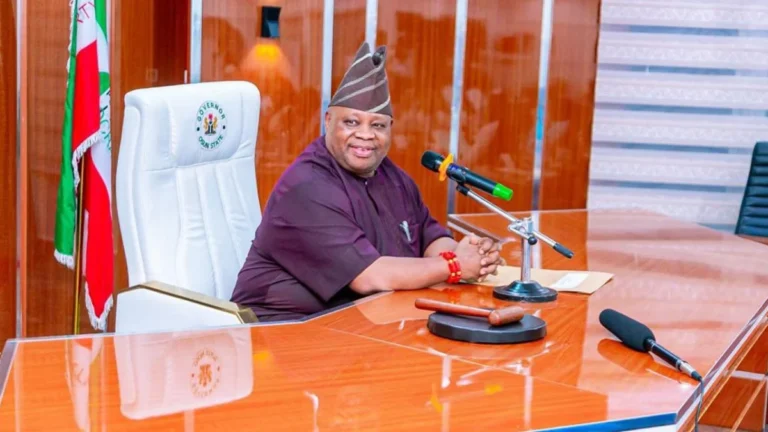
In a striking demonstration of political realignment that bridges traditional divides, Osun State Governor Ademola Adeleke has officially approved the establishment of 20 specialised sub-committees to spearhead the state Presidential Campaign Council. This strategic development successfully brings together influential leaders, grassroots mobilisers, and former public office holders from three major political platforms—the All Progressives Congress (APC), the Peoples Democratic Party (PDP), and the Accord Party—into a unified front dedicated to securing a comprehensive electoral victory for President Bola Ahmed Tinubu’s re-election bid.
The high-stakes political initiative was formally announced on Saturday by the governor’s spokesperson, Mallam Olawale Rasheed. The newly structured campaign machinery effectively consolidates factions that have historically operated within deeply adversarial political ecosystems, merging their grassroots networks, financial resources, and institutional influence under a single operational umbrella in Osun State.
Structural Overview of the Osun Campaign Council
The newly unveiled campaign architecture is expansive, featuring a central coordinating committee, a dedicated grassroots mobilisation framework, and 20 distinct sub-committees designed to oversee granular aspects of electioneering, voter outreach, and strategic communication.
The division of labor within the campaign apparatus reflects a meticulous approach to modern electoral management. The designated sub-committees cover a wide spectrum of operational needs, including women mobilisation, media and strategic communication, digital and social media, election planning and monitoring, informal sectors and artisans mobilisation, support groups coordination, campaign planning and strategies, finance, fundraising and logistics, as well as civil society and labour union engagement.
Additional portfolios established to ensure comprehensive coverage include welfare, contact and mobilisation, protocol and venue, special duties, security and intelligence, youth and student affairs, parliamentary mobilisation, inter-party affairs, religious affairs, medical affairs, legal matters, and administration and secretariat coordination.
Political analysts note that the inclusion of diverse administrative units points to an intensive strategy aimed at preempting logistical hurdles and neutralising opposition narratives across both urban centers and rural communities in Osun State.
Key Leadership Appointments and Cross-Party Representation
The leadership configuration of the central coordinating committee highlights the unprecedented nature of the coalition. Governor Ademola Adeleke will steer the central committee, working alongside some of the most formidable political heavyweights in the state and the southwest region.
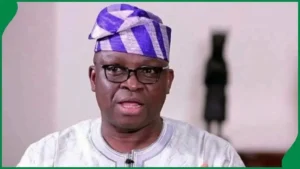
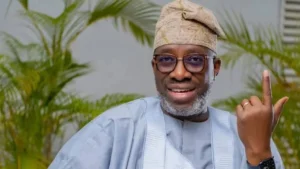
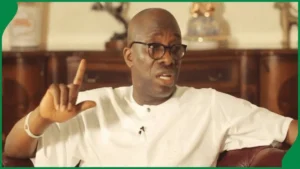
Prominent figures appointed to the central coordinating committee include former Osun State Governor Chief Bisi Akande; immediate-past governor Gboyega Oyetola; former APC National Secretary Senator Iyiola Omisore; and Senator Ajibola Basiru.
Furthermore, the leadership circle incorporates the state chairmen of the three coalescing political parties: Pastor Victor Akande of the Accord Party, Sooko Taju Lawal of the APC, and Hon. Sunday Bisi of the PDP, alongside other key stakeholders.
The deliberate blending of party leadership structures is viewed as a vital confidence-building measure aimed at assuaging local party loyalists who might otherwise feel alienated by the sudden partnership between longtime political adversaries.
Specialized Committees and Task Assignments
To ensure optimal execution of campaign mandates, the governor assigned specific portfolios to seasoned administrators, legal luminaries, and security experts:
- Election Planning and Monitoring: Chaired directly by Governor Adeleke, with Senator Iyiola Omisore serving as deputy chairman. This committee comprises serving and former lawmakers, as well as experienced electoral strategists.
- Finance, Fundraising, and Logistics: Also chaired by Governor Adeleke, with Senator Omisore providing deputizing support to oversee the financial lifelines of the campaign.
- Media and Strategic Communication: Headed by the Osun State Attorney-General and Commissioner for Justice, Barrister Kolapo Alimi, with Otunba Demola Adefila as co-chairman and Mallam Olawale Rasheed as deputy chairman. Rasheed additionally leads the digital and social media committee.
- Security and Intelligence: Placed under the command of retired military officer Lieutenant-General Lamidi Adeosun, reflecting the gravity assigned to maintaining peace and order throughout the campaign cycle.
- Youth and Student Affairs: Chaired by the Speaker of the Osun State House of Assembly, Rt. Hon. Adewale Egbedun, to effectively capture the critical demographic of young voters.
- Artisans and Informal Groups Mobilisation: Led by Hon. Bosun Oyintiloye.
- Support Groups Coordination: Directed by Ismael Jayeoba.
- Campaign Planning and Strategies: Supervised by Mr. Gboyega Alabi.
In tandem with these functional groups, dedicated advisory frameworks have been established. An elders and advisory group features veteran female leaders such as Yeye Dupe Adeleke Sanni, Erelu Olusola Obada, and Otunba Titilayo Laoye Ponnle, while the women mobilisation committee is chaired by Alhaja Kudirat Fakokunde, supported by prominent figures including Mrs. Titi Adeleke, Hon. Ayo Omidiran, and Hon. Mobola Yusuf.
Background Context and Political Implications
The formation of this cross-party coalition in Osun State occurs against the backdrop of shifting political dynamics within Nigeria’s geopolitical landscape ahead of the 2027 general elections. Osun, historically a swing state characterized by fiercely contested gubernatorial and presidential polls, presents a unique case study in pragmatic political alignment.
Historically, the PDP and the APC have maintained a zero-sum relationship in the state, marked by intense legal battles and volatile electoral outcomes. However, the imperatives of national alignment and the need to consolidate federal support have prompted key regional actors to rethink traditional adversarial postures.
Governor Adeleke disclosed that he recently held a direct meeting with President Bola Ahmed Tinubu to brief him on Osun State’s comprehensive preparations for the presidential election. According to the governor, the president was fully apprised of the coalition’s objectives, expectations, and strategic aspirations.
In a move designed to cement internal cohesion among coalition partners, Governor Adeleke addressed lingering administrative concerns within the state, notably the unresolved local government administration matters. He assured stakeholders and the general public that outstanding issues would be addressed and resolved expeditiously.
"I commend our coalition partners for their statesmanship in setting aside partisan differences to work collectively toward a common objective," Governor Adeleke stated during the rollout announcement. "This united front significantly enhances our statewide mobilisation capacity. I charge all committee members to translate their appointments into concrete, grassroots-driven activities that will guarantee a resounding electoral victory for the president."
Strategic Analysis: Challenges and Opportunities
While the consolidation of the APC, PDP, and Accord Party under the banner of the presidential campaign council presents a formidable electoral machine on paper, political observers note that translating elite-level agreements into cohesive grassroots support will require meticulous management.
- Grassroots Alignment: The primary challenge facing the coalition lies in harmonizing local party structures that have spent years competing against one another at the polling booth. Local party executives and foot soldiers must be convinced that the coalition serves their immediate and long-term political interests.
- Messaging and Narrative Control: With the media and strategic communication committees headed by seasoned administrators like Barrister Kolapo Alimi and Mallam Olawale Rasheed, the campaign will need to craft a unified narrative that justifies the cross-party collaboration to skeptical voters accustomed to strict party lines.
- Resource Mobilization and Accountability: By placing executive leadership at the helm of the finance and logistics committees, the campaign aims to streamline resource allocation. Efficient distribution of campaign materials and logistical support will be critical to maintaining momentum across Osun’s thirty local government areas.
Immediate Next Steps
Governor Adeleke has directed all members of the 20 sub-committees to commence operations immediately. Secretariat coordination units have been instructed to provide the necessary administrative backing to enable the committees to deploy into wards and polling units across the state.
As the 2027 electoral cycle gathers momentum, the Osun State model of cross-party collaboration for a presidential campaign will likely be observed closely by political strategists across Nigeria as a potential template for managing national ambitions amidst complex regional political realities.