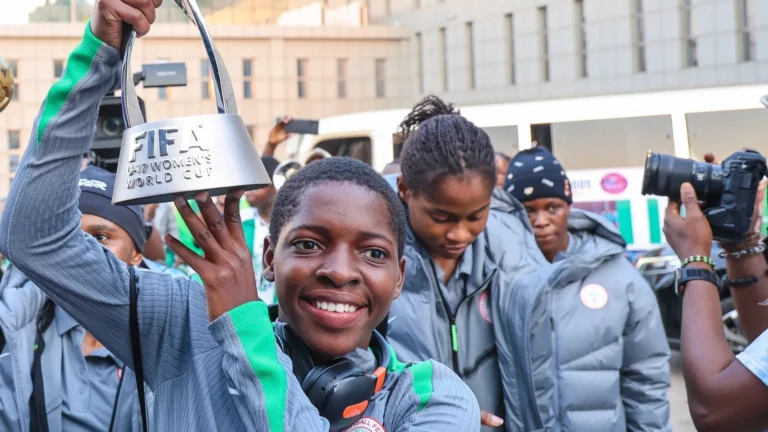
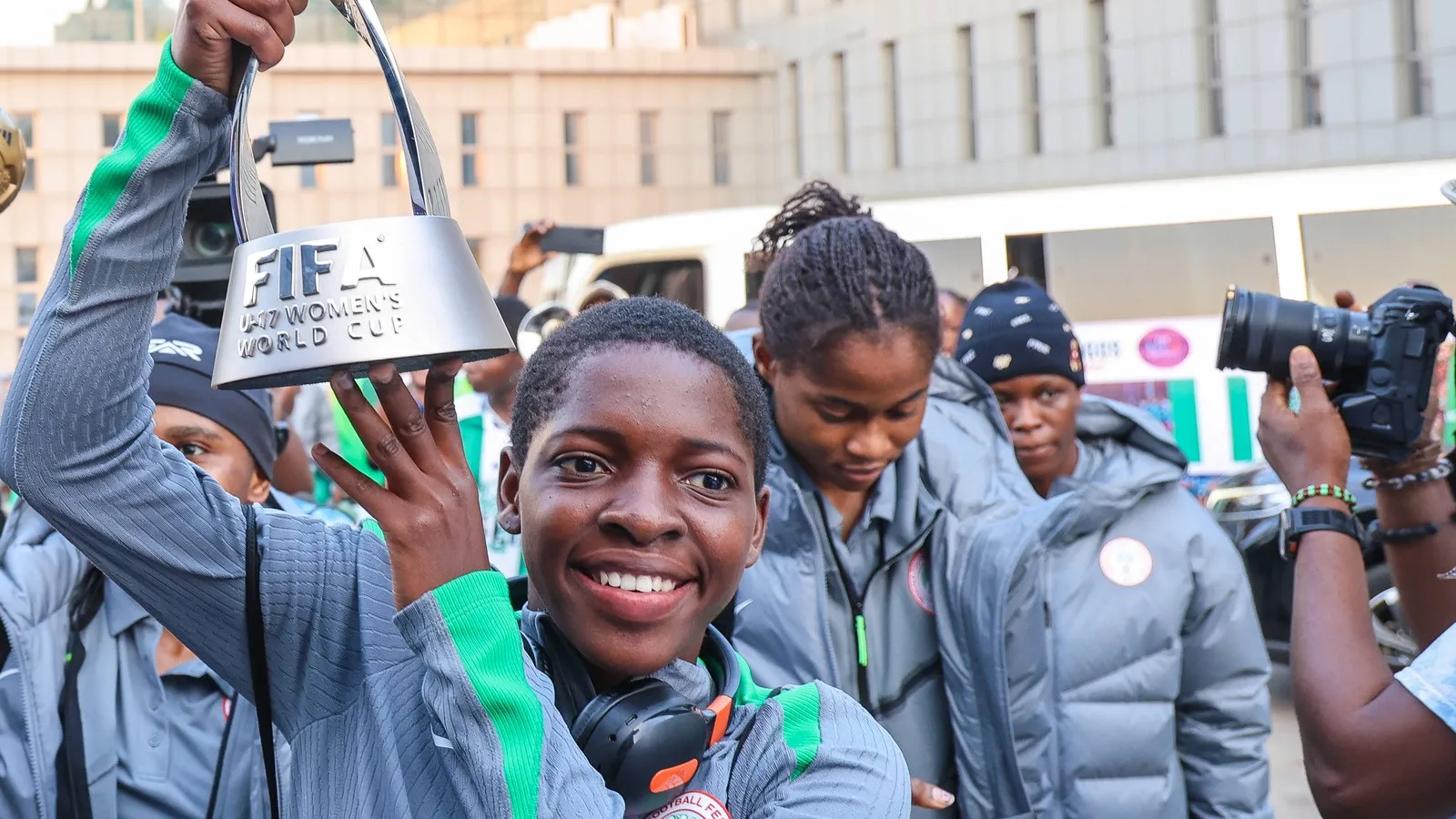
The historic triumph of Nigeria’s U-17 women’s football team, the Flamingos, at the FIFA U-17 Women’s World Cup in Rabat has culminated in a significant national recognition. During a formal reception at the Presidential Villa in Abuja this Wednesday, the Nigerian government, led by President Bola Ahmed Tinubu, announced a substantial financial reward package for the players and their technical staff. Each player in the gold-medal-winning squad has been awarded N100 million, structured as a savings certificate held in trust through designated financial institutions. This condition stipulates that the funds remain inaccessible to the athletes until they reach the age of majority, 18.
The celebratory event, which served as a national acknowledgment of the team’s unprecedented feat, saw First Lady Senator Oluremi Tinubu represent the President. In addition to the players’ individual savings bonds, the reward framework includes a direct cash payment of N100 million for Head Coach Hakeem Busari, while each member of his technical support staff has been allocated N50 million. This reward structure reflects a dual commitment: honoring the team’s historic achievement while implementing a long-term financial management strategy for the young athletes.
A Chronology of Historic Success
The path to this moment began in Morocco, where the Flamingos redefined the trajectory of African women’s football. By defeating Japan 2-1 in the final, the team secured Nigeria’s first-ever world title in this age category. The victory was not merely a singular win; it was the culmination of a tournament run characterized by tactical discipline and technical proficiency that shattered five long-standing African records.
The journey commenced with a rigorous qualification phase, followed by a concentrated training camp that emphasized both athletic conditioning and psychological resilience. The tournament itself saw the Flamingos overcome high-pressure scenarios, including knockout stages against world-class opposition. Following the final whistle in Rabat, the squad returned to Nigeria as national heroes, leading to the high-level state reception in Abuja where the federal government moved to institutionalize their success through these financial incentives.
The Rationale Behind the Age Condition
The decision to place the N100 million awards into savings certificates until the players turn 18 is a strategic policy intervention. Financial experts and observers of sports administration have lauded this move as a prudent measure to protect young athletes. At the U-17 level, players are navigating a critical developmental phase, both physically and personally. Injecting significant wealth into the lives of teenagers can often create immediate social and domestic pressures that might distract from their professional growth.
By restricting access to the funds, the government ensures that the capital remains intact, potentially serving as a foundational asset for the players when they transition into adulthood or more advanced stages of their professional football careers. This mechanism also mitigates the risks associated with premature financial independence, allowing the athletes to focus on the essential task of honing their skills under the guidance of the Nigeria Football Federation (NFF).
Economic and Sporting Context
The scale of the reward package is unprecedented for the U-17 level in Nigeria. It signals a shift in how the state views its developmental sporting assets. Historically, Nigerian football teams—from the Super Falcons to the Flying Eagles—have often faced delays in receiving promised bonuses. For instance, the recent payment of a $100,000 WAFCON reward to the Super Falcons, which arrived 15 months after the tournament, highlighted the administrative hurdles that often plague sports funding.
The current administration, through the National Sports Commission (NSC) leadership of Shehu Dikko and Bukola Olopade, appears to be adopting a more structured, trust-based approach to avoid such delays. The use of savings certificates is a move toward transparency and accountability. By engaging designated banks, the government is creating a paper trail that ensures the money is earmarked specifically for the players, rather than subject to the typical bureaucratic bottlenecks that have historically hampered federal sports disbursements.
Official Statements and Player Reactions
During the presentation, First Lady Oluremi Tinubu emphasized the symbolic and material importance of the gift. "For all our players, Mr. President is awarding you all with savings certificates of N100 million each," she stated, reiterating the sentiment that Nigeria remains committed to supporting its youth. She further extended the President’s gratitude to the medical personnel, the coaching staff, the NFF administrators, and the parents whose support underpinned the team’s success.
Captain Harmony Chidi, who emerged as a standout leader throughout the tournament, displayed a level of maturity that belied her age. Addressing the assembly, she acknowledged the significance of the reward while maintaining a focus on the future. "This is just a starting point. I will not say we have arrived," Chidi remarked. Her statement captures the ethos of the squad—that this world title is not the end goal, but a platform for the next generation of the Super Falcons.
Broader Implications for Nigerian Football
The investment in the Flamingos has broader implications for the development of women’s football in Nigeria. If the NFF and the NSC can successfully integrate these players into the senior national team pipeline, the investment will yield dividends far beyond the cash value of the certificates.
- Retention of Talent: By providing substantial financial security, the state reduces the likelihood of players abandoning the sport in pursuit of immediate alternative career paths due to financial necessity.
- Professionalization: The financial reward underscores the legitimacy of women’s football as a career, encouraging parents to support their children’s participation in the sport.
- Institutional Accountability: The involvement of the National Sports Commission in managing these rewards sets a precedent for how future national team successes should be incentivized.
However, the efficacy of this policy will ultimately be measured by the long-term career progression of these teenagers. The challenge now lies in ensuring that the technical development of these players continues at the same pace as their financial rewards. The NFF is tasked with monitoring the players’ progression, ensuring that the transition from the U-17 level to the senior ranks is supported by competitive leagues and continued access to elite training facilities.
A New Era for Sports Administration?
The involvement of leaders like Shehu Dikko and Bukola Olopade suggests a collaborative effort between the presidency and sports technocrats to revitalize the sector. Their presence at the ceremony, alongside the President’s directive, indicates that the current administration is utilizing sports not just as a vehicle for national pride, but as an area for policy reform.
The skepticism that often surrounds government promises in the sports sector is gradually being replaced by a demand for structured, sustainable payment systems. The move to use savings certificates is a departure from the traditional "cash-in-hand" model, which has been criticized for lack of oversight and susceptibility to corruption. If this model proves successful with the Flamingos, it could become the standard for future athletic rewards in Nigeria.
Conclusion: Investing in the Future
The Flamingos’ victory in Rabat has done more than add a trophy to Nigeria’s cabinet; it has sparked a national conversation about the value of grassroots sports development. The N100 million reward, while substantial, is secondary to the message it conveys: that the Nigerian state recognizes the potential of these young women as the future of the nation’s sporting industry.
As the players return to their clubs and continue their academic and professional development, the conditions placed on their rewards will serve as a constant reminder of the long-term stakes involved. The age-based restriction is a protective measure designed to ensure that the immediate excitement of success does not obscure the necessity of sustained effort. For now, the Flamingos stand as the standard-bearers for Nigerian youth, with a nation watching to see how they utilize this platform to reach the pinnacle of the global game. The success of this initiative will be judged not by the ceremony in Abuja, but by the number of these young champions who go on to achieve sustained excellence on the world stage in the years to come.