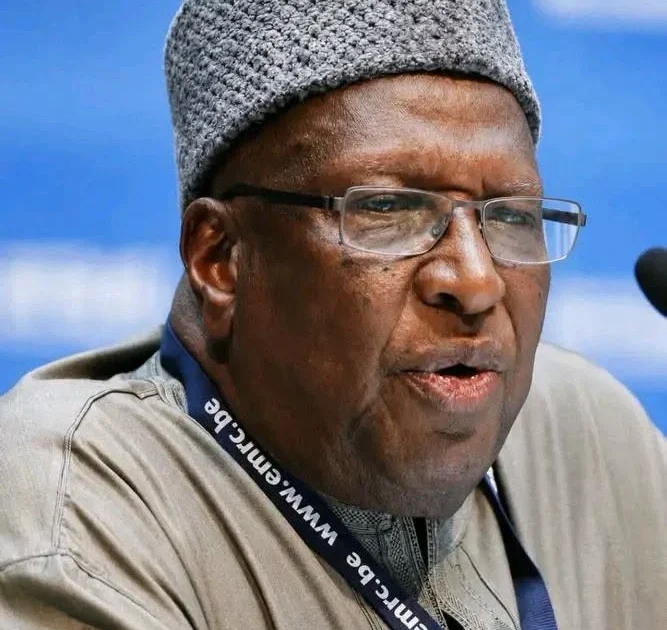
Former Governor of Ogun State, Senator Ibikunle Amosun, has paid a glowing tribute to the late elder statesman and former National Chairman of the Peoples Democratic Party, Alhaji Bamanga Tukur, describing his passing as an irreparable and profound loss to the Federal Republic of Nigeria. Tukur, a towering figure in Nigerian politics, public administration, and international commerce, passed away on Saturday, merely three days before what would have been his milestone 91st birthday.
In a deeply reflective and comprehensive condolence message released on Sunday, Senator Amosun noted that the late nonagenarian lived a long, purposeful, and remarkably distinguished life. According to the former Ogun State governor, Tukur’s existence was defined by monumental contributions across a wide spectrum of national endeavor, including public administration, partisan politics, state governance, corporate entrepreneurship, and broader continental development. Amosun emphasized that the deceased statesman’s legacy transcended the boundaries of traditional political office, extending deep into the operational foundations of Nigeria’s maritime economy and the architecture of pan-African trade cooperation.
The passing of Alhaji Bamanga Tukur marks the end of an era for a generation of Nigerian leaders who midwived the nation’s post-independence institutional frameworks and navigated the treacherous waters of military transitions and civilian governance. As tributes continue to pour in from across the political, economic, and traditional strata of Nigerian society, leaders from various divides have begun reflecting on the profound impact of Tukur’s life, his public service credentials, and the indelible marks he left on the nation’s democratic trajectory.
A Storied Life Spanning Public Service, Commerce, and Governance
Bamanga Tukur’s journey to national prominence was not a product of sudden political fortune; rather, it was the culmination of decades of rigorous public service, astute corporate management, and resilient political participation. Born in the northern part of Nigeria, Tukur cultivated a formidable reputation as an administrative technocrat long before he stepped into the turbulent arena of elective politics.
His early career laid a solid foundation for a lifetime of leadership. One of his most notable early institutional contributions came in 1975, when he was appointed as the General Manager and Chief Executive Officer of the Nigerian Ports Authority (NPA). During his tenure at the helm of the nation’s premier maritime agency, Tukur played a pioneering role in restructuring and modernizing Nigeria’s port infrastructure. At a time when the country was experiencing an oil boom and a corresponding surge in import-dependent economic activity, his administrative acumen helped manage the infamous port congestion crises, streamlining maritime operations and enhancing the efficiency of cargo clearing processes.
Beyond the maritime sector, Tukur’s administrative genius found expression in the corporate world, where he carved a niche for himself as a visionary business leader. He held executive positions in numerous prominent companies and industry groups, successfully bridging the often-wide gap between public sector policy formulation and private sector execution. His business interests spanned manufacturing, international trade, and agriculture, earning him respect within the West African business community and beyond.
Political Chronology and Leadership Milestones
Alhaji Bamanga Tukur’s foray into frontline politics began earnestly during the Second Nigerian Republic. In 1983, at the height of the political transition under the National Party of Nigeria, Tukur contested and won the gubernatorial election, becoming the civilian Governor of the defunct Gongola State, which has since been bifurcated into modern-day Adamawa and Taraba States. Although his tenure as governor was cut short by the military coup led by Major General Muhammadu Buhari on December 31, 1983, his brief time in office left structural footprints in infrastructural development, educational expansion, and civil service administration within the region.
A decade later, during the turbulent political transitions of the aborted Third Republic and the subsequent military administration of General Sani Abacha, Tukur’s administrative expertise was once again called upon at the federal level. Between 1993 and 1995, he served as the Minister of Industry, where he championed policies aimed at reviving domestic manufacturing, encouraging local raw material sourcing, and improving the competitiveness of Nigerian industrial goods on the global market.
Perhaps his most nationally visible political assignment in the Fourth Republic came in March 2012, when he emerged as the National Chairman of the then-ruling Peoples Democratic Party (PDP) during a highly competitive national convention in Abuja. Tukur took over the leadership of the party at a critical juncture in Nigeria’s democratic evolution, navigating fierce internal power struggles, regional balancing acts, and the complex dynamics of party supremacy. Although his tenure as PDP National Chairman was stormy and punctuated by high-profile defections that ultimately culminated in his resignation in January 2014, his supporters and political associates maintain that his leadership style was rooted in party discipline, institutional loyalty, and adherence to democratic tenets.
Continental Reach and Pan-African Economic Diplomacy
Senator Amosun’s tribute placed particular emphasis on Tukur’s extensive contributions to African economic integration and private sector development—areas where the late statesman projected his influence far beyond the shores of Nigeria.
In the late 1990s and throughout the 2000s, Tukur was heavily involved in continental developmental initiatives. He played a pivotal and founding role in the New Partnership for Africa’s Development (NEPAD), an economic development program of the African Union designed to eradicate poverty and promote sustainable economic growth and integration across the continent. Working alongside other African leaders and technocrats, Tukur advocated for increased foreign direct investment, infrastructural interconnectivity, and improved governance standards as prerequisites for Africa’s socio-economic renaissance.
Furthermore, his leadership within the African Business Roundtable (ABR) underscored his unwavering belief that the private sector must serve as the primary engine of economic growth in Africa. Through the ABR, Tukur fostered cross-border business partnerships, lobbied African governments to remove bureaucratic bottlenecks hampering intra-continental trade, and championed the empowerment of indigenous African entrepreneurs. His advocacy laid crucial groundwork for contemporary discussions surrounding the African Continental Free Trade Area (AfCFTA), proving his foresight in matters of continental trade and economic cooperation.
National Honours and Traditional Recognition
The magnitude of Bamanga Tukur’s contributions to national and local development did not go unnoticed by the Nigerian state or his immediate community. Over the course of his illustrious life, he was a recipient of numerous prestigious awards, traditional titles, and national honors.
In recognition of his decades of meritorious service to the fatherland, the Federal Government of Nigeria conferred upon him the national honor of Commander of the Order of the Niger (CON), one of the country’s highest civilian accolades. This honor reflected his status as a statesman who dedicated his intellect, time, and resources to the advancement of the Nigerian project.
At the community level, Tukur remained deeply rooted in his native Adamawa State. He held the esteemed traditional title of the Tafidan Adamawa, a prominent position within the Adamawa Emirate Council. As the Tafida, he acted as a bridge-builder, a custodian of cultural heritage, and an influential voice for traditional institutions in contemporary governance. Senator Amosun described these multiple recognitions as enduring testaments to an extraordinary life dedicated to community upliftment and national cohesion.
Senator Ibikunle Amosun’s Condolence Message in Full
Amplifying the collective grief of the nation, Senator Amosun remarked that Nigeria’s political landscape had been immensely enriched by the life and profound intellectual and administrative contributions of Alhaji Bamanga Tukur.
"Our nation’s political landscape has been greatly enriched by the life and contributions of Alhaji Bamanga Tukur," Senator Amosun stated in his official release. "He distinguished himself through decades of service to Adamawa State, the Northern Region, Nigeria, and the African continent. His passing is a great loss to Nigeria, robbing us of an elder statesman whose wisdom, institutional memory, and commitment to national development were second to none."
Amosun extended his deepest sympathies to the immediate and extended Tukur family, the government and good people of Adamawa State, as well as the late statesman’s vast network of business associates, political allies, friends, and admirers across the globe. Concluding his tribute, the former Ogun State governor offered fervent prayers for the departed soul, asking Almighty Allah to grant Bamanga Tukur Aljannah Firdaus and to bestow upon his children, grandchildren, and loved ones the fortitude to bear what he termed an "irreparable loss."
Broader Implications of Tukur’s Passing for Nigerian Politics
The death of Alhaji Bamanga Tukur occurs at a critical juncture in Nigeria’s political history, serving as a poignant reminder of the fast-depleting pool of foundational nationalist and political figures who helped shape the architecture of modern Nigeria. As political actors across party lines prepare for future electoral cycles, the exit of veteran leaders like Tukur underscores the urgent need for contemporary politicians to draw institutional lessons from the resilience, cross-ethnic networking, and ideological commitment that characterized the generation of the mid-20th century.
Political analysts note that Tukur’s career—spanning the civil service, military regimes, industrial management, and the rough-and-tumble of civilian party politics—provides a comprehensive case study in adaptive leadership. Whether viewed through his stabilization of the Nigerian Ports Authority in the 1970s, his governance of Gongola State, or his steering of the PDP during turbulent times, Tukur’s life trajectory demonstrates the intricate interplay between administrative competence and political survival in developing democracies.
As condolence messages continue to flood the family residence and official channels, the memory of Alhaji Bamanga Tukur remains enshrined as that of a consummate patriot, a visionary business leader, a dedicated public servant, and one of Nigeria’s finest citizens whose legacy will endure across generations and national borders.