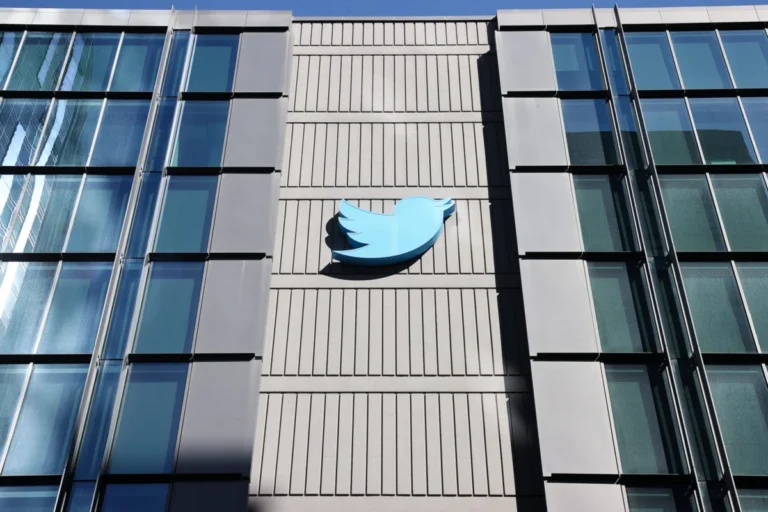
The intersection of global technology and emerging markets reached a watershed moment in April 2021 when Twitter, under the leadership of co-founder Jack Dorsey, announced its official expansion into the African continent. Choosing Accra, Ghana, as the headquarters for its African operations, the social media giant signaled a strategic pivot toward immersive engagement with the vibrant communities driving digital conversations across the region. However, this historic milestone—hailed as a breakthrough for Big Tech’s footprint in Africa—was abruptly upended just over a year later following Elon Musk’s turbulent $44 billion acquisition of the company. The subsequent mass layoffs exposed deep operational disparities and triggered intense global scrutiny over the long-term commitments of Silicon Valley corporations to the Global South.
The Strategic Vision Behind Twitter Ghana
When Jack Dorsey took to his timeline on April 12, 2021, to declare that "Twitter is now present on the continent," tech enthusiasts across Africa celebrated a major validation of the region’s burgeoning digital talent. The announcement was accompanied by a custom Ghanaian flag hashmoji and a formal blog post outlining the company’s growth strategy. Twitter explicitly stated that to truly serve the global public conversation, it needed to be more deeply immersed in the rich and vibrant communities driving dialogue across Africa.
Ghana was selected not by chance, but as a deliberate endorsement of its democratic credentials. The West African nation had long positioned itself as a champion of free speech, online freedom, and an open internet—values that closely aligned with Twitter’s corporate ethos. Ghanaian President Nana Addo Dankwa Akufo-Addo welcomed the development as the beginning of a transformative partnership aimed at catalyzing the nation’s rapidly expanding technology sector.
Within weeks, recruitment drives commenced across the continent. Rather than parachuting in expatriates, Twitter prioritized locally sourced talent, ensuring that the team possessed an innate, localized understanding of African sociopolitical landscapes. Employees worked remotely during the initial phase, contributing directly to product safety, content moderation, and regional partnerships. For users across Africa, the presence of a localized team provided unprecedented assurance that regional challenges—ranging from digital rights to platform safety—would be addressed with contextual nuance and cultural competence.
Leadership Transition and Mounting Pressures
The grand vision for Twitter’s African expansion was conceived during a period of significant corporate transition. Only seven months after announcing the move to Ghana, Jack Dorsey surprised the tech industry on November 29, 2021, by announcing his resignation as CEO. Dorsey, who had famously juggled dual CEO roles at Twitter and Square (now Block), faced mounting pressure from activist investors and the board of directors who argued that Twitter required undivided executive focus.
In his departure email, Dorsey endorsed Parag Agrawal, then-Chief Technology Officer, as his successor, citing Agrawal’s deep comprehension of the company’s operational needs. Agrawal adopted a calm, people-oriented leadership style, engaging directly with regional tech leaders through virtual forums such as Twitter Spaces. Despite his approachable demeanor, Agrawal faced immediate financial and operational hurdles. By May 2022, in an effort to curb rising costs and realign product strategies, Agrawal dismissed two high-ranking executives: Kayvon Beykpour, head of consumer product, and Bruce Falck, general manager of revenue. Concurrently, a hiring freeze was enacted across the organization.
The Musk Takeover: A Chronology of Conflict
While Agrawal attempted to steady the corporate ship, an external disruption of unprecedented magnitude was unfolding. On April 14, 2022, regulatory filings revealed that Tesla CEO Elon Musk had amassed a significant stake in Twitter and subsequently offered to take the company private for $44 billion. What began as a potential board seat negotiation quickly deteriorated into a hostile takeover bid.
The ensuing months were characterized by intense public and private friction between Musk and Twitter’s executive leadership. Musk routinely used his personal account to question the platform’s operational integrity, publicly sparring with Agrawal over the prevalence of automated bot accounts and spam. Leaked text messages later revealed the severe internal strain the acquisition battle caused. When Agrawal cautioned Musk that public criticism was demoralizing the workforce and impeding daily operations, Musk dismissively replied, "What did you get done this week?" followed by his withdrawal from consideration for the board of directors.
In July 2022, Musk formally announced his intention to terminate the acquisition agreement, citing concerns over fake accounts. In response, Twitter filed a lawsuit in the Delaware Court of Chancery to compel the billionaire to complete the transaction at the agreed-upon price of $54.20 per share. As a high-stakes legal trial loomed, Musk reversed course, ultimately finalizing the $44 billion leveraged buyout on October 27, 2022.
Immediate Internal Disarray and Mass Layoffs
Musk’s takeover triggered an immediate and drastic restructuring of the company. On his first day as owner, Musk ousted CEO Parag Agrawal, Chief Financial Officer Ned Segal, and Chief Legal Officer Vijaya Gadde. Rumors of a massive workforce reduction quickly materialized into reality.
On November 4, 2022, approximately 50% of Twitter’s 7,500 global employees were laid off. The reduction in force was executed with jarring swiftness. Employees across various time zones received termination notifications via email under the subject line "Your Role at Twitter" shortly after finding themselves locked out of corporate email systems and Slack channels.
Musk defended the sweeping cuts publicly, stating that the company was operating at a daily loss of over $4 million, leaving management with no viable alternative. He noted that all departing employees were offered three months of severance pay, which exceeded legal requirements in the United States.
The Disproportionate Impact on Twitter Africa
While Musk’s public statements emphasized generous severance terms for the global workforce, the implementation of the layoffs in newly established regions revealed stark administrative oversights. Just three days prior to the mass layoffs, on November 1, 2022, senior executives and team members in Ghana had celebrated the official physical opening of Twitter’s Africa headquarters in Accra after a year of successful remote operations.
The euphoria of the launch was short-lived. Following the acquisition, the entire African workforce received termination notices sent via personal email accounts from a Director of People Services based in Dublin, Ireland. According to investigative reports by international media outlets, the communication mirrored an automated broadcast rather than an individualized notice, and crucially, the promised three-month severance package failed to materialize for the African staff in alignment with local expectations and the broader corporate declarations.
The abrupt dissolution of the African office drew sharp rebukes from former high-ranking Twitter executives. Alphonzo Terrell, former Global Head of Social & Editorial, publicly criticized the handling of the regional team, calling out Jack Dorsey to intervene and rectify what he termed an unjust process. Lara Cohen, former Global VP of Partners & Marketing, similarly questioned the sincerity of the initial corporate commitments made to the continent.
Broader Implications for Tech Expansion in Africa
The dismantling of Twitter’s African operations has reignited critical debates surrounding the motivations behind multinational technology expansions into developing markets. Industry analysts have raised concerns that high-profile announcements of regional headquarters often serve as superficial public relations strategies rather than genuine, long-term operational investments.
By scaling back regional hubs and eliminating local content moderation and safety teams, platforms risk alienating emerging user bases and weakening their capacity to manage regional crises effectively. For African tech ecosystems—which viewed Twitter’s entry as a validation of local talent and a gateway to global inclusion—the rapid withdrawal under Musk’s leadership serves as a cautionary tale regarding the precarity of reliance on foreign multinational corporations.
As Musk continues to steer Twitter—now rebranded as X—through ongoing operational overhauls, verification system revamps, and advertiser boycotts, the legacy of its brief venture into Africa remains a poignant reminder of the vulnerability of regional initiatives during periods of corporate upheaval.