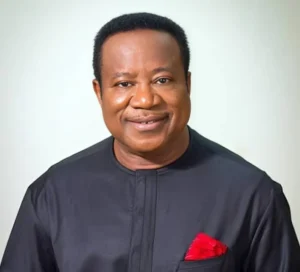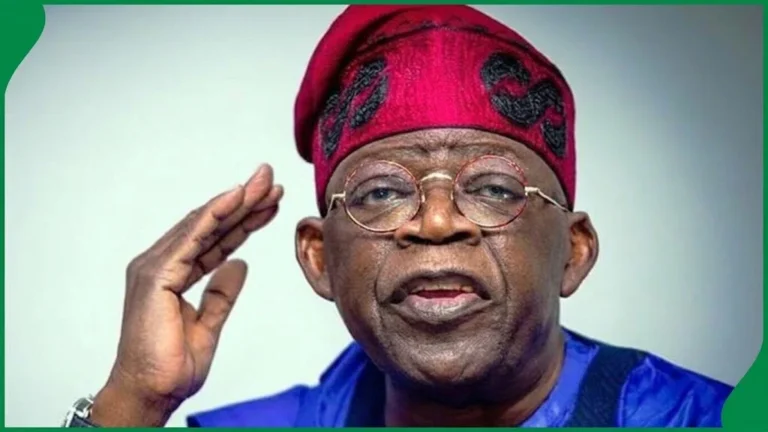
This directive, issued during a high-profile prayer gathering in Lagos on Sunday, November 22, 2026, signals a strategic pivot for the All Progressives Congress (APC) as the party prepares to consolidate its influence ahead of the next electoral cycle. President Tinubu, addressing a congregation of political allies and party faithful, emphasized the urgent need for internal cohesion, tasking his long-time associate, Ibrahim Kabir Masari, with the delicate mission of pacifying aggrieved members and unifying party factions across key states.
The President’s call for reconciliation comes at a critical juncture in the Nigerian political landscape. With the 2027 general elections approaching, the ruling party faces the dual challenge of managing internal dissent and navigating the socio-economic pressures that have defined the current administration’s tenure. By positioning Masari—whom he affectionately dubbed his “confidant and bulldozer”—at the center of this peace-building effort, the President is signaling a top-down approach to dispute resolution.
The Mandate for Reconciliation
During the Lagos prayer session, President Tinubu was explicit in his instructions. He directed Masari to prioritize the resolution of ongoing political feuds, starting with his home base and extending to other states, specifically mentioning Jigawa. The President’s message was one of absolute necessity: "We have to reconcile; every anger must dissipate and evaporate."
This move is widely interpreted by political analysts as an effort to mitigate the electoral risks associated with fragmented state chapters. In many Nigerian states, the APC has struggled with intra-party squabbles that often lead to the loss of legislative seats and gubernatorial positions. By explicitly instructing Masari to "beg" aggrieved stakeholders, the President is deploying a conciliatory strategy intended to bring back disgruntled party stalwarts who may have become disenfranchised over the past three years.
A Chronology of Internal Party Dynamics
The history of the APC has been marked by periodic internal friction, often stemming from the struggle for the control of party structures at the state level. Since the party’s ascent to power in 2015, maintaining a unified front has been the primary occupation of its leadership.
- 2022 Pre-Convention Tensions: The lead-up to the 2023 general elections saw significant upheaval as various factions competed for influence. Ibrahim Kabir Masari, a key political figure from Katsina State, has consistently played the role of a mediator during these high-stakes periods.
- The 2023 Electoral Transition: Following the inauguration of President Tinubu in May 2023, the focus shifted from winning the presidency to consolidating power. However, the subsequent economic reforms and ministerial appointments created new fault lines within the party, particularly in states where the political elite felt marginalized.
- Late 2026 Strategy Shift: As of November 2026, the administration has begun shifting its focus toward the 2027 electoral map. The directive to Masari is the latest in a series of administrative maneuvers aimed at ensuring that the party enters the next election cycle without the baggage of internal rebellion.
The Role of Ibrahim Kabir Masari: The "Bulldozer"
Ibrahim Kabir Masari occupies a unique position in the President’s inner circle. His designation as a "bulldozer" suggests a mandate that goes beyond mere diplomacy; it implies an assertive approach to breaking down barriers and forcing consensus among warring factions.
Masari, who has historically been involved in the machinery of Northern politics, is seen as a bridge-builder between the federal government and the local political structures. His ability to traverse different political camps, particularly in the Northwest region, makes him the ideal choice for the President’s mandate. By tasking him with visiting Jigawa and other states, the President is utilizing a trusted envoy to bypass bureaucratic hurdles that often stifle party-level dispute resolution committees.
Political and Economic Implications
The directive for reconciliation carries significant implications for the broader stability of the Nigerian state. Political stability is often a prerequisite for effective policy implementation, and the President appears to recognize that an divided party is an ineffective governing tool.
1. Managing Voter Base Erosion
When factions break away from the main party, they often lead to "protest votes" or the migration of supporters to opposition parties. By initiating a reconciliation process early, the APC aims to plug these leaks before the campaign season officially begins.
2. Strengthening Executive-Legislative Relations
Internal party disagreements often manifest as legislative gridlock. If the party can achieve harmony at the state level, it is expected to translate into a more unified front in the National Assembly, facilitating the passage of the administration’s legislative agenda in the final months of its first term.
3. Preparing for the 2027 Campaign
The 2027 elections are expected to be intensely competitive. The current economic climate, characterized by inflation and structural adjustments, has placed the government under intense public scrutiny. A unified APC is deemed essential by the leadership to defend the administration’s record and articulate a vision for the future.
Supporting Data and Party Trends
Analysis of recent electoral data suggests that states where the APC has maintained a unified front consistently outperform states plagued by litigation and internal factionalism. In previous election cycles, party divisions led to the loss of several governorship seats, as aggrieved members either sponsored opposition candidates or worked against the party’s interests from within.
Recent internal reports from the APC’s national secretariat have indicated that there are currently at least ten states experiencing some level of leadership dispute. The President’s directive is, in essence, a direct intervention to prevent these disputes from reaching a point of no return.
Official Responses and Public Sentiment
While official statements from the APC national leadership have been sparse since the President’s announcement, party insiders suggest that the directive is being welcomed as a necessary step. Supporters view the move as a proactive measure to ensure that the party remains a formidable force.
Conversely, political opponents are watching the developments closely. The success of the "reconciliation tour" will likely determine whether the opposition can capitalize on any remaining fractures. If Masari’s mission succeeds in bringing back key figures who were previously disillusioned, the APC’s dominance in the Northern states could be significantly bolstered, effectively narrowing the path for opposition candidates.
Broader Context: The Future of Internal Democracy
The focus on "begging" aggrieved persons and "dissipating anger" highlights a traditional, consensus-based approach to Nigerian politics. It reflects a shift away from strictly legalistic or procedural resolutions toward a more interpersonal, hierarchical approach to conflict resolution.
This style of politics, which prioritizes the personal influence of the President and his emissaries, remains a cornerstone of the Nigerian political system. Critics, however, argue that such methods may ignore the root causes of discontent, such as the lack of internal democracy or the unfair allocation of party resources. Whether these reconciliations will be sustainable or merely cosmetic remains a subject of ongoing debate among political observers.
As Ibrahim Kabir Masari begins his assignment, the eyes of the political class will be on Jigawa and other affected states. The ability of the "bulldozer" to mend fences will serve as a bellwether for the APC’s health as it prepares to defend its tenure and seek a mandate for the next four years. President Tinubu’s intervention is, at its core, a strategic recognition that in the high-stakes game of Nigerian politics, party unity is not merely a preference—it is a survival imperative.
With the electoral calendar set to tighten in the coming months, the results of this reconciliation exercise will likely be reflected in the party’s primary contests and its ability to mobilize a unified electorate in 2027. The clock is ticking, and for the President and his team, every political bridge repaired is a step toward securing their legacy.