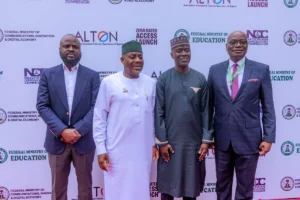
The House of Representatives Committee on University Education has issued a stern directive to the newly appointed Vice Chancellor of the University of Abuja (UniAbuja), Professor Hakeem Fawehinmi, urging him to launch an immediate and thorough investigation into widespread allegations of accommodation racketeering plaguing the institution. The parliamentary mandate was delivered in Abuja during a high-level oversight visit by federal lawmakers aimed at assessing the operational, financial, and administrative health of tertiary institutions across the country.
Led by Abubakar Fulata, a lawmaker representing Jigawa State under the platform of the All Progressives Congress (APC), the committee stressed that urgent administrative intervention is required to sanitize the university’s housing system. The visit served as a platform for the legislature to outline its expectations for the new leadership, emphasizing accountability, adherence to statutory guidelines, and the restoration of institutional harmony after years of turbulence that have affected academic calendars and administrative continuity at the prominent federal university.
Unveiling the Extent of Accommodation Racketeering
According to Mr. Fulata, the House Committee on University Education has been inundated with a deluge of petitions detailing systemic corruption within the university’s hostel allocation processes. These grievances outline a predatory marketplace operating within the campus ecosystem, where legitimate student accommodation is hijacked by opportunistic syndicates.
The lawmaker revealed that unscrupulous middlemen routinely manipulate the allocation system to acquire official university housing units, only to sub-lease them to desperate students at exorbitant rates. In some instances, the markup exceeds 500 percent of the original institutional fee, placing an intolerable financial burden on students and their families who are already grappling with broader macroeconomic pressures.
"We have received several petitions regarding accommodation racketeering," Mr. Fulata stated during the interactive session with the university management. "Some middlemen will get it and lease it to others at an exorbitant price, sometimes exceeding 500 per cent. This is very wrong and it poses serious challenges to so many people, particularly females who may be exposed to many problems."
The committee highlighted the disproportionate vulnerability of female students within the context of housing scarcity. Beyond the severe financial exploitation, the lack of safe, affordable, and readily accessible campus accommodation forces many young women to seek alternative off-campus housing in less secure neighborhoods. Lawmakers noted that this dynamic exposes students to heightened security risks, including harassment, exploitation, and safety vulnerabilities that could otherwise be mitigated by a transparent, well-regulated campus housing infrastructure.
Navigating Historical Leadership Instability at UniAbuja
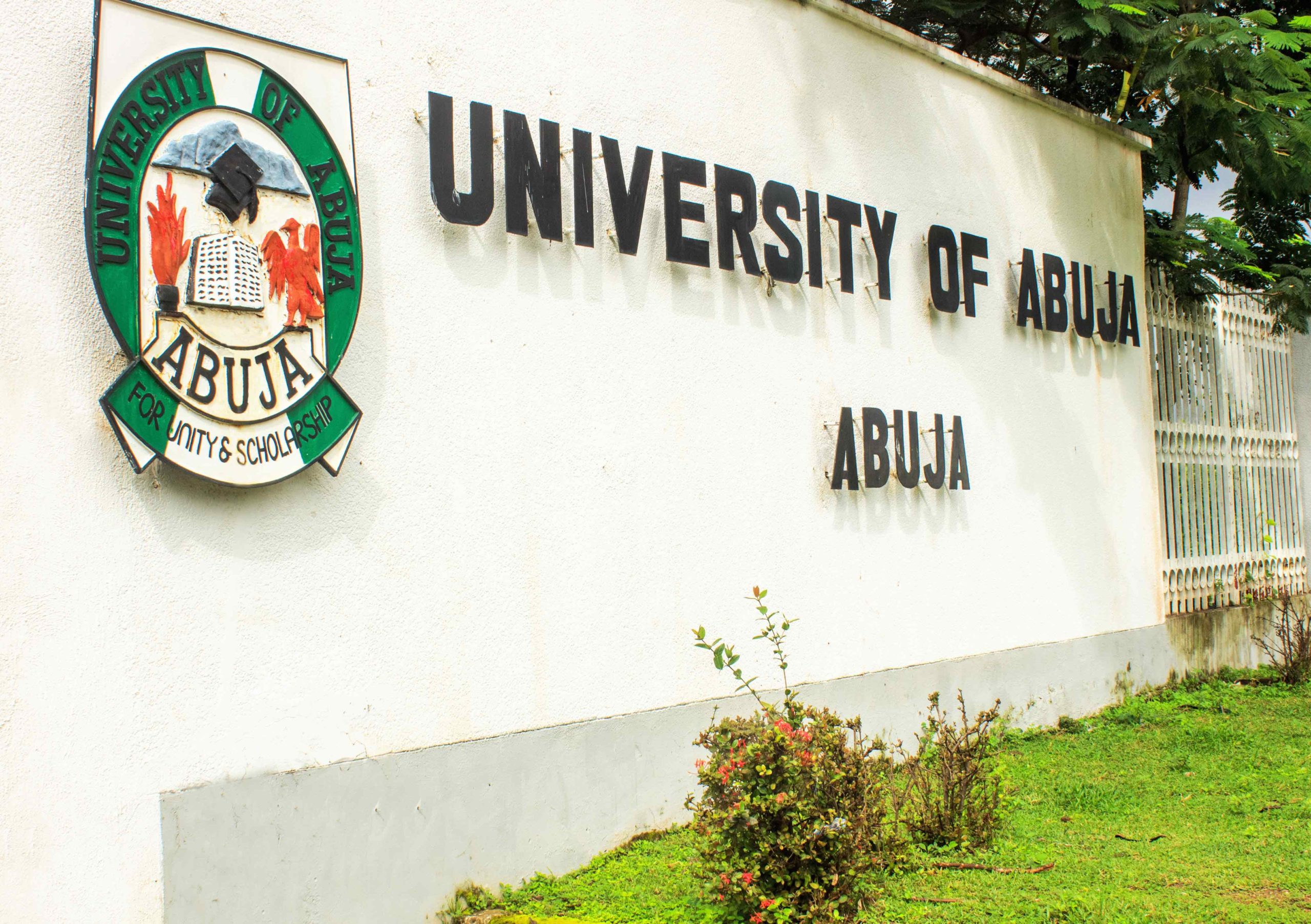
The directive to Professor Fawehinmi comes at a critical juncture in the history of the University of Abuja. The institution has experienced a turbulent administrative phase characterized by deep-seated governance crises, leadership tussles, and friction between successive administrations, staff unions, and the student body.
Highlighting this volatile history, Mr. Fulata issued a cautionary warning to the new Vice Chancellor regarding the administrative instability that has plagued the university in recent years. The institution has witnessed the appointment of four different vice chancellors in quick succession over a compressed three-year period—a high turnover rate that severely hampered long-term infrastructural planning, academic stability, and staff morale.
The committee urged Professor Fawehinmi to break this cycle by prioritizing dialogue, transparency, and consensus-building. Lawmakers emphasized that sustainable progress at UniAbuja hinges on cultivating a harmonious working relationship between the central administration, various staff unions—such as the Academic Staff Union of Universities (ASUU), Non-Academic Staff Union (NASU), and Senior Staff Association of Nigerian Universities (SSANU)—and the student representatives.
"We urge the VC and the entire management of the university to ensure harmony between the management and various staff unions, as well as students," Mr. Fulata reiterated, cautioning the administration to exercise utmost prudence and administrative wisdom to prevent a recurrence of past leadership fractures.
Broader Legislative Oversight: Federal Character, New Institutions, and Institutional Accountability
Beyond the specific challenges at UniAbuja, the House Committee on University Education utilized the oversight visit to address broader systemic issues governing Nigeria’s tertiary education sector. The legislative engagement extended to several other institutions, reflecting a comprehensive approach to parliamentary oversight.
In its interactions with the newly established Federal University of Technology, Abuja, the committee underscored the critical importance of strict adherence to federal character principles in both staff recruitment and student admissions. Lawmakers stressed that as a federal institution funded by taxpayers from across the federation, the university must reflect national diversity and equity, ensuring that recruitment processes and admission quotas are merit-based, transparent, and reflective of Nigeria’s geopolitical balance.
Furthermore, the committee revealed that it had held extensive interfaces with the leadership teams of the Federal University of Technology, Minna, and the Federal University of Education, Kontagora, both located in Niger State. These discussions focused on recent administrative trends, financial stewardship, and the operational challenges confronting these institutions amid dwindling budgetary allocations and rising operational costs.
A Notable Apology and Commitment to Transparency

In a related development during the legislative oversight proceedings, the Vice Chancellor of Usmanu Danfodiyo University, Sokoto, Professor Bashir Garba, formally appeared before the committee to tender an apology regarding his absence during previous oversight visits spanning the past three years.
Addressing the lawmakers, Professor Garba explained the circumstances surrounding his past non-appearance and used the platform to reaffirm his dedication to institutional accountability and open governance. The Sokoto-based university helmsman maintained that his administration operates an open-door policy rooted in transparency, asserting that he has nothing to hide from the general public or the legislative arm of government.
"We run a transparent system and have nothing to hide from the general public or the committee," Professor Garba stated. He pledged unalloyed cooperation with the House Committee on University Education and relevant national stakeholders, promising to drive strategic initiatives aimed at elevating Usmanu Danfodiyo University to new heights of academic excellence and administrative efficiency.
Implications for the Nigerian Tertiary Education Sector
The recent directives and interactions by the House of Representatives Committee on University Education underscore the growing legislative anxiety over governance standards, welfare conditions, and financial integrity within Nigeria’s public universities.
The specific focus on accommodation racketeering at the University of Abuja brings to light a pervasive, nationwide challenge where public infrastructure meant to subsidize the cost of education for indigent and middle-class students is routinely subverted by illicit cartels. Observers note that addressing this challenge will require not only punitive measures against indicted middlemen but also a comprehensive infrastructural overhaul, including public-private partnerships (PPPs) to expand student housing capacity on campuses across the country.
Moreover, the emphasis on leadership stability at UniAbuja highlights the interconnected nature of institutional governance and academic productivity. Frequent changes in executive leadership disrupt strategic plans, stall accreditation processes, and erode the confidence of development partners and international academic collaborators.
As Professor Fawehinmi settles into office, his immediate success will likely be measured by his capacity to dismantle entrenched administrative cartels, restore faith in the university’s housing allocation system, and bridge the trust deficit between management, labor unions, and the student populace. The legislature has signaled that it will maintain rigorous oversight to ensure these mandates are translated into measurable administrative reforms.