The vibrant, high-stakes atmosphere of a Madrid derby always guarantees heightened emotions, tactical chess matches, and post-match friction, but the latest chapter between Atlético Madrid and Real Madrid has extended far beyond the white lines of the pitch. Following a hard-fought 2-1 victory for Atlético Madrid at the Wanda Metropolitano, manager Diego Simeone used his post-match platform to deliver a sharp rebuke to his Real Madrid counterpart, José Mourinho, concerning the Portuguese tactician’s public criticism of match officials. The exchange has ignited a fresh debate across European football regarding the boundaries of managerial conduct, the pressures of elite competition, and the enduring tension between respecting refereeing authority and the instinct to protect one’s squad.
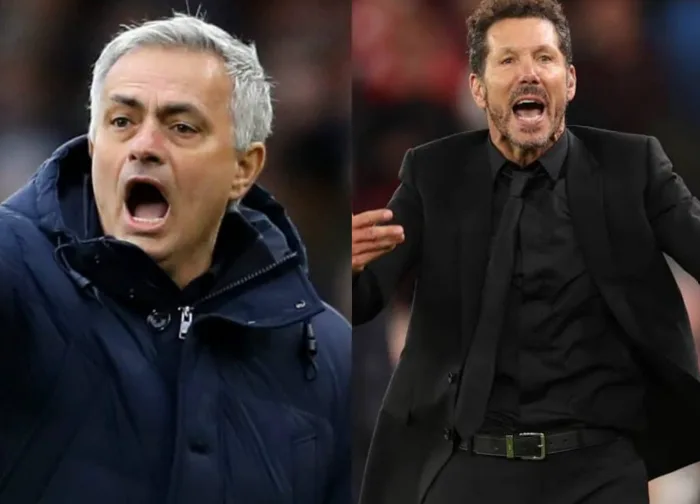
The controversy centers on comments made by Mourinho in the immediate aftermath of the capital derby. Known for his fiery touchline presence and uncompromising defense of his teams, Mourinho voiced strong grievances over several refereeing decisions that he believed negatively impacted Real Madrid’s chances during the encounter. In a match where margins were razor-thin and every tactical decision carried championship implications, the visiting manager argued that officiating discrepancies altered the course of the fixture. However, rather than letting the complaints pass, Simeone seized the opportunity during his media obligations to address what he perceives as a dangerous precedent set by high-profile managers attempting to influence public perception of match officials.
Drawing upon information shared widely by football transfer expert Fabrizio Romano via social media platform X, Simeone’s remarks were both direct and universal. The Argentine manager insisted that no figure in football, regardless of their status, trophy cabinet, or historical footprint, is exempt from maintaining decorum toward referees. "You cannot lose the referees’ respect," Simeone stated bluntly. "No matter how much of a big name you are, like Mourinho is… we need to be respectful." The Atlético boss expanded his argument to encompass the broader managerial fraternity, emphasizing that public pressure exerted by elite coaches can unduly influence the integrity of the game. "You should never cross the line," he added, explicitly naming several high-profile peers alongside Mourinho to underline his point. "Regardless of who you are; Mourinho, Flick, Pellegrini, me, or anyone else, we need to be careful about what we say."
To fully understand the gravity of Simeone’s warning, it is essential to contextualize the fierce rivalry between Atlético Madrid and Real Madrid within the broader landscape of La Liga. The Madrid derby, or El Derbi Madrileño, is historically one of the most fiercely contested fixtures in world football. Matches between these two clubs are rarely decided by sheer talent alone; they are psychological battles defined by resilience, tactical discipline, and the ability to absorb intense pressure. Over the past decade, the rivalry has grown increasingly intense as Atlético Madrid, under Simeone’s relentless stewardship, has consistently challenged the traditional duopoly of Real Madrid and Barcelona, transforming Spanish football into a bruising three-way title race.
In this high-pressure environment, refereeing decisions are magnified tenfold. Every yellow card, penalty appeal, and controversial offside call is scrutinized by millions of supporters and analyzed endlessly by the sports media. Managers operating at this level face immense professional vulnerability, where a single poor run of form can lead to dismissal. Consequently, post-match press conferences often serve as strategic battlegrounds where coaches attempt to deflect criticism from their players’ performances or exert subtle pressure on the technical committee ahead of future fixtures. Mourinho, a veteran of elite European dugouts across England, Italy, Spain, and beyond, has long utilized this psychological warfare as a tool of management. Yet, Simeone’s public pushback highlights a growing weariness among certain coaches regarding the erosion of institutional respect for referees on the pitch.
Simeone further contextualized the inevitability of refereeing errors by reminding the press that human mistakes are an inherent component of association football. Rather than framing officiating discrepancies as systemic bias—a narrative frequently pushed by frustrated managers—the Argentine coach adopted a philosophical stance regarding the natural ebb and flow of a grueling domestic campaign. "Sometimes things go your way and sometimes they don’t," he remarked, noting that over the course of a 38-game league season, fortunate and unfortunate decisions tend to balance out for every competing club. This pragmatic view contrasts sharply with the immediate, emotionally charged grievances often aired in the wake of high-profile defeats.
Shifting his focus from the officiating controversy to the tactical realities of the 90 minutes played out on the pitch, Simeone provided a clear, analytical breakdown of how the derby was won and lost. Rather than attributing the result to external factors, the Atlético manager highlighted the decisive moments that separated the two sides. "The match was clear," Simeone evaluated. "There was one team that controlled it, one team that knew how to take advantage of the important moments in the game, and another team that didn’t create the goalscoring chances they normally do."
This tactical assessment points to the defensive organization and clinical efficiency that have become the hallmarks of Simeone’s tenure at Atlético. While Real Madrid dominated spells of possession and probed for openings with their star-studded attacking lineup, Atlético demonstrated superior situational awareness. They capitalized on defensive lapses from their cross-town rivals while shutting down passing lanes and limiting the visitors to low-probability efforts on goal. The 2-1 scoreline was a testament to Atlético’s ability to execute their game plan under duress, frustrating Real Madrid’s creative outlets and punishing them when opportunities arose in the final third.
The broader implications of this fiery derby extend far beyond the immediate three points secured by Atlético Madrid. In the context of the La Liga title race, every fixture between the traditional heavyweights carries monumental weight. A victory for Atlético not only boosts their morale and cements their status as genuine contenders for the domestic crown, but it also inflicts a psychological blow on Real Madrid, exposing vulnerabilities that opposing managers will look to exploit in the coming weeks. Furthermore, Mourinho’s post-match complaints and Simeone’s subsequent public reprimand are likely to draw the attention of the Royal Spanish Football Federation’s technical committees and disciplinary bodies. While expressing disagreement with referees is a common occurrence in professional sport, crossing the threshold into questioning their integrity or demanding targeted accountability can frequently result in official warnings, hefty fines, or touchline bans for the offending managers.
As the season progresses, the verbal sparring between two of football’s most charismatic and demanding managers serves as a reminder of the relentless stakes involved at the summit of European sport. For Mourinho, the defeat and the subsequent fallout necessitate a recalibration as Real Madrid look to bounce back in their upcoming fixtures, both domestically and on the continental stage. For Simeone and Atlético, the victory validates their enduring grit and tactical identity, reinforcing the coach’s philosophy that discipline, focus, and respect for the structural pillars of the game remain paramount. Ultimately, as the dust settles on another memorable Madrid derby, the footballing world is left to ponder the delicate balance between competitive passion and sportsmanship—a debate that will undoubtedly continue to shape the narrative of the current La Liga campaign.