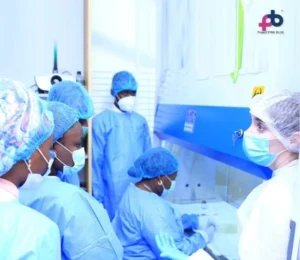
The Lagos State Government has officially confirmed the registration of six laboratory-confirmed cases of diphtheria within the state for the 2026 calendar year. Alongside these confirmed instances, state health authorities are currently monitoring 53 suspected cases, prompting a swift, coordinated response from the Ministry of Health to contain any potential spread. Prof. Akin Abayomi, the Lagos State Commissioner for Health, disclosed these figures during a press briefing held at the State Secretariat in Alausa, Ikeja, on Wednesday, aimed at clarifying the current epidemiological status of the disease in the nation’s commercial nerve center.
While the figures have understandably drawn public concern, Prof. Abayomi emphasized that there is currently no widespread outbreak of the disease in Lagos. He urged the populace to remain calm, noting that the state’s robust disease surveillance architecture has successfully identified and isolated the affected individuals. The Commissioner attributed the persistence of the disease—even at low levels—to the city’s dense population and the high rate of human mobility between Lagos and other parts of Nigeria where the infection may be more prevalent.
Understanding Diphtheria: A Public Health Challenge
Diphtheria is a serious bacterial infection caused by the bacterium Corynebacterium diphtheriae. It typically affects the mucous membranes of the throat and nose. The disease is highly contagious and spreads through respiratory droplets, such as those produced by coughing or sneezing, or through contact with contaminated personal items. If left untreated, the toxin produced by the bacteria can lead to severe complications, including heart failure, paralysis, and kidney damage.
The clinical presentation of the disease often begins with a sore throat, fever, and swollen glands in the neck. A hallmark sign, which health officials are asking residents to monitor, is the development of a thick, grey or white membrane that coats the back of the throat, which can eventually obstruct breathing. Because these symptoms can mimic other common respiratory infections, the Lagos State Ministry of Health has issued a high-alert notice to both public and private medical practitioners to maintain a high index of suspicion when evaluating patients with persistent sore throats or respiratory distress.
Chronology and Response Strategy
The Lagos State government’s response to the 2026 diphtheria threat has been methodical. Upon the identification of the initial suspected cases, the state’s Emergency Operations Centre (EOC) was activated to facilitate rapid laboratory diagnosis.
- Detection and Confirmation: Health surveillance officers identified symptomatic individuals across various local government areas. Laboratory samples were processed at state-accredited facilities to confirm the presence of C. diphtheriae.
- Case Management: All six confirmed patients were immediately placed under medical care. Protocols for managing diphtheria involve the administration of diphtheria antitoxin (DAT) and appropriate antibiotics to neutralize the toxin and kill the bacteria.
- Contact Tracing: One of the most critical components of the response has been the aggressive contact tracing exercise. Health teams identified every individual who had been in close proximity to the confirmed patients. These contacts have been placed under active surveillance for the duration of the incubation period—typically two to five days—to ensure that any secondary infections are caught before they can be transmitted further.
- Public Awareness: The current phase involves a sustained public communication campaign. The Ministry of Health is utilizing community leaders, local health centers, and media channels to disseminate information about symptoms and the importance of timely medical intervention.
Vaccination: The First Line of Defense
Prof. Abayomi stressed that the most effective tool in the state’s arsenal against diphtheria is the pentavalent vaccine. This vaccine provides protection against five life-threatening diseases: diphtheria, pertussis, tetanus, hepatitis B, and Haemophilus influenzae type b. The recommended immunization schedule requires children to receive three doses at six, 10, and 14 weeks of age.

Despite the government’s efforts, current data indicates that Lagos State has achieved approximately 64 percent full vaccination coverage. While this is a significant number, it leaves a vulnerable cohort of children who are either partially vaccinated or have not received any doses at all. This "immunity gap" is precisely where the disease finds an opening to spread.
To bridge this gap, the Lagos State government has made routine immunization free of charge across more than 1,000 public and private health facilities. The Commissioner reiterated that parents have a primary responsibility to ensure their children’s immunization cards are up to date, as the cost of treating complications from vaccine-preventable diseases far outweighs the effort of obtaining a routine dose.
Broader Implications and Institutional Preparedness
The timing of this announcement is particularly critical as schools prepare for the new academic term. The congregate nature of school environments—where children share classrooms, play areas, and dining facilities—makes them potential hubs for respiratory pathogens.
In anticipation of the school reopening, the Lagos State Ministry of Health is collaborating closely with the Ministry of Education. The strategy includes:
- School-Based Awareness: Educational campaigns to inform teachers and students about hygiene practices, such as frequent handwashing and respiratory etiquette.
- Health Surveillance in Schools: Schools are being encouraged to report any cluster of illnesses involving fever or sore throat to the nearest health facility immediately.
- Integration of Vaccination Services: There are ongoing discussions about potentially integrating mobile immunization drives near school hubs to capture children who may have missed their scheduled doses.
From an analytical standpoint, the current situation underscores the necessity of continuous, year-round surveillance. Lagos, as a megacity, acts as a primary entry and exit point for travelers across West Africa. As such, the state’s health security is intrinsically linked to the national immunization coverage. If neighboring states report rising cases, the risk to Lagos inevitably increases, justifying the Commissioner’s call for sustained vigilance.
Recommendations for the Public
The Lagos State Ministry of Health has issued specific guidelines for the public to mitigate risks:
- Avoid Self-Medication: Residents are strongly advised against treating throat infections with over-the-counter medication without professional diagnosis, as this may mask the progression of diphtheria.
- Report Symptoms Promptly: Any individual experiencing fever, weakness, or difficulty swallowing should report to the nearest primary healthcare center or designated hospital.
- Prioritize Hygiene: Maintaining basic hygiene, such as washing hands with soap and water and avoiding close contact with individuals exhibiting respiratory symptoms, remains a primary deterrent to the transmission of the bacteria.
- Check Vaccination Records: Parents and guardians are encouraged to verify the immunization status of their wards immediately. If a dose was missed, the child can still be brought to a government facility to complete the schedule.
As the state continues its surveillance efforts, the Ministry of Health maintains that the situation is under control. However, the government’s plea for public cooperation is clear: the path to eradicating diphtheria lies in a combination of high-level surveillance, rapid clinical response, and, most importantly, the universal uptake of the pentavalent vaccine. Through these integrated efforts, the Lagos State government aims to protect its population and prevent the current isolated cases from escalating into a public health crisis.